AI and Actual Delivery to Reshape Real Estate Competition in Egypt Within 4 Years
The Imperative of Digital Transformation and AI in Real Estate
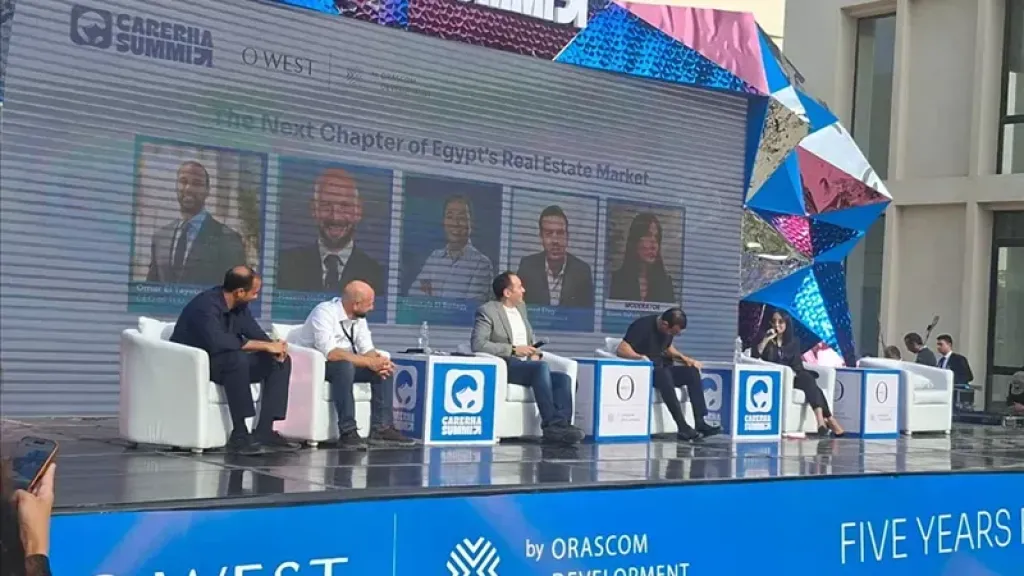
Speakers at the "Next Chapter of the Egyptian Real Estate Market" panel—held during the fifth edition of Careerha Summit 2026 on Saturday, November 21, at O West in 6th of October City—warned that companies failing to integrate artificial intelligence into their operations over the next three to four years risk losing their competitive edge.
Mostafa El-Beltagy, Co-Founder and CEO of Nawy, stated that ignoring these shifts would turn companies into "dinosaurs," explaining that technology must solve real customer problems and deliver tangible value rather than serve as mere window dressing. He projected that over the next two to three years, AI's primary impact will focus on boosting workforce productivity, analyzing sales calls, and offering more accurate recommendations without replacing human interaction and trust-building—especially as younger generations more reliant on smart systems enter the market.
Meanwhile, Mohamed Elwy, Chairman of Homeberry and Founder of Kawkb, noted that AI provides a competitive advantage when used to augment human capabilities and develop the skills of youth aged 18 to 30, pointing out that mastering AI tools and prompt engineering has become a core skill in the job market.
Fractional Ownership and Expanding the Real Estate Investment Base
El-Beltagy reviewed the size of the Egyptian real estate market, which records between 100,000 and 120,000 annual transactions valued at nearly EGP 2 trillion, executed by approximately 80,000 to 90,000 buyers. He explained that repeat purchases by specific individuals reflect a concentration of activity among a limited segment compared to Egypt's population of around 110 million. He noted that fractional ownership enables savers to participate with smaller shares amid rising prices, revealing that Nawy is coordinating with regulatory authorities to finalize one remaining regulatory step that will pave the way for broader expansion in this sector.
In turn, Elwy stated that fractional ownership and Real Estate Investment Trusts (REITs) could open the market to millions of young people—out of roughly 22 million youth aged 16 to 30—while also channeling a portion of Egyptian expatriate remittances toward Ready-to-Move Products and Recurring Assets across commercial, service, and medical sectors. He emphasized that the success of these models requires clear execution, exit, and valuation mechanisms, alongside an accurate real estate data system covering all governorates rather than specific areas alone.
Delivery, Operations, and Transparency as True Benchmarks of Success
Panelists stressed that sales volumes and marketing campaigns alone are insufficient to measure a developer's strength, warning against confusing marketing skills with actual development capabilities, as well as the emergence of "pseudo-developers" relying on promotion without adequate execution or operational experience. They affirmed that customer trust and word-of-mouth referrals remain far more impactful than advertising spend.
In this context, Omar El-Tayebi, CEO of TLD Developments, noted that the company achieved sales of 2,200 to 2,300 units across five to six projects over the past eight years, delivering around 1,200 units by 2026 with more than 1,000 families currently residing in its communities. He pointed out that competition is shifting toward developers with stronger execution and operational capabilities, adding that TLD focuses on hospitality-led developments, service resorts, and smaller-scale mixed-use projects to accelerate delivery and operations within two to three years—including Branded Residences partnerships with Marriott on the Red Sea.
For his part, Eng. Hazem Helal, Board Member and CEO of Orascom Real Estate, revealed that O West sales grew by more than 50% in 2026 compared to the previous year, driven by an integrated model featuring four schools, a sports club, commercial and administrative zones, and a Business Park. He affirmed that the sustainability of new urban communities—such as El Gouna and new cities—depends on providing daily services alongside sports and social facilities, citing collaborative models to build and transfer ownership of sports clubs. Helal also warned against discrepancies between gross and net areas, noting that loading ratios can reach up to 40% at some companies compared to lower rates elsewhere, while affirming Orascom's commitment to its current area-calculation standards to preserve credibility and customer trust.
related topics
 Visa Quadruples its Team in Egypt to Serve 98 Regional Markets
 Hossam Heiba: Rising Cost of Capital Imposes Stricter Investment Criteria, with AI...
 CLOUD11 Co-CEO: Digital Transformation Breaks Corporate Monopolies as ”Two-Person” Startups Now Compete...
 Arab African International Bank (AAIB) Concludes Exceptional Participation at Cairo ICT 2026...
 Egypt’s Higher Education Ministry Announces Five Winning Tech Startups in Innovation and...
 Egyptian Businessmen Association Signs MoU with Athens Chamber to Strengthen Trade and...
 Housing Minister Stresses Accelerating Work Pace, Upgrading Services, and Tackling Violations in...
 UAE Ranks Among Top 5 Globally in E-Government Development for 2026
 QNB Report: Technological Gap and AI Investments Deepen Productivity Disparity Between the...
 Complete Stability in the US Dollar Rate Against the Egyptian Pound Today,...
 Egypt and Greece Discuss Doubling Trade Exchange and Expanding Private Sector Investments...
 Vodacom and Ahmed El Beheiry Win at the 2026 Africa Tech Festival...