


China’s Oil Demand Projected to Fall 8.9% in 2026 for Third Consecutive Annual Drop, Sinopec Reports
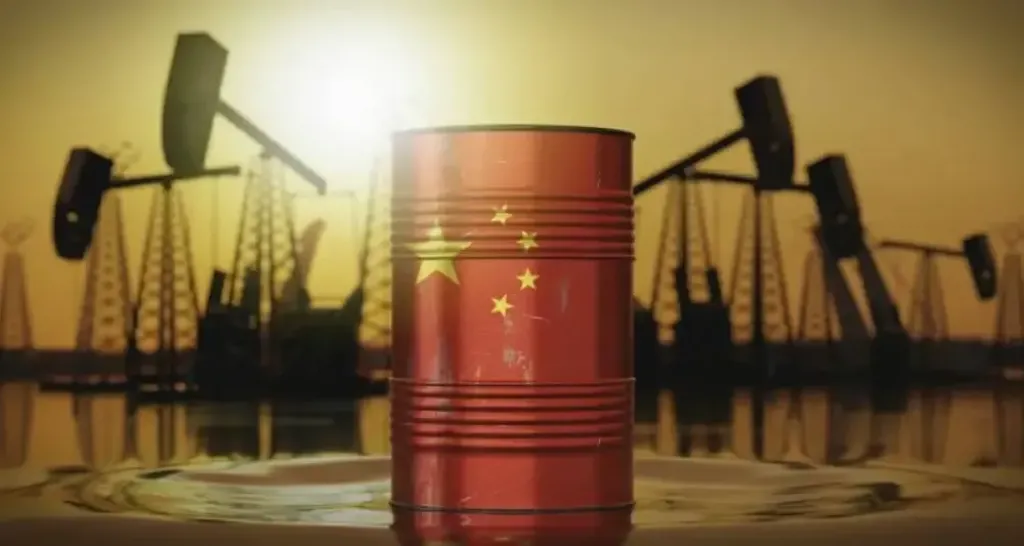
China’s oil demand is on track to record its third consecutive annual contraction in 2026, declining by approximately 600,000 barrels per day (bpd)—equivalent to an 8.9% year-on-year drop—driven by elevated crude prices and the rapid proliferation of electric vehicles, according to a research institute affiliated with state energy giant Sinopec.
The projected slump in consumption by the world’s largest crude importer comes as global benchmark markets face persistent headwinds from softening Chinese intake. This weakened baseline demand continues to limit the capacity of major supply disruptions—including severe impacts on oil transit through the strategic Strait of Hormuz amid conflict with Iran—to sustain crude prices at elevated levels.
Road Fuels Lead the Downward Trajectory
According to projections from Sinopec’s Economics and Development Research Institute, gasoline and diesel consumption will spearhead the decline across refined petroleum products this year:
Gasoline: Demand is expected to decrease by 8.7% year-on-year to approximately 149 million metric tons.
Diesel: Consumption is forecast to experience an even sharper downturn, tumbling 11.4% year-on-year to roughly 164 million metric tons.
This dual contraction underscores a decisive structural shift in domestic Chinese fuel consumption patterns, accelerated by the aggressive adoption of pure electric and hybrid vehicles alongside the dampening effect of high crude costs on conventional ground transportation.
Aviation Fuel Remains the Sole Outlier
In contrast to road transport fuels, jet fuel is forecast to remain the primary outlier defying the broader contraction.
The report projects jet fuel demand to rise 1.3% year-on-year in 2026, reaching approximately 41.55 million metric tons. The expansion is sustained by consistent momentum in commercial aviation and passenger air travel, rendering jet kerosene far more resilient than ground transport fuels facing direct competition from vehicular electrification.
related topics
 Oil Prices Climb as US-Iran Clashes in Strait of Hormuz Threaten Global...
 Global LNG Supply Rises in July Amid Hormuz Bottlenecks and Egypt Import...
 U.S. Gas Prices Set to Surpass $4 a Gallon Over Labor Day...
 Oil Ticks Down as Markets Weigh US-Iran Escalation and Strait of Hormuz...
 US Energy Secretary Chris Wright Eyes Doubling Venezuelan Crude Output via New...
 Global Bond Yields Surge as Oil Price Spikes and Rate Hike Fears...
 UAE Renewable Energy Capacity Surges 63-Fold, Reaching 8.2 GW in 2025
 Venezuelan Oil Eyed for US SPR Refill as Production Slowly Recovers Toward...
 Oil Prices Surge Over 3%, Brent Tops $91 Following US Strike on...
 Egypt’s Renewable Energy Capacity Rises 5.8% to 9.1 GW in FY 2025/2026
 Trump Announces Unprecedented Move to Secure 65 Billion Barrels of Venezuelan Oil...
 Oil Prices Drop Over 2% as Iran-Oman Talks Spark Hopes for Easing...