


From Egypt to Africa and the Gulf: How eFinance Is Taking Its Digital Payments Model Regional
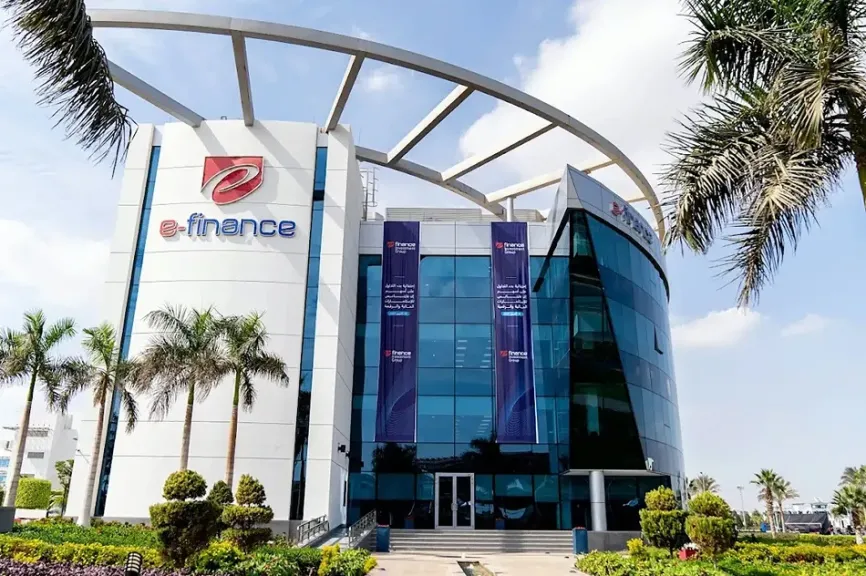
For two decades, eFinance built much of its business around one unusually complex assignment: creating and operating digital payment infrastructure capable of connecting governments, businesses and millions of users across Egypt.
The next challenge is different.
Instead of building another domestic platform, eFinance Investment Group is increasingly looking for ways to export the experience it accumulated in Egypt into African and Gulf markets where governments, banks and businesses are accelerating digital transformation but remain at very different stages of payment and financial-technology development.
That makes regional expansion less a story about opening offices abroad and more about identifying markets where eFinance can reproduce parts of the infrastructure model it already knows how to operate — government financial networks, payment platforms, card services, cloud infrastructure, agricultural technology and specialized digital marketplaces. eFinance itself says it has created a dedicated external-expansion division focused on African markets and international alliances.
Africa offers the widest gap — and potentially the biggest opportunity
Africa is the most obvious destination because the continent combines rapid adoption of digital financial services with large gaps in traditional banking infrastructure.
That creates opportunities beyond conventional card payments.
Countries seeking to digitize government collections, agricultural transactions, utilities, tax systems or subsidy programs need platforms capable of connecting multiple institutions rather than standalone consumer apps. That is close to the model eFinance developed in Egypt, where its flagship subsidiary operates end-to-end payment infrastructure supporting government-to-government, government-to-business, government-to-consumer and private-sector transactions.
The group has already started translating that experience into specific regional partnerships.
In Libya, eFinance signed an agreement with the Ministry of Finance aimed at replicating elements of Egypt’s government financial network, while in Tunisia it reached an agreement with the Agricultural Bank of Tunisia to apply experience developed in Egypt’s agricultural sector.
The group has also partnered with Cassava Technologies, whose footprint extends across Africa, to explore opportunities in digital transformation and financial inclusion across the continent. Under that relationship, eFinance contributes its experience in payments and digital infrastructure while Cassava brings local market reach and technology infrastructure across multiple African countries.
That partnership model is important because entering African markets rarely follows a single template. Regulatory structures, payment habits, banking penetration and government technology differ sharply from one country to another, making local alliances more practical than simply exporting an Egyptian product unchanged.
Payments are only one part of what eFinance can export
The group’s regional proposition is broader than electronic payments.
Its subsidiaries cover card issuance and processing, bill-payment aggregation, digital marketplaces, outsourcing, cloud services and sector-specific platforms, giving eFinance several possible entry points into a new market rather than requiring every expansion project to begin with a national payments network.
That flexibility is particularly relevant in Africa.
One country may need government-payment infrastructure, another may offer a stronger opportunity in agricultural digitization, while another could be more suitable for card processing, e-commerce or utility payments.
The group has already taken that approach through eAswaaq, which partnered with Post for Investment to establish an African e-commerce platform designed to develop and operate specialized digital marketplaces, including payment, financing and value-added services.
Its card-services arm, eCards, also explicitly identifies regional expansion as part of its strategy, positioning its technology and experience for African markets rather than limiting its business to Egypt.
The Gulf presents a different kind of opportunity
The Gulf is a more mature and capital-intensive market, so the opportunity there is unlikely to resemble Africa.
Saudi Arabia, the UAE and other Gulf markets already have sophisticated payment ecosystems, strong banking systems and rapidly growing fintech sectors. Competing there therefore requires more than basic digitization.
The opportunity for eFinance is more likely to lie in large-scale platforms, government technology, cloud infrastructure, specialized payment solutions and partnerships that combine its operating experience with local institutions.
Saudi Arabia has particular strategic significance for the group because the Public Investment Fund became eFinance’s largest shareholder after acquiring a 25% stake, giving the Egyptian company a direct institutional connection to the region’s largest economy.
That relationship does not automatically translate into contracts, but it creates a different foundation for expansion than eFinance has in most international markets.
The Gulf also offers an opportunity to export knowledge rather than simply infrastructure.
Egypt’s scale forced eFinance to build systems capable of processing very large transaction volumes across government and private-sector services, while operating in a market where cash, cards, wallets and government payments have had to coexist during a long transition toward digitization.
That operational experience can be valuable in Gulf markets increasingly focused on integrated government services, artificial intelligence, cloud migration and cashless economies.
Exporting a model, not copying Egypt
The most important question for eFinance is therefore not whether its Egyptian platforms can simply be installed elsewhere.
They cannot.
Every market has its own regulators, banking structures, data-residency requirements, digital identity systems and consumer behavior.
What eFinance can export is the architecture behind those platforms: how to connect government bodies with banks and payment providers, how to process transactions securely at scale, how to operate sector-specific digital ecosystems and how to integrate payments with services rather than treat them as a separate layer.
That distinction explains why partnerships are likely to remain central to the group’s international strategy.
Its alliance with Cassava gives it an African technology network, its agreements in Libya and Tunisia provide country-specific entry points, and its Saudi shareholder creates a potential bridge into the Gulf. At the same time, partnerships with global payments companies such as Visa strengthen the group’s capabilities in areas including card issuance, merchant acceptance and digital payment services.
The regional test begins after the first contract
eFinance already has one advantage many fintech companies trying to expand internationally do not: it is not exporting an untested product.
Its core businesses grew out of infrastructure designed for national-scale use in Egypt, beginning with the government financial network in 2005 and later expanding into a broader ecosystem of digital payments, cloud services and sector-specific platforms.
But that experience also creates the central test for the next phase.
Success abroad will depend on whether eFinance can break its Egyptian experience into adaptable pieces rather than attempting to reproduce the entire model in every country.
Africa offers markets where basic financial and government digitization still has considerable room to grow. The Gulf offers deeper pockets but tougher competition and more advanced digital infrastructure.
If eFinance can tailor its proposition to both, its regional expansion could turn the company from an operator built around Egypt’s digital transformation into an exporter of the infrastructure behind it.