


Strait of Hormuz Disruptions Cut Middle East LNG Supply by 7.1 BCM Monthly Amid Global Market Strain
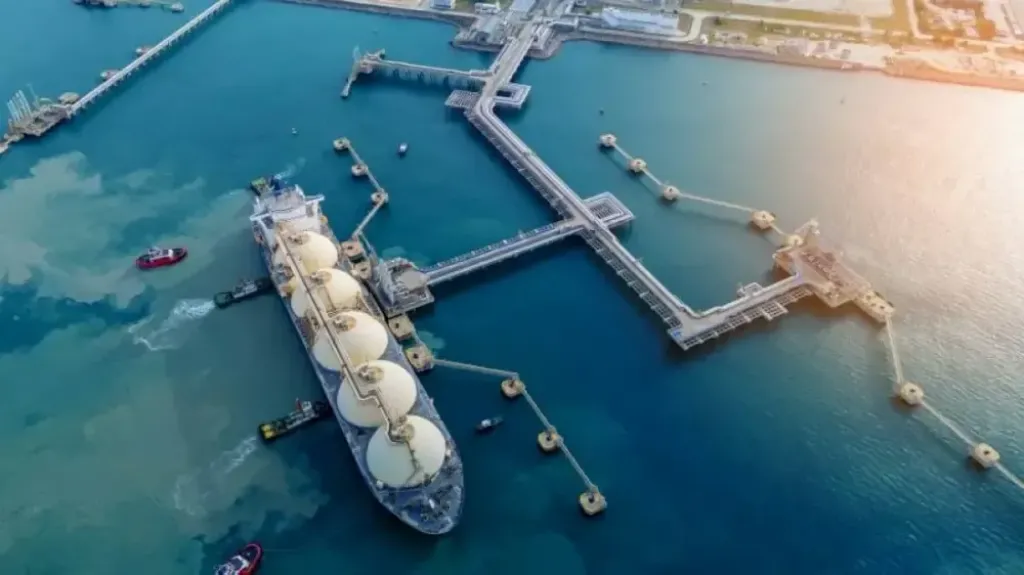
Global natural gas markets entered the second half of 2026 facing an increasingly complex supply-demand equation, as persistent disruptions to maritime traffic through the Strait of Hormuz severely impaired liquefied natural gas (LNG) exports from the Middle East. With market assumptions of a rapid return to normalized LNG flows now dispelled, the crisis continues to pressure European and Asian gas benchmarks and complicate European storage refill targets in an already tight global market.
According to a report by the Oxford Institute for Energy Studies (OIES), the effective closure and severe disruption of the Strait of Hormuz led to a steep decline in Middle East LNG exports. While trade did not halt entirely—with some deliveries fulfilled within the Arabian Gulf and others navigating the strait intermittently—actual volumes reaching destination import markets averaged just 1.8 billion cubic meters (bcm) per month between May and July, with July showing a noticeable uptick.
This represents a net supply loss of approximately 7.1 bcm per month compared to the same period last year. However, the price impact was somewhat moderated as non-regional alternative producers expanded output to bridge a significant portion of the deficit.
Global LNG Market & Flow Dynamics (May–July 2026 Overview)
The table below outlines the core supply and demand metrics highlighted by the Oxford Institute for Energy Studies:
Dimension / MetricMarket Data & Regional Impact
Middle East Supply Loss~7.1 bcm per month (YoY deficit)
Actual Reached Deliveries~1.8 bcm per month average (May–July)
Total Global LNG ImportsDeclined by ~2.0 bcm YoY across May–July
Non-EU/UK Demand GrowthRose by 4.8 bcm (~1.6 bcm/month) vs. same period in 2025
Leading Importer GrowthEgypt recorded the largest YoY import surge to offset falling domestic output
Sharpest Demand DeclinesEurope, Pakistan, Kuwait, and Bahrain (Hormuz transit constraints)
Demand Destruction and Regional Shifts
The crisis has evolved beyond supply bottlenecks, triggering shifts in global demand patterns under the weight of sustained price volatility:
Mixed Asian Demand: Broad Asian markets maintained baseline growth, despite noticeable import contractions across South Korea, Singapore, and Hong Kong.
Egypt’s Import Surge: Egypt registered the largest year-on-year increase in LNG imports, utilizing seaborne cargoes to compensate for declines in domestic gas production.
European Divergence: While total European imports declined, heavily LNG-reliant countries including Portugal, Lithuania, and Greece increased their intake, alongside rising demand across parts of Central and South America.
Regional Bottlenecks: Gulf-based importers like Kuwait and Bahrain faced localized supply squeezes due to the operational complexities of receiving shipments through the strait.
Excluding the European Union and the United Kingdom, global LNG import demand grew by 4.8 bcm across the May–July period, reflecting structural energy shifts as alternative markets compete for uncommitted global cargoes.