


Brazil Pioneers Tokenized Cattle as Collateral for Agricultural Financing Using AI and Blockchain
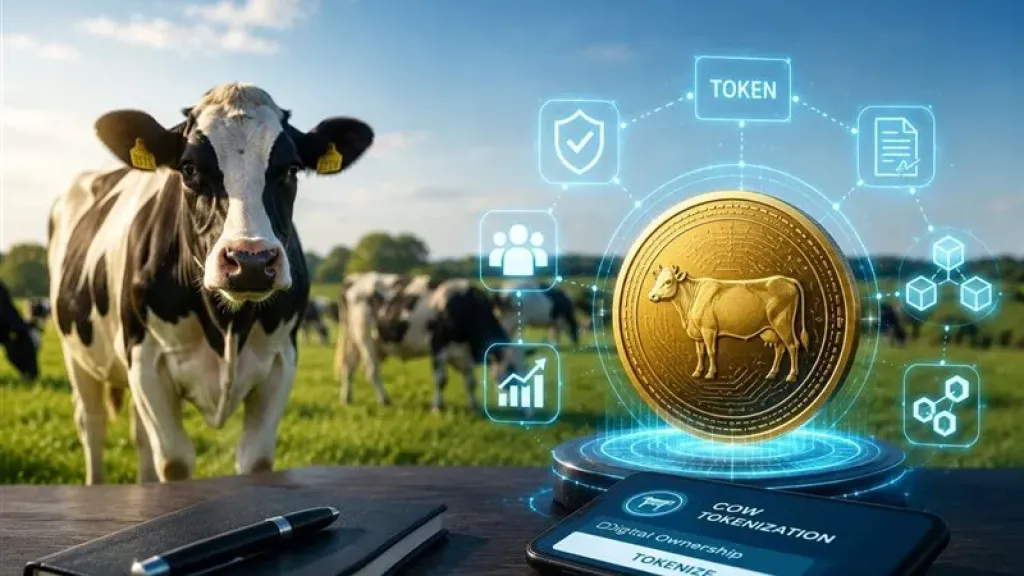
In a landmark convergence of FinTech and agriculture, Brazil has recorded its first official transaction using tokenized livestock as collateral for a commercial loan. The "Fazenda Engenho Velho" farm in Imbituva, Paraná, utilized a herd of 10 cows to secure a BRL 100,000 credit line, pioneering a model that blends blockchain infrastructure with artificial intelligence.
The transaction involved 10 cows with an estimated total value of BRL 120,000 (approximately $23,310). These live assets were used to back a financial agricultural credit certificate worth BRL 100,000 (approximately $19,420), issued by BMB, a direct credit institution authorized by the Brazilian Central Bank.
Following the origination, BMB sold the credit rights to the Target Receivables Investment Fund, which subsequently registered the operation on the Brazilian B3 exchange, seamlessly bridging traditional farming assets with digital capital markets.
How the Tokenization and AI Integration Works
The operation relied on advanced tokenization technology, assigning each cow a unique, encrypted digital identity. This was achieved through continuous data collection:
Smart Collars: Each animal was equipped with an AI-powered smart collar developed by AgriTech firm CowMed.
Real-Time Data: The collars track the animal's location, behavioral patterns, and vital health metrics.
Tamper-Proof ID: The gathered data is converted into a secure digital identifier directly linked to the financing contract, allowing lenders to verify the asset's existence and condition without relying entirely on physical field inspections.
Overcoming Financial and Industry Hurdles
Historically, financial institutions heavily discount live cattle collateral—often by up to 60%—due to the inherent risks of livestock mortality and the logistical difficulties of constant monitoring. By linking each animal to an updated digital identity, this new ecosystem drastically mitigates financing risks, enhances transparency, and improves credit terms for farmers.
This financial innovation comes at a critical time for Brazil’s agricultural sector, which is navigating severe economic headwinds. Agricultural bankruptcy protection filings surged to 1,990 requests in 2025, a sharp increase from 534 in 2023, driven by high interest rates, fluctuating commodity prices, and adverse climate conditions.
Paving the Way for Live Asset Markets
Thiago Martins, CEO of CowMed, highlighted that the company successfully transformed physical livestock into trackable digital assets. He noted that this model integrates live assets into the formal financial system, granting farmers much-needed access to credit amid industry-wide constraints.
This milestone represents a significant evolution in financial technology. It demonstrates that asset tokenization is no longer confined to real estate or traditional securities but can be effectively applied to living agricultural assets, potentially laying the groundwork for a broader digital agricultural financing market.
related topics
 Saudi Central Bank Licenses Mala'a Information Technology for Open Banking Payment Services
 FinTech Hive Event Highlights Need for Robust Tech Foundations to Scale Agentic...
 Valu Partners with 2B Egypt to Offer Zero-Interest, Zero-Down Payment Installments for...
 Mubadala Capital Opens Blockchain-Based Access to Private Markets Fund
 Saudi Arabia's Venture House Ventures Invests $500,000 in Five Tech Startups from...
 Bahrain's Benefit Launches 'Tawajjuh' Summer Program to Empower Youth in FinTech
 NVIDIA Bets Big on FinTech with $196 Million Investment in British Neobank...
 Deep Finance Capital Launches in DIFC as the First AI-Native Asset Management...
 MENA Startups Raise $12.7 Million in a Week, Led by Saudi AI...
 Visa Launches Institutional 'Visa Stablecoin Platform' to Accelerate Digital Asset Integration
 Erada Finance and Ministry of Supply Explore Financing Solutions for 'Carry On'...
 Revolut Secures Preliminary VARA Approval to Offer Virtual Asset Services in Dubai