


Global Energy Markets Shaken as “Operation Epic Fury” Triggers Oil and Gas Price Surge
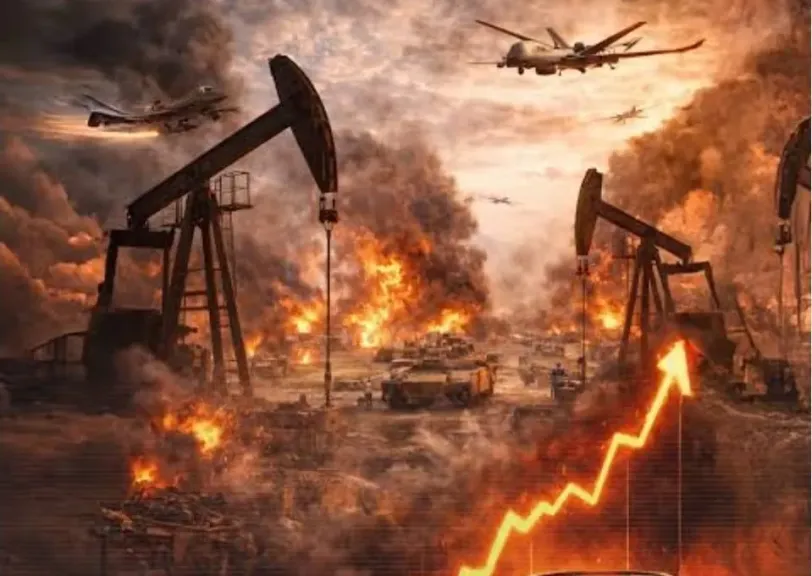
Global energy markets have entered a period of severe volatility following the launch of “Operation Epic Fury,” a coordinated military strike carried out by the United States and Israel against targets inside Iran. The attacks triggered immediate jumps in oil and gas prices and raised fears of a structural supply crisis in the global energy market.
Reports published on March 5, 2026 indicate that the conflict has evolved beyond a temporary military event into a real stress test that has exposed the fragility of global energy infrastructure after years of underinvestment in the sector.
According to a report by PitchBook, energy prices surged rapidly after the attacks began. Brent crude climbed by 8% to $78 per barrel, while West Texas Intermediate rose 11% to $75 per barrel. Analysts warn that continued military escalation could push Brent prices above $100 per barrel, potentially reigniting global inflation and increasing the risk of slower economic growth or recession in several major economies.
The turmoil quickly spread to natural gas markets. Futures at the Title Transfer Facility surged 30% to $12.50 per million British thermal units, while the Japan Korea Marker jumped 45% to above $15, adding new pressure on Europe and Asia, which are still coping with the long-term effects of reduced Russian gas supplies.
The most sensitive factor in the crisis is the Strait of Hormuz, through which nearly 20% of the world’s oil and liquefied natural gas supplies pass each day. Iran’s Revolutionary Guard announced the closure of the strait and warned that any vessel attempting to cross would face potential targeting.
As a result, nearly 750 commercial ships have accumulated while waiting to pass through the waterway, representing roughly 10% of the global container fleet. Although alternative routes exist — such as Saudi Arabia’s East–West pipeline and Abu Dhabi’s pipeline system — their combined capacity of 6.5 million barrels per day replaces only about one-third of the normal trade volume passing through the strait, leaving global markets exposed to a significant supply gap.
The conflict’s impact has extended across the regional energy infrastructure. Saudi Aramco temporarily shut down the Ras Tanura refinery, one of the largest refining facilities in the region, as a precautionary measure following the interception of a drone attack nearby.
In a more significant development, Qatar announced a full suspension of its liquefied natural gas production after drone strikes targeted facilities linked to the sector. The disruption represents a major shock to global markets, as Qatar accounts for roughly 20% of global LNG supply.
Production has also been halted at several Israeli gas fields, including the Leviathan gas field operated by Chevron, further increasing uncertainty across energy markets in the Eastern Mediterranean.
On the global supply front, the OPEC+ is facing mounting pressure to stabilize the market. Although the group pledged to increase output, the rise has effectively been offset by a forced reduction of about 1.5 million barrels per day in Iraqi production due to export constraints and limited storage capacity.
Data suggest that OPEC’s effective spare capacity ranges between 2.5 and 3 million barrels per day, far below the widely cited theoretical figure of 5.3 million barrels per day.
This situation places significant pressure on Saudi Arabia and United Arab Emirates to boost production in order to stabilize markets. Meanwhile, investors are closely watching the response of the U.S. shale sector, which produced about 13.7 million barrels per day before the crisis, with expectations that output could rise if high prices encourage further drilling and investment.
Analysts believe the conflict will likely accelerate global investment in oil and gas regardless of the war’s military outcome. In particular, new capital is expected to flow into upstream exploration and production, oilfield services, and supply chain infrastructure.
Natural gas is also expected to remain a crucial pillar of the global energy system for decades, supported by expanding LNG infrastructure projects to meet rising demand in Asia and the growing electricity needs of AI data centers.
The trajectory of the crisis will largely depend on the conflict’s duration and political objectives. While U.S. President Donald Trump suggested that military operations could last four to five weeks, Israeli assessments indicate the campaign could continue longer with broader strategic objectives inside Iran.
If the conflict ends quickly, prices may gradually decline, though geopolitical risk premiums will likely remain elevated. However, a prolonged conflict or political instability in Iran could remove 1 to 2 million barrels per day of Iranian oil production from global markets in the long term.
Such a scenario would force energy companies to redirect large investments toward alternative supply regions, including U.S. shale basins, deepwater projects in West Africa, and offshore developments in Guyana.
Ultimately, the Iran war of 2026 may mark a turning point for global energy markets. Years of capital discipline and concerns over the transition to clean energy have reduced investment in oil and gas, leaving the global system less capable of absorbing major supply shocks.
Rebuilding Iran’s energy infrastructure and securing global supply chains are therefore expected to become major challenges for governments and investors in the coming years.