


Lubna Helal: Institutional Partnerships Are Key to Empowering Youth in the Age of Artificial Intelligence
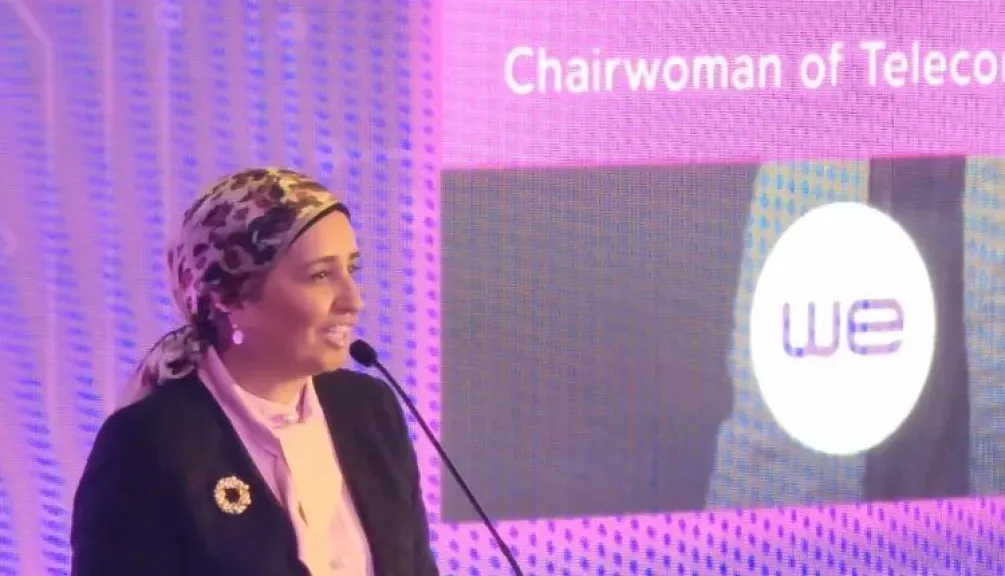
Lubna Helal, Chairwoman of Telecom Egypt, emphasized that the rapid acceleration of artificial intelligence technologies and successive industrial revolutions necessitates the adoption of a clear human-centered and ethical framework alongside technological and material advancement, in order to ensure balanced and sustainable development.
Speaking during her keynote address at the STEM & AI Challenge Summit 2025, Helal stressed that engagement with the profound transformations associated with the Fourth and Fifth Industrial Revolutions should not be limited to tools, systems, and applications alone. Rather, she underlined the importance of a deeper awareness of how these shifts are reshaping everyday life, societal structures, and human relationships, particularly as machines evolve from supportive tools into influential partners in decision-making processes.
Helal explained that her participation in the summit came from more than one perspective. She attended both in her capacity as Chairwoman of Telecom Egypt, which joined the forum as a strategic partner within the framework of its corporate social responsibility commitments, and as a member of the forum’s board. In this context, she highlighted the growing importance of sustainable partnerships between the private sector, academic institutions, and civil society organizations in building resilient knowledge-based ecosystems.
Reflecting on a previous experience dating back more than six years, Helal recalled that the same venue had once witnessed the launch of one of the most prominent partnerships between academic institutions and the banking sector, supported by the Central Bank of Egypt and several operating banks. This collaboration paved the way for a landmark initiative launched in early 2019, which delivered tangible results in fostering entrepreneurship and supporting startup incubation across Egypt.
She also commended the ongoing role played by institutions supporting small and medium-sized enterprises, noting that the progress achieved on the ground clearly demonstrates the critical value of institutional integration in building a more sustainable and inclusive business environment.
Addressing the future of technology, Helal pointed out that while the mentoring and guidance programs featured at the conference reflect strong attention to professional and economic dimensions, there remains a noticeable gap in addressing the human and ethical implications of upcoming technological transformations. She stressed that this gap requires deeper dialogue and structured engagement as the world moves closer to the contours of the Fifth Industrial Revolution.
Helal further asserted that young people are no longer merely a promise for the future, but have become central actors in today’s landscape, assuming leadership roles and participating directly in decision-making across politics, economics, and business. This shift, she noted, places a direct responsibility on youth to shape the evolving relationship between humans and technology.
She concluded by calling for concerted efforts among state institutions, universities, and young innovators to develop a clear and shared vision for this relationship, alongside the formulation of an ethical code that keeps pace with rapid technological advancement. Such a framework, she said, is essential given that artificial intelligence and advanced technologies are no longer abstract concepts, but lived realities whose impact will extend to future generations.
Helal also stressed that Egypt is required to play an active and influential role in shaping the global technological future, emphasizing that the transition from being a passive recipient to a producer of knowledge, content, and strategic vision has become an urgent necessity in the coming phase.