Business and Technology Leaders at Cairo ICT 2026 Call for National Program to Boost Infrastructure and Attract AI Investments
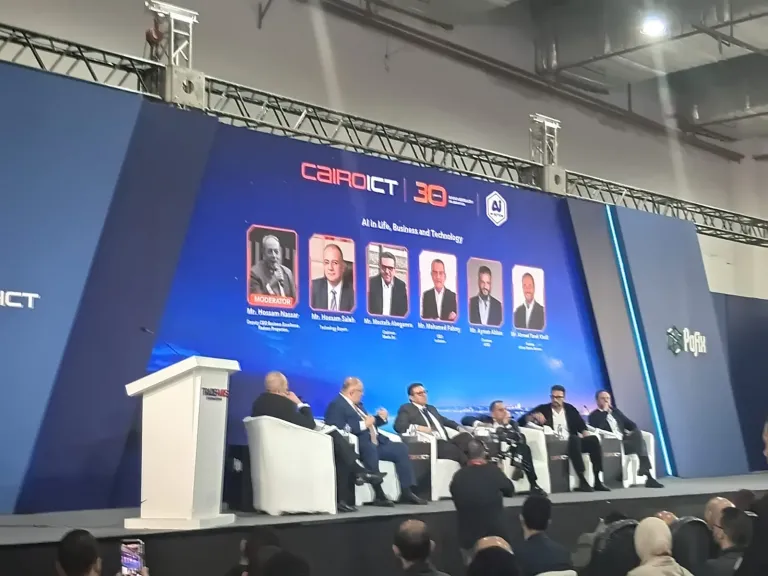
Business leaders and technology experts have called for a comprehensive national artificial intelligence program to strengthen Egypt’s digital infrastructure, attract international investments, develop local talent and establish clear frameworks for the responsible use of AI, supporting the competitiveness of the Egyptian market regionally and globally.
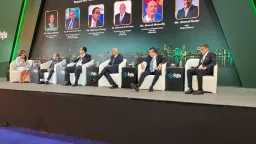
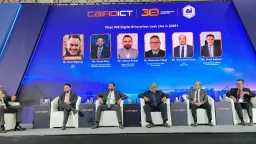
The call came during a panel discussion on the third day of the 30th edition of the Middle East and Africa International Technology Exhibition and Conference, Cairo ICT 2026. Participants included Ayman Abbas, Chairman of Ads Holding Group; Ahmed Tarek Khalil, Chairman of Allianz Middle East Ship Management; Hossam Saleh, a technology, media and telecommunications expert; Mohamed Fahmy, Chairman of Ivolution; and Mostafa Abu Gemra, Founder, Chairman and CEO of MediaSci.
Ayman Abbas: Egypt Needs a National Program to Attract Global AI Investments
Ayman Abbas said Egypt has the human capital and creative capabilities needed to compete in artificial intelligence, expressing expectations that Egyptian entrepreneurs will launch businesses across various AI fields and applications in the coming period.
He noted that the main challenge is not a shortage of talent, but rather the need for stronger regulation and a clear vision for managing the sector. He added that national security and political considerations should remain key priorities when addressing AI technologies.
Abbas said Egypt still needs to strengthen its position in the global AI race, highlighting manufacturing and data centers as essential pillars of modern technology infrastructure. He compared data centers to power stations that supply different sectors with the energy required to operate.
He also pointed out that Egypt’s data center capacity remains below levels in countries such as India, underscoring the need to expand investment in the sector.
Abbas called for a comprehensive national AI program, supported by additional incentives to attract international companies to Egypt and equip young people with the required skills. He welcomed the establishment of technology schools while stressing the importance of continued support.
He also warned against the absence of a values-based framework governing AI applications, calling for safeguards that protect companies and institutions from potential risks while enabling safe and sustainable adoption.
Ahmed Tarek Khalil: AI Will Create New Markets Without Replacing Human Capabilities
Ahmed Tarek Khalil said Egyptians possess significant creative and innovative potential, stating that 100% of Egyptians have the ability to innovate and create. He stressed the importance of harnessing these capabilities to develop AI technologies and applications.
He expects technological developments to accelerate over the next three to four years, warning that individuals and institutions that fail to keep pace with AI tools could face significant losses. He noted that AI is helping create new markets and open up different business opportunities.
Khalil cited the evolution of autonomous ship navigation systems since the 1980s, pointing to modern models implemented in Saudi Arabia that allow ships to sail without captains.
However, he stressed that human intervention remains essential when systems are breached or technical problems require control to be restored. He added that intelligence should not be measured solely through IQ scores, as human beings retain distinct cognitive and creative abilities.
Hossam Saleh: AI Will Become as Essential as Electricity and Energy
Hossam Saleh described artificial intelligence as the next major source of technological power, comparing its expected impact on everyday life to that of electricity and energy. He said AI is becoming a common and essential component across economic sectors.
Saleh explained that AI has reshaped the business environment and can help individuals use their time more efficiently. He added that Egypt is well positioned to keep pace with these developments, noting that Egyptian companies have already developed technology products and services capable of competing internationally.
At the same time, he cautioned against adopting new technologies without careful assessment, pointing out that certain services and applications could be used to influence people's thinking and decisions.
He emphasized that people will remain central to directing technology, thanks to their awareness and ability to reassess objectives and determine the purposes that technological tools should serve.
Mohamed Fahmy: AI Should Be Used Within Clear Limits
Mohamed Fahmy noted that artificial intelligence is not a newly developed technology. Its research roots date back to the 1950s, particularly 1958, followed by a major breakthrough in 2008 and widespread adoption after the launch of ChatGPT in 2022.
He said one of the current challenges is that some individuals and institutions use AI applications without sufficient understanding of their terminology and tools. While AI is fundamentally an analytical tool, its adoption within some institutions remains limited, reaching no more than 5% in certain cases.
Fahmy stressed the need to expand technology education and prepare qualified professionals to keep pace with global developments. He also warned against overstating AI capabilities or relying on it entirely.
Instead, he called for using AI tools within clear controls and defined limits, in line with specific objectives that deliver tangible value to institutions.
Mostafa Abu Gemra: Data and Youth Creativity Strengthen Egypt’s AI Potential
Mostafa Abu Gemra said Egypt has significant opportunities to expand AI applications in both business-to-business (B2B) and business-to-consumer (B2C) markets, supported by its extensive data resources and the creative capabilities of young people, particularly within startups.
He explained that technology adoption typically develops gradually, citing the growth of automated teller machines (ATMs) in Egypt from around 100 machines in the early stages to much larger numbers today. He expressed confidence that AI applications will achieve similarly broad adoption among Egyptians in the coming years.
Abu Gemra added that AI can understand language and generate millions of potential solutions to problems in a short time. However, he stressed that it lacks genuine human creativity, making it important not to accept all AI outputs without scrutiny and to ensure that the technology complements human innovation.
Cairo ICT 2026 Highlights Practical AI Applications and Digital Infrastructure
Cairo ICT is one of the region’s leading events for the telecommunications and information technology industries. Its 30th edition is being held under the patronage of the Prime Minister, with a focus on practical AI applications to improve services, enhance business efficiency and support innovation across sectors.
The accompanying events include the third edition of the Artificial Intelligence, Data Centers and Cloud Computing Exhibition and Conference, AIDC²; the 13th edition of the Digital Payments and Financial Inclusion Exhibition and Conference, PAFIX, held under the auspices of the Central Bank of Egypt; and the sixth edition of Connecta, dedicated to gaming, smart devices and entertainment technology.
The Innovation Arena also provides startups and entrepreneurs with a platform to showcase their solutions and products and connect with investors, business partners and organizations supporting innovation.
related topics
 Cairo ICT 2026 Experts: Decision Intelligence Is Shaping the Next Generation of...
 Digital Transformation and Investment Expansion: Launch of the 20th ”People and Banks”...
 ”Cairo ICT 2026”: Central Bank of Egypt Launches the Second Edition of...
 ”PAFIX 2026”: Artificial Intelligence Shapes the Future of Payments and Banking Services
 ”2035 Enterprises”: AI Shapes the Future of Companies at Cairo ICT 2026
 Drive Finance Successfully Completes EGP 1.5 Billion Bond Issuance to Support Growth...
 Egypt Presents Its Digital Vision, Renews ITU Council Candidacy, and Intensifies Bilateral...
 Launch of the 5th Cohort of ”Creativa Incubation Program” with 10.8 Million...
 Banque du Caire Leads EGP 3.2 Billion Banking Consortium Financing for UBL...
 Women Technology Leaders at Cairo ICT 2026: AI Empowers Female Entrepreneurs and...
 Infinix Egypt Returns to Cairo ICT 2026 for the Second Consecutive Year,...
 Lulu Group Expands Dubai Presence with New Hypermarket and Three Projects in...