


Orange Egypt and Nokia Turn 28-Year Partnership Toward AI-Driven, Greener Networks
After nearly three decades of working together through successive generations of mobile technology, Orange Egypt and Nokia are shifting their partnership toward a different challenge: building networks that can manage themselves more intelligently, consume less energy and support the transition to 5G and beyond.
The relationship dates back 28 years and has accompanied Orange Egypt through GSM, 3G, 4G and 5G. But its next phase is increasingly focused less on individual generations of mobile technology and more on how the network itself is operated.
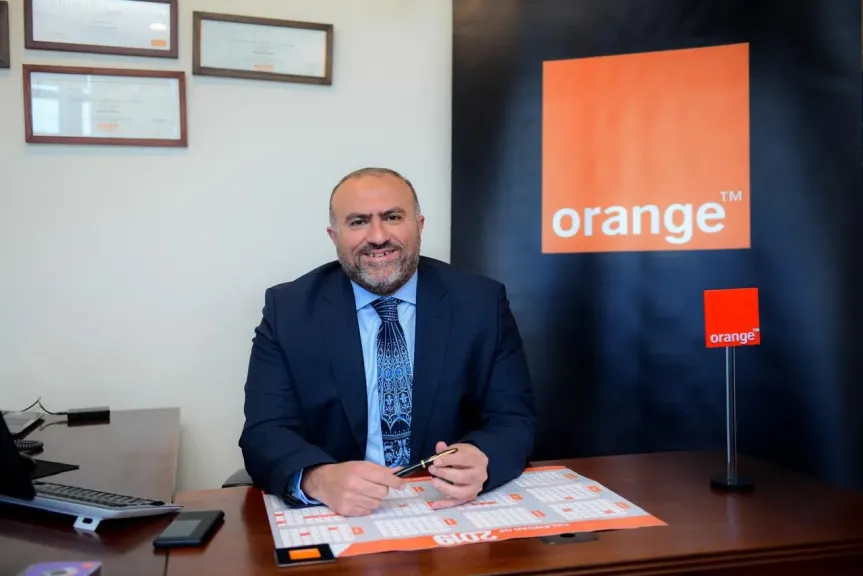
In an interview with Telecom Review Africa, Dr. Ayman Amiri, CTIO of Orange Egypt, said the company is working to create a network architecture that is more software-driven, automated and capable of using AI to improve performance and respond faster to changing demand.
“Together, we have successfully navigated every major technology transition—from GSM to 3G, 4G, 5G, and today’s network modernization,” Amiri said.
He added that the long relationship has also created “a strong foundation for future-ready, software-driven, and AI-enabled networks.”
AI moves deeper into network operations
Orange Egypt’s current transformation program is built around three main areas: network modernization and automation, maximizing value, and operational excellence.
AI is increasingly being used across those areas to optimize network performance, support predictive maintenance and automate operational processes.
The operator is also directing additional capacity toward locations experiencing heavier data demand, an increasingly important issue as 4G usage continues to grow and 5G adoption expands.
According to Amiri, the combination of AI-driven optimization, predictive maintenance, automation and targeted capacity expansion has helped improve network availability, reduce congestion and accelerate incident resolution.
The broader goal is to move from a largely reactive network model to one that can identify potential problems earlier and respond before service quality is affected.
That transition is becoming increasingly important as telecom networks grow more complex, combining 4G, 5G and increasingly cloud-based architectures.
A telecom site that no longer needs diesel
One of the more tangible results of the Orange-Nokia partnership has come not from radio technology, but from energy.
The two companies tested a renewable-energy model at Orange Egypt’s KS-HK-BATTAH network site, enabling it to operate entirely on solar power supported by lithium battery storage.
The system allowed the conventional 27 KVA diesel generator to be switched off completely, while maintaining network performance and service continuity.
According to the project figures, the change reduced diesel consumption by around 55 to 60 liters per day and removed the maintenance requirements associated with the generator.
The significance of the trial goes beyond the savings at a single site.
For mobile operators running large numbers of geographically distributed network locations, energy consumption and backup power represent major operational costs.
If the model proves practical at scale, similar deployments could reduce both operating expenses and reliance on diesel at selected sites.
Egypt could become a test bed for wider Orange markets
The partnership also has implications outside Egypt.
Mikko Lavanti, President of Nokia Middle East and Africa, said successful technologies tested and certified with Orange Egypt could potentially be scaled into other Orange markets across Africa and the Middle East.
That gives the Egyptian network a role beyond its domestic customer base.
With Africa facing rapid growth in mobile data demand alongside infrastructure and energy constraints, technologies proven in Egypt could provide a reference point for markets facing similar challenges.
The solar-powered site is one early example of that approach.
From adding capacity to making networks smarter
The next phase of network competition is no longer only about adding more base stations or increasing radio capacity.
Operators are increasingly looking at how AI can predict failures, dynamically allocate resources, reduce energy consumption and improve service quality without a proportional increase in operating complexity.
For Orange Egypt, that means combining continued investment in 5G with greater automation, more intelligent network management and a stronger focus on energy efficiency.
“Working closely with Nokia, our objective is to build a scalable, sustainable, and future-ready network capable of supporting growing data demand and enabling a smooth evolution toward 5G and beyond,” Amiri said.
After 28 years, the Orange Egypt-Nokia relationship is therefore entering a phase where the technology generation itself may be less important than how intelligently the network supporting it can operate.