


Vodafone, Elsewedy and Cassava Plan $1 Billion Data Center Push as Egypt Builds Its AI Infrastructure
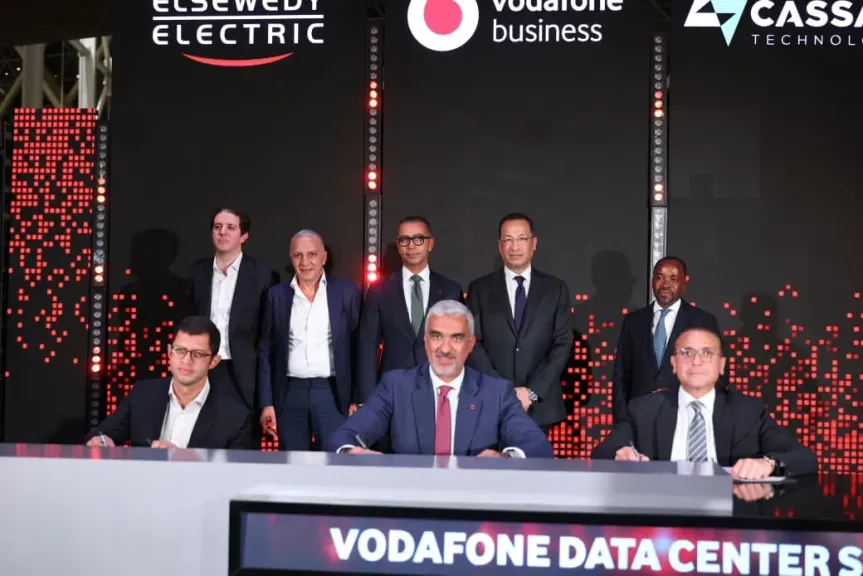
Egypt is preparing for one of its largest private-sector investments in digital infrastructure, with Vodafone Business, Elsewedy Electric and Cassava Technologies laying out plans for a data-center platform that could eventually reach 200MW of capacity and $1 billion in investment, alongside a separate Nvidia-powered sovereign AI infrastructure project.
The two announcements put data centers and advanced computing — rather than traditional telecom connectivity — at the center of Vodafone Egypt’s next infrastructure push.
Under the first partnership, the three companies will establish Africa Data Centres Egypt, a new platform that is expected to begin with 20MW of capacity during its first three years before scaling toward a targeted 200MW.
The initial phase is expected to attract around $200 million in foreign direct investment, while total investment could rise to approximately $1 billion if the development reaches its planned full capacity.
At that scale, the project would represent a significant increase in the computing infrastructure available locally to enterprises, international technology companies and cloud providers looking to operate from Egypt.
The signing took place in Cairo in the presence of Raafat Hendy, Egypt’s Minister of Communications and Information Technology, together with senior executives from Vodafone Egypt, Elsewedy Electric and Cassava Technologies.
Egypt wants to host more of the data that passes through it
Egypt has long occupied a strategic position in international connectivity because of the large number of subsea cables crossing the country, but the bigger economic opportunity now lies in converting that connectivity advantage into local data storage, processing and computing capacity.
That is the gap the new project is attempting to address.
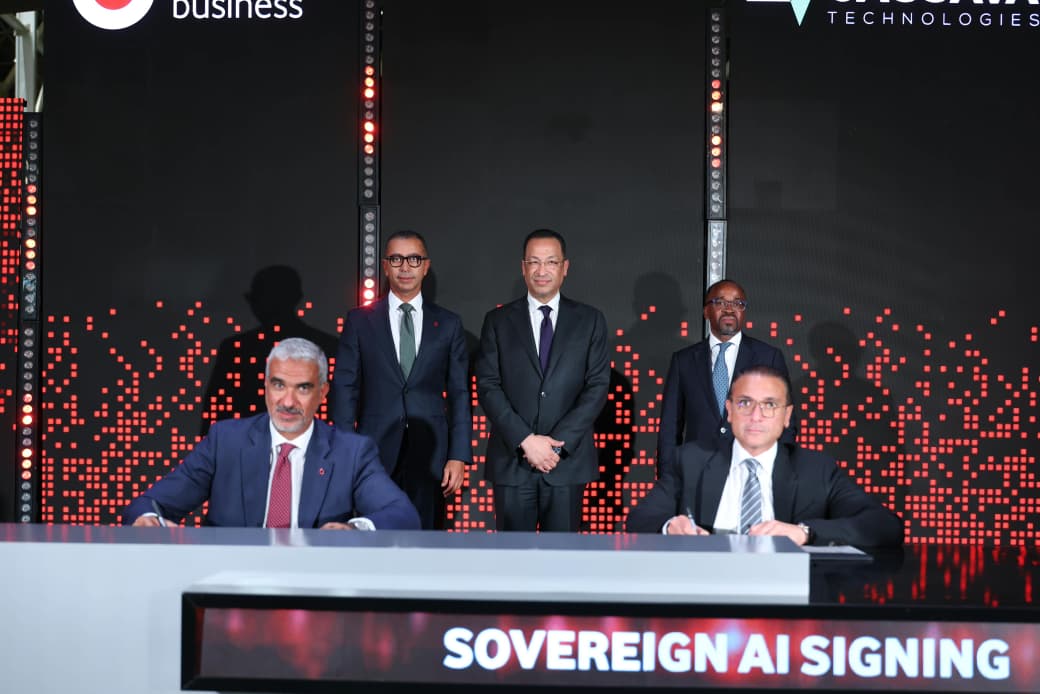
The development combines Vodafone Business’s enterprise and cloud capabilities with Elsewedy Electric’s experience in power and large-scale infrastructure and Cassava Technologies’ data-center operations across Africa.
Mohamed AbdAllah, CEO of Vodafone Egypt and Vodacom International Markets, said the expansion of cloud computing and AI has made local data-hosting and processing capacity an increasingly important measure of a country’s ability to compete for technology investment.
He said the projects are intended to help Egypt attract investment, expand digital exports and create technology jobs while building the infrastructure needed for more advanced digital services.
Vodafone Egypt says it has invested more than EGP 125 billion in the country over 28 years and plans to invest more than EGP 20 billion during fiscal year 2026/2027.
The power challenge brings Elsewedy into the equation
Building a 200MW data-center platform is as much an energy project as a technology project.
Large data centers require highly reliable electricity supply, redundancy, cooling and infrastructure capable of supporting continuous workloads, particularly as AI increases power density dramatically.
That makes Elsewedy Electric a particularly important part of the partnership.
Ahmed El Sewedy, President and CEO of Elsewedy Electric, said Egypt has an opportunity to capture a larger share of the global data-center market by combining its geographic advantages with reliable power infrastructure and the ability to execute large projects.
Elsewedy also sees the project as a potential platform for expansion elsewhere in Africa if the Egyptian model proves successful.
The partners expect the first phase to create up to 200 direct jobs and around 2,000 indirect jobs, with Egyptian engineers and technical staff involved in construction, operation and management.
The second project is about AI compute, not conventional hosting
The other announcement addresses a newer infrastructure bottleneck.
Vodafone Business and Cassava Technologies are planning an AI data-center platform that would make advanced GPU computing capacity available inside Egypt, allowing organizations to develop and run AI applications without relying entirely on computing infrastructure hosted abroad.
The project will draw on Nvidia accelerated-computing technology through Cassava, which describes itself as Africa’s first NVIDIA Cloud Partner.
The model includes GPU-as-a-Service, allowing companies to access high-performance processors as a service rather than making the large upfront investment required to build their own AI clusters.
For banks, government agencies, telecom operators and other organizations dealing with sensitive information, the more important element may be where that computing takes place.
Local infrastructure can allow data and AI workloads to remain inside Egypt, subject to domestic regulatory and security requirements.
Sovereign AI becomes an infrastructure question
The term “sovereign AI” is increasingly being used by governments and technology companies to describe the ability of a country to develop and operate AI while retaining greater control over data, infrastructure and computing resources.
In practical terms, that requires much more than locally developed software.
It requires GPUs, data centers, high-capacity networks, power infrastructure, cybersecurity and rules governing where critical information can be stored and processed.
Mahmoud ElKhateeb, Vodafone Business Director at Vodafone Egypt, said the new infrastructure would give organizations access to GPU-as-a-Service locally and enable them to build and operate AI applications at scale while keeping data inside Egypt.
That could become increasingly important as AI moves from experimental deployments into production systems handling corporate, financial and government information.
Cassava expands its African AI infrastructure strategy into Egypt
The partnership also fits into a wider strategy already being pursued by Cassava Technologies.

The company has been rolling out an Nvidia-powered AI infrastructure network across Africa, with deployments and expansion plans covering South Africa, Nigeria, Kenya, Egypt and Morocco.
Hardy Pemhiwa, President and Group CEO of Cassava Technologies, said Egypt is strategically positioned within the company’s plans to build digital infrastructure across Africa and the Middle East.
Meanwhile, Ahmed El Beheiry, Executive Vice President, Group COO and Group Chief Technology & AI Officer at Cassava Technologies, has been leading the group’s push to expand sovereign AI infrastructure and Nvidia-powered computing capabilities across the continent.
That distinction matters because El Beheiry’s current role is considerably broader than a conventional AI business-unit leadership position.
Egypt is preparing a national data-center strategy
The private-sector announcements also come as the Egyptian government begins treating data centers as a standalone infrastructure industry.
Hendy said the Ministry of Communications and Information Technology is developing an integrated national data-center strategy to estimate future storage and computing requirements, improve the regulatory environment and design incentives capable of attracting domestic and international investment.
The ministry also wants to expand local expertise in building, operating and managing data centers while strengthening the ability to host critical applications and information inside the country.
For Egypt, the broader ambition is to capture more economic value from its position on global data routes.
The country already carries a significant share of international digital traffic through its geography and subsea cable infrastructure. The next challenge is to convince cloud providers, AI companies and large enterprises not simply to route traffic through Egypt, but to place computing infrastructure there.
The Vodafone–Elsewedy–Cassava projects represent a sizeable bet on that transition.
If the 200MW target is eventually reached and Nvidia-powered AI computing becomes commercially available at scale, Egypt would be moving beyond its traditional position as a connectivity crossroads toward a more valuable role: a place where regional data is actually stored, processed and used to run AI.