


German Direct Investment in the U.S. Plunges to Three-Year Low in H1 2026 Amid Tariff Uncertainty
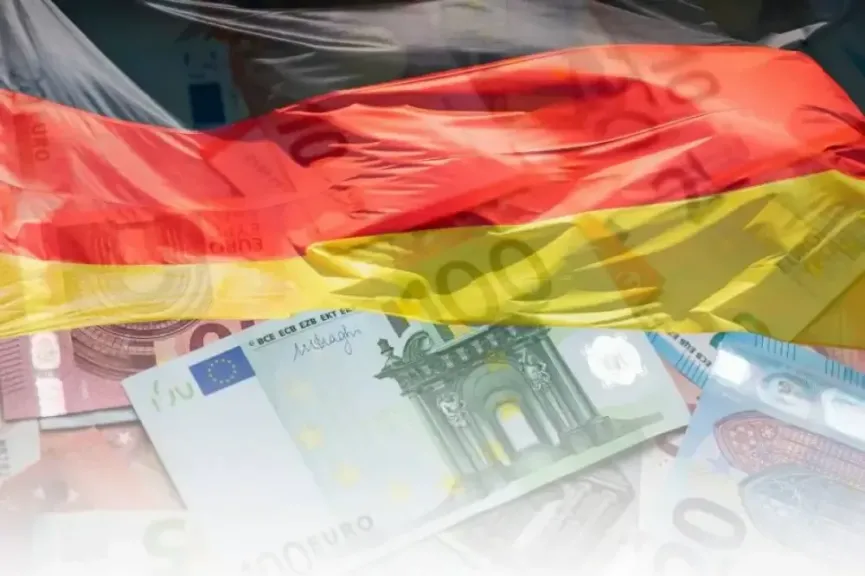
German companies slashed their direct investments in the United States to a three-year low during the first half of 2026, driven by persistent trade policy uncertainty between transatlantic partners under the administration of U.S. President Donald Trump.
Foreign direct investment (FDI) from Germany to the U.S. dropped by approximately two-thirds year-on-year to €4.3 billion (~$5.0 billion) in H1 2026, marking the lowest semi-annual level recorded since 2023, according to calculations published by the German Economic Institute (IW) based on Deutsche Bundesbank data.
Compared to the corresponding period in 2024, the figures represent a steep decline of nearly 80%.
"This continues the downward trend that emerged since the beginning of Donald Trump's second presidential term in January 2025," said Samina Sultan, trade and economic policy researcher at the German Economic Institute (IW).
Investment Contraction Metrics
The table below highlights the magnitude of the investment contraction across recent comparative periods:
PeriodGerman FDI in the U.S.Comparative Variance
H1 2026€4.3 Billion (~$5.0 Billion)Lowest level recorded since 2023
vs. H1 2025Year-on-Year Change$\sim -66.7\%$ (Down by two-thirds)
vs. H1 2024Two-Year Change$\sim -80.0\%$ plunge
Transatlantic Trade Friction and Tariff Pressures
Since taking office for a second term, President Trump has repeatedly threatened major U.S. trading partners with sweeping import tariffs in an effort to extract economic and trade concessions favorable to Washington.
In a strategic attempt to shield European exports from prohibitive U.S. tariff barriers, the European Union finalized an agreement last year that included commitments for roughly $600 billion in investments across the U.S. economy. Despite those high-level commitments, corporate risk aversion and lingering regulatory friction continue to weigh heavily on private corporate capital deployment from Europe’s largest economy.
related topics
 Visa and USSC Money Services Launch ”U Accept” to Transform Smartphones into...
 Foreign Currency Rates Against the Egyptian Pound (EGP) – Saturday, August 15,...
 Google's Gemini Surpasses 1 Billion Monthly Users, Driven by Surging Voice and...
 Gold Advances as Fed Rate Hike Bets Cool Down Ahead of Critical...
 Boston Fed’s Susan Collins Open to September Rate Hike if Inflationary Pressures...
 NTRA Tightens SIM Registration Rules to Verify Actual Users and Protect Personal...
 Meta Unveils 'Muse Glimmer' AI Model, Pledges $145 Billion for 2026 Infrastructure...
 Foreign and Arab Currency Exchange Rates Stabilize Against the Egyptian Pound on...
 Gold Prices Retreat Amid Geopolitical Calm as Markets Await Key US Inflation...
 US Tightens Restrictions on Chinese Tech Imports to Secure Infrastructure and Boost...
 Arab Digital Platform 'Qriib' Surpasses 100,000 Users in First Month, Championing Regional...
 Foreign Exchange Rates Stabilize in Egyptian Banks on August 8