


Egypt, Rwanda Sign AI and Digital Transformation Pact at WSIS 2026
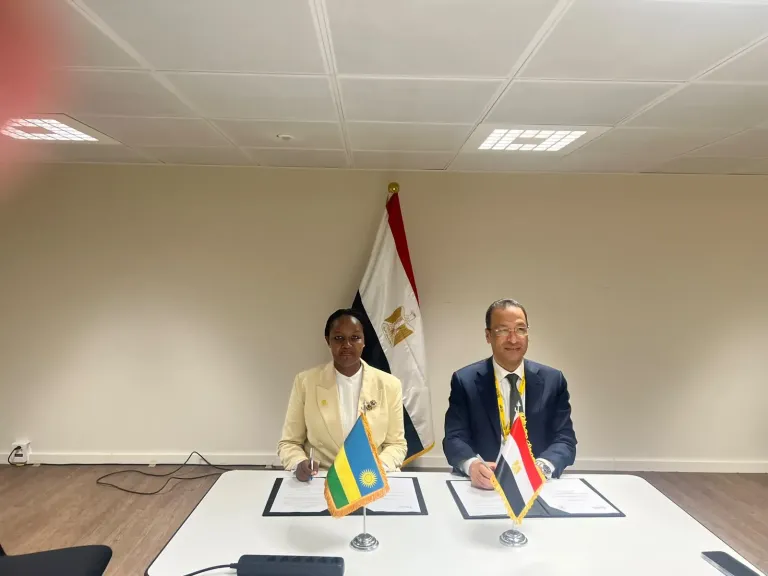
Egypt and Rwanda have signed a memorandum of understanding (MoU) to deepen cooperation in artificial intelligence (AI), digital transformation and digital capacity building, as Egypt's Minister of Communications and Information Technology Raafat Hindy held a series of high-level meetings with international officials on the sidelines of the World Summit on the Information Society (WSIS) Forum 2026 in Geneva.
The agreement was signed with Paula Ingabire, Rwanda's Minister of ICT and Innovation, following bilateral talks focused on expanding collaboration in AI, digital government and skills development. The MoU builds on discussions held during Ingabire's visit to Cairo in late June.
Under the agreement, Egypt and Rwanda will cooperate on developing a shared African approach to responsible and inclusive AI, while launching practical AI pilot projects in healthcare, agriculture, local languages and government services. The partnership also includes collaboration between government institutions, universities, research centers and innovation hubs, in addition to coordinating African positions in international AI governance forums, including the African Union, the International Telecommunication Union (ITU), the Global AI Initiative and the United Nations AI Advisory Body.
The two countries also agreed to exchange expertise in digital government infrastructure, public service platforms and interoperability standards to accelerate digital transformation.
During the forum, Hindy also met Ahmed Gandour, Sudan's Minister of Digital Transformation and Communications, to discuss expanding bilateral cooperation in digital transformation, AI, digital infrastructure and capacity building. The talks explored training programs for Sudanese professionals in strategic technology fields, including artificial intelligence, cybersecurity and personal data protection.
In a separate meeting, the Egyptian minister met Amandeep Singh Gill, the United Nations Under-Secretary-General and Special Envoy for Digital and Emerging Technologies, to discuss global AI governance and the transition from developing guiding principles to implementing practical governance frameworks.
The discussions highlighted the importance of strengthening digital capacities, promoting interoperability and developing flexible governance models capable of keeping pace with rapid technological advances while enabling developing countries to play a greater role in shaping global AI governance.
Hindy also reviewed Egypt's progress in implementing its National AI Strategy, including initiatives related to AI impact assessment, regulatory sandboxes and technical reviews conducted through the Egyptian Center for Responsible Artificial Intelligence.
The minister further met Kurtis Lindqvist, President and CEO of the Internet Corporation for Assigned Names and Numbers (ICANN), to discuss cooperation on internet governance, preparations for the ITU Plenipotentiary Conference 2026, and promoting universal acceptance of domain names to support the use of multiple languages and writing systems online. The meeting also highlighted Egypt's role in advancing internet governance discussions at both regional and international levels.
In addition, Hindy held talks with Amir Ghelin, Executive Director of Public Policy for the Middle East, Eurasia and Africa at TikTok, focusing on cooperation with Egypt's National Telecom Regulatory Authority (NTRA) to strengthen child online safety initiatives. The discussions also covered joint capacity-building programs and efforts to promote educational and cultural digital content, particularly in science, technology, engineering and mathematics (STEM).
The meetings were attended by senior officials from the Ministry of Communications and Information Technology and the National Telecom Regulatory Authority, reflecting Egypt's continued efforts to strengthen international partnerships and expand its role in shaping the future of digital transformation and AI governance.