Egyptian Cabinet Approves National Data System Powered by Artificial Intelligence
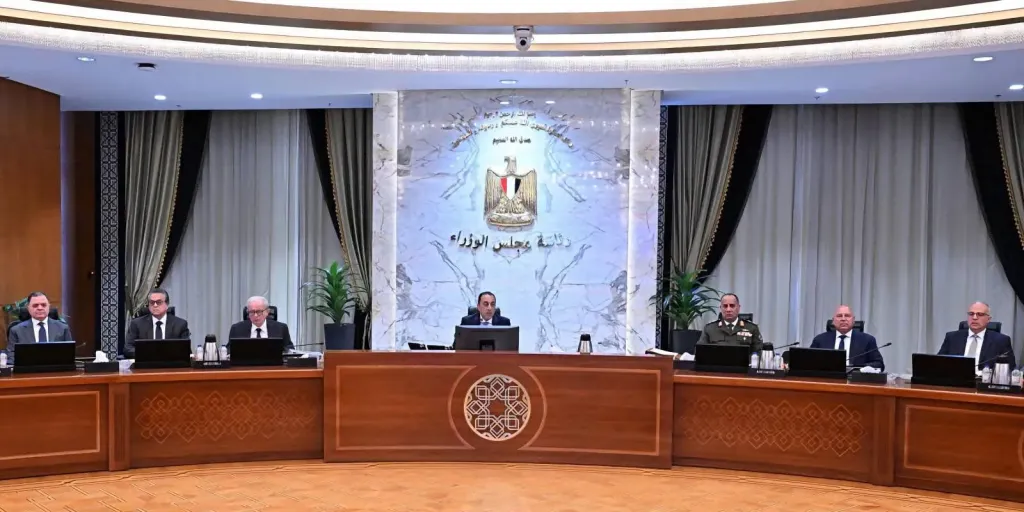
Egypt's Cabinet, chaired by Prime Minister Mostafa Madbouly, has approved the establishment of a comprehensive national data system, as part of a series of decisions covering government performance monitoring, tobacco control, healthcare services and climate-resilient water management.
National Data System to Strengthen Government Performance Monitoring
The Cabinet approved a draft Prime Minister's decree establishing the National Comprehensive Data System, in implementation of presidential directives. The electronic platform aims to create a centralized database for the Egyptian state, supported by advanced analytical tools and artificial intelligence technologies.
The system will cover ministries, governorates, public authorities, government agencies and their affiliated entities, with the objective of improving data governance, integration and performance monitoring.
It will consist of six specialized platforms: the Egyptian State Sector Performance Indicators Platform, the Scenarios and Forecasting Platform, the National Projects Platform, the Government Action Program Platform, the National Strategies Monitoring Platform, and the National Platform for Monitoring Presidential Assignments and Cabinet Decisions.
The performance indicators platform will provide integrated data to assess the development of different sectors, including economic, human and social development, infrastructure, urban planning, food security, industry and the environment.
Meanwhile, the Scenarios and Forecasting Platform will use quantitative economic models to assess key economic variables and forecast GDP growth, foreign direct investment, remittances from Egyptians abroad, export changes and monthly inflation rates. It will also estimate Egypt's credit rating based on the standards of international credit rating agencies.
Six Platforms to Track Projects and National Strategies
The National Projects Platform will monitor implementation progress and financial disbursements, link resources to actual project outputs, and assess their development impact. This will help identify development gaps, evaluate investment efficiency and support decisions on project priorities and resource allocation.
The Government Action Program Platform will track the implementation of government policies and programs, linking public spending to actual results. The National Strategies Monitoring Platform will assess national strategies through their objectives, targets and performance indicators.
The sixth platform will provide real-time monitoring of presidential assignments and Cabinet decisions, allowing relevant entities to update implementation progress and enabling authorities to assess performance and completion rates.
The draft decree also provides for the establishment of a permanent committee reporting to the Prime Minister. It will be chaired by the Head of the Information and Decision Support Center and include representatives of relevant entities. The committee will meet at least once a month.
Its responsibilities will include overseeing the system's governance, approving its components and indicators, updating data management rules, monitoring government entities' compliance with data submission deadlines, addressing implementation challenges and approving periodic performance reports.
The committee's chairman will submit a report every three months to the Prime Minister, in preparation for presentation to the President of the Republic.
Cabinet Reshapes Egypt's Supreme Tobacco Control Committee
In a separate decision, the Cabinet approved a draft decree to reconstitute the Supreme Committee for Tobacco Control, established under Law No. 52 of 1981 concerning the prevention of smoking-related harm.
The committee will be chaired by the Minister of Health and Population, with membership including ministers responsible for local development and environment, finance, education, higher education and scientific research, state information, justice, youth and sports, and industry.
Its membership will also include the Grand Mufti of Egypt, representatives of the Ministry of Interior, Al-Azhar, the Egyptian Church, civil society organizations working in public health and tobacco control, and two experts in public health and smoking-related diseases.
The committee will develop tobacco control policies and coordinate implementation efforts across ministries and government entities. The Minister of Health will present its recommendations to the Cabinet, and the committee will meet at least once every six months.
Decisions Cover Waste Management and Universal Health Insurance
The Cabinet also approved the findings of the Ministry of Finance's evaluation committee regarding Beni Suef Governorate's request to grant usufruct rights over the land and buildings of three municipal waste treatment plants located in El-Wasta, Sanour and Samasta to a specialized company.
Additionally, the Cabinet approved the General Authority for Universal Health Insurance's request to renew its contract with E-Health, the Health Insurance Services Operation and Management Technology Company, to provide technical support and operational services for the universal health insurance system at its first and second levels.
The renewed contract will run for three months, under the same terms and specifications, from December 1, 2026, to February 28, 2027.
IFAD Provides €58.22 Million for Climate-Resilient Water Management
The Cabinet approved a draft presidential decree concerning a €58.22 million financing agreement provided by the International Fund for Agricultural Development (IFAD) to support the Climate-Adaptive Water Management in the Nile Valley Project.
The initiative falls under the food pillar of Egypt's National Platform for Green Projects, known as the NWFE Program.
It aims to improve water-use efficiency, increase income opportunities and enhance the livelihoods of smallholder farmers participating in value chains, while contributing to Egypt's food security objectives.
related topics
 ”AI Retreat 2026” Shapes the Next Phase of Dubai’s Digital Transformation
 Connect Money Closes $3.5 Million Pre-Series A Round to Fuel Expansion in...
 Samsung Considers Nearly Bezel-Less Galaxy Smartphones Ahead of Apple’s Next iPhone Design
 Aman Holding Marks a Decade Since Inception with a 52% Surge in...
 Amazon Egypt Launches ”White Friday” Deals with Up to 70% Off and...
 Sponsored by saib Bank: Arab Academy Team Wins Second Place Locally and...
 Hyde Park Developments Wins Two Global Awards at the Arabian Property Awards...
 Suez Canal Bank Opens Charity Factory in Giza to Empower People with...
 Tadamon Microfinance Foundation Presents Egypt’s Financial Inclusion Experience to Sudanese Delegation
 LG Electronics Reaches 10 Million Laundry Appliances Produced at Its Tennessee Manufacturing...
 WideBot Becomes Egypt's First Strategic Customer for GPUaaS Services to Accelerate AI...
 AlexBank Profits Hit EGP 11.2 Billion in 9 Months Driven by Operating...