Egypt Raises Basic Export Support by 35% and Shipping Subsidies to 50% Under New Programme
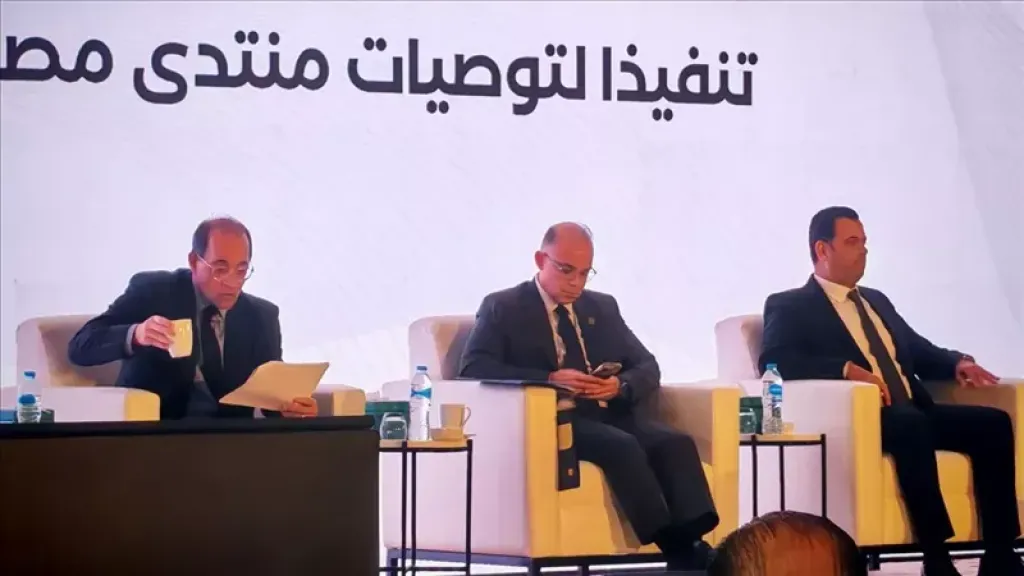
Egypt has unveiled a new export rebate programme for 2026, featuring a 35% increase in average basic export support and shipping subsidies of up to 50% of invoice value for selected target markets. The programme also introduces incentives for inland transportation and cargo insurance, aiming to ease exporters’ costs and strengthen the competitiveness of Egyptian products abroad.
Hatem El-Nawawy, CEO of the Egyptian Export Development Authority and the Export Development Fund, presented the programme, which follows the recommendations of Egypt Forum 2026. The new framework reduces the previous 12 support categories to three main pillars: basic support and additional incentives, shipping, and export services.
El-Nawawy explained that the programme was developed through ongoing consultations with business representatives and export councils, alongside a comprehensive assessment of the previous programme’s performance over the past decade.
Basic Export Support Increased by 35%
The new programme raises average basic export support by 35% compared with previous rates, while maintaining existing additional incentives. These incentives will be calculated on the increased basic support, resulting in higher overall benefits for eligible companies.
Basic support is calculated according to the value-added share of exports, alongside additional incentives allocated to different activities and sectors.
Additional incentives include support for exports and border areas ranging from 25% to 40%, export growth incentives of 9% to 12%, and quality and sustainability certification support ranging from 30% to 60%.
The programme also provides a 1% incentive for Egyptian brands, in addition to covering 50% of annual registration costs. Support for upgrading machinery and production lines ranges from 4% to 8% of the cost of purchasing new equipment, once every three years.
Other incentives include support for factories in the Suez Canal Economic Zone, linked to local-content ratios, a 30% incentive for electronic platforms serving the food industries, and support of 20% to 60% for economic complexity products, including engineering, chemical, and textile industries.
Expanded Coverage of Target Export Markets
The programme retains the additional incentive of 25% of basic support for exports directed to target markets, while expanding the range of eligible destinations and sectors.
These markets include Africa, Latin America and the Caribbean, and 11 Southeast Asian countries. The list also adds the United States and Canada as new markets for all sectors, alongside the Commonwealth of Independent States, Russia, China, Hong Kong, Taiwan, Australia, New Zealand, Japan, and South Korea.
Sea and Land Freight Support Increased to 50%
Under the shipping pillar, the programme raises support for sea and land freight to 50% of invoice value for exports heading to Africa, Latin America, Australia, Southeast Asia, and Russia.
This compares with the previous programme, which offered 25% support for Africa only, based on indicative prices. The new system instead relies on actual costs recorded in electronic invoices.
The programme also provides a 25% subsidy based on electronic invoice value for RoRo vessels, replacing the previous fixed support of between €500 and €2,000 per truck.
Higher Air Freight Allocations and New Incentives
The allocation for air freight support for agricultural products has increased to EGP 500 million, up from EGP 350 million under the previous programme.
The new scheme provides support at 25% for the euro area and 50% for England, replacing the previous support mechanism of between 20 and 50 cents per kilogram.
It also introduces a new inland transportation subsidy covering 25% of costs, capped at EGP 250,000 per company annually. Another new incentive covers 25% of cargo insurance policy costs.
Export Services, Trade Missions and Training
The third pillar focuses on export services, including international exhibitions, buyer missions, trade missions, training, and capacity-building programmes for exporting companies.
Support for participation in international exhibitions and trade and buyer missions ranges from 40% to 60% of costs, depending on company size, maintaining the rates applied under the previous programme.
Training and capacity-building support ranges from 50% to 75% of programme costs, according to the scale of training.
Programme Performance to Be Reviewed at Fiscal Year-End
El-Nawawy said the new export rebate programme will be evaluated at the end of the fiscal year to assess implementation results and determine whether it is achieving its objectives.
The programme is designed to stimulate export growth, increase value addition, and raise the contribution of exports to the national economy, while adapting support mechanisms to geopolitical developments and the challenges facing exporters.
related topics
 Egypt to Launch Export System Modernization Projects at Four Ports Soon
 Egypt to Launch Digital Export Subsidy Platform with Direct Bank Integration Within...
 Ahmed Galal: Banking Finance Focuses on Developing Local Production and Boosting Export...
 Egypt’s Textile Chamber and EOS Partner to Tighten Import Controls and Unveil...
 Egyptian Tax Authority Issues New Unified VAT Refund Guidelines to Accelerate Procedures...
 Food Export Council and Export Development Fund Conclude Training Program on Export...
 Egypt is in the ”Green Zone” for Investment, says Diamond CEO; Highlights...
 Egyptian Ministries Monitor Regional Developments to Safeguard Export Flows