


Remote Inspections Could Become EG Insurtech’s Blueprint for Rethinking Insurance Claims
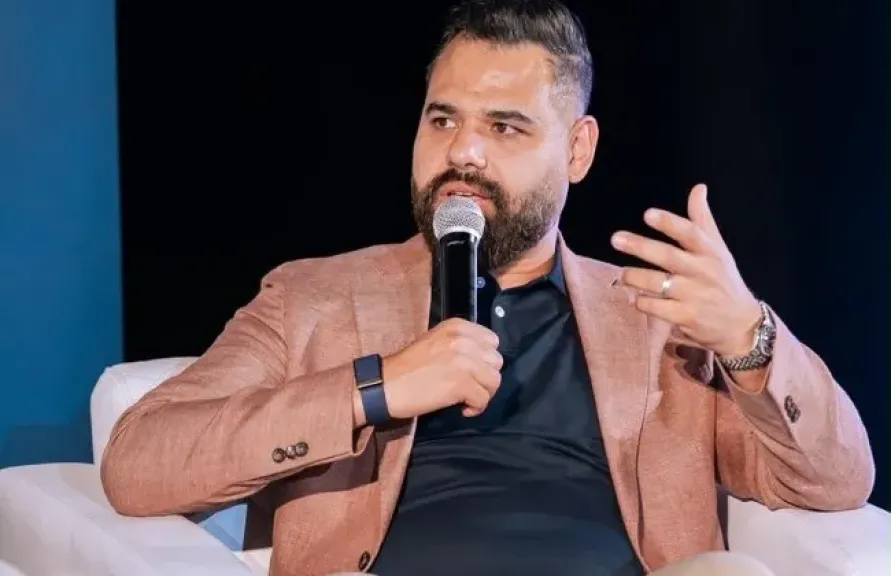
For many insurers, digital transformation has largely meant moving paperwork, forms and customer requests from branches to screens. EG Insurtech is trying to push that model further by asking a different question: what if the process itself was redesigned before it was digitized?
That thinking is beginning to take shape around remote inspections, a project the company sees as more than a standalone digital service.
Instead, EG Insurtech is using the experience as a practical test for how technology, data and artificial intelligence could reshape wider parts of the insurance journey, particularly claims.
At the center of the strategy is a simple idea: every point where a customer waits, repeats information, loses visibility or depends on a manual handoff is a potential target for redesign.
Ahmed Eissa said the company’s innovation model starts with the journey itself, from policy issuance through to claims, rather than with a specific technology.
“The customer journey from policy issuance to claims is at the heart of innovation for us,” he said. “Every point of friction within that journey is an opportunity to rethink and improve the process.”
That distinction matters because it separates digitization from transformation.
Putting an existing process online can make it easier to access, but it does not necessarily make it faster, clearer or more efficient. EG Insurtech’s approach is to examine where complexity exists first, then decide how technology should be used to remove it.
Remote inspection is emerging as the clearest example of that model.
Instead of recreating the traditional inspection workflow digitally, the company has been testing how the journey can be redesigned around speed, transparency and service quality.
“We did not take the old process and simply put it on a screen,” Eissa said. “We reconsidered the journey itself: how can it be faster, more transparent, and still maintain quality and trust at the same time?”
The company now plans to build on what it learned through the regulatory sandbox experience and study whether remote inspection can be extended to additional claim types and scenarios.
It is also looking to deepen its work with GIG Egypt and explore the deployment of the model with other insurers.
That could give the project a wider significance.
Claims are often the point at which an insurer’s digital promise is tested most seriously. Customers may tolerate a slow onboarding process, but delays, uncertainty or poor communication during a claim can quickly undermine trust.
For that reason, technologies that shorten assessment times or improve visibility can have a direct impact on customer experience, but only if they preserve accuracy and confidence in the final decision.
EG Insurtech is therefore not positioning automation as a replacement for insurance professionals.
Its model is closer to augmented decision-making, where assessors and operational teams receive better information and digital tools while retaining a human role in the process.
Eissa said the next stage of transformation will increasingly depend on systems that do more than record transactions.
“The first phase of digital transformation was about turning procedures into digital processes,” he said. “The next phase is about making digital itself more intelligent, more helpful, more predictive and more interactive.”
That could include systems capable of analyzing information earlier, highlighting potential issues and helping teams respond before a problem moves further through the claims process.
But Eissa argues that the objective is not to remove human judgment.
“The best use of technology is when it improves a person’s ability to make a better decision, not when it tries to eliminate their role,” he said.
This is likely to become increasingly important as AI enters insurance operations.
The value of AI will not come simply from adding another automated layer, but from whether it can reduce friction without creating new uncertainty around decisions that directly affect customers.
For EG Insurtech, remote inspection is therefore less about one feature and more about proving a method.
If a complex insurance procedure can be broken down, rebuilt around the customer and supported by better data, the same model could eventually be applied across other stages of the insurance lifecycle.
“Technology is not the goal for us,” Eissa said. “The goal is a simpler insurance journey, higher service quality and greater trust.”
That may also be the more important test for insurtech in Egypt: not how many processes move online, but how many become genuinely easier after they do.