


23,000 Complaints Over 700,000 SIMs Push Egypt Toward a New Biometric Identity Era
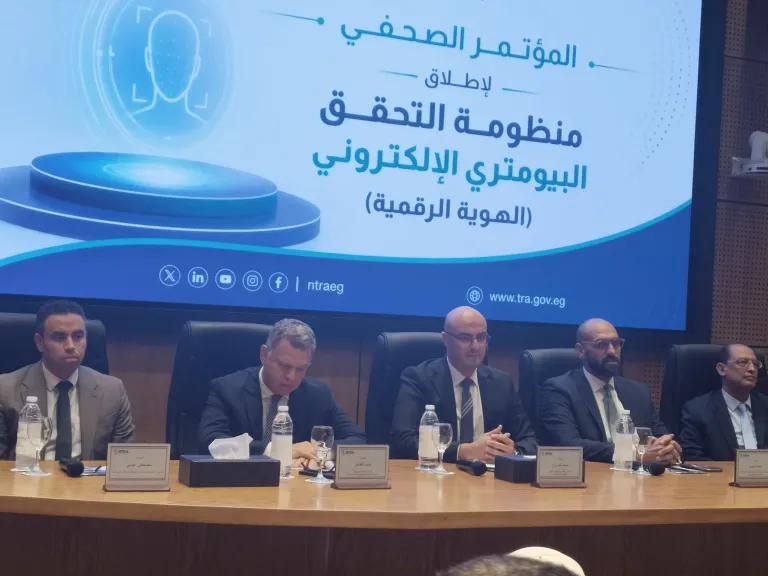
Egypt is moving some of its most sensitive mobile transactions away from branch counters and into biometric digital journeys, after tens of thousands of complaints exposed the scale of a long-running problem: mobile lines registered under citizens’ names without their knowledge.
The National Telecommunications Regulatory Authority (NTRA) has launched a new electronic biometric verification framework that allows customers to prove their identity remotely and complete selected telecom transactions through mobile operator apps.
The timing is significant. NTRA CEO Mohamed Shamroukh said the regulator received around 23,000 complaints involving nearly 700,000 mobile lines linked to citizens who said they had no knowledge of the numbers registered under their identities.
That problem has become one of the clearest arguments for replacing paper-heavy onboarding with stronger digital identity checks.
Under the new system, a transaction can be tied directly to the person requesting it through biometric verification, creating a stronger link between the customer, the SIM and the contract behind it.
Why paper contracts became a problem
One of the most difficult cases for regulators has involved customers disputing contracts carrying their names and signatures.
Shamroukh said paper-based contracts leave NTRA unable to independently establish whether a signature is authentic. In contested cases, verification can require investigations by prosecutors and forensic authorities before the regulator can take action against an operator.
Biometric verification is intended to change that equation.
If the person completing the transaction has to pass an identity check before the service is activated, the opportunity to register a line or sign a contract using someone else’s identity should become harder.
The new system is already being introduced through the apps of Egypt’s four mobile operators and will initially cover services including buying and activating new SIMs, opening mobile wallets and handling ownership-transfer procedures.
More services are expected to follow gradually.
Twelve systems working behind a simple customer journey
For the user, the process begins inside the mobile operator’s app.
The customer opens the camera and completes the biometric verification step, while multiple systems communicate in the background with the relevant state databases to validate the identity.
Shamroukh said around 12 entities and technical systems can interact in real time during a transaction, although the customer sees a much simpler front-end experience.
The process can then move to electronic signing, where the user receives the digital credentials needed to complete the transaction.
Ahmed El-Zaher, CEO of the Information Technology Industry Development Agency (ITIDA), said Egypt is simultaneously moving electronic signatures beyond their traditional corporate use.
Businesses already commonly use token-based e-signatures, but the new model is designed to allow individuals to obtain an electronic signature certificate remotely after their identity has been verified.
That certificate can then be used to sign a contract electronically with full legal effect.
Telecoms are only the starting point
The government sees mobile services as a testing ground rather than the final destination for biometric identity.
Mahmoud Badawy, Assistant Minister of Communications and Information Technology for Digital Transformation, said telecoms were chosen because they reach virtually every segment of society and provide a large-scale environment in which to test the model.
The broader ambition is to build a fully digital service journey around three steps: confirming the citizen’s identity, completing the required procedure and electronically signing the transaction.
If that model proves reliable at scale, it could later be extended to other digital government services.
Badawy said the ministry has spent around two years testing the broader concept because the system handles sensitive citizen data and touches directly on national sovereignty.
Hossam Abdel Mawla, Vice Chairman of NTRA, said the direct technical integration work itself took around 18 months, reflecting the complexity of connecting telecom systems with Ministry of Interior databases, electronic signature infrastructure and other participating platforms.
The objective, he said, is straightforward even if the technology behind it is not: allow citizens to complete services from wherever they are, with as little human intervention as possible.
A local system built around data sovereignty
Data control has been treated as a core part of the project.
Mostafa Eissa, CEO of Digital Solutions at CyShield, said the technology used in the platform was developed entirely by Egyptian engineers and was designed to keep citizens’ data under full national control.
According to Eissa, no foreign entity has access to the data handled by the system.
That requirement becomes particularly important as biometric verification is tied to state identity records and legally binding electronic transactions.
Digital by choice, not by force
NTRA is not eliminating branches or forcing customers into biometric onboarding.
Shamroukh stressed that the new digital route is optional and that customers can still complete transactions through conventional channels if they prefer.
That also applies to users of basic feature phones, a segment Shamroukh said is too large to ignore.
Operator branches are expected to receive tablets that can use the same identity framework on-site, allowing the biometric system to support both remote and in-person journeys.
The current rollout is also being treated as a pilot.
NTRA plans to monitor how customers use the service, identify technical or usability issues and address them before broader expansion.
Foreign SIMs will be tied to residency status
The identity rules will also apply to non-Egyptian subscribers.
Shamroukh said SIMs registered to foreign nationals will be linked to passport information and the duration of legal residency, with the line automatically suspended once the recorded residency period expires.
The approach adds another layer of control over how mobile identities are created and maintained in the market.
Network quality is becoming part of the same regulatory push
The launch of digital identity also came with a tougher message for mobile operators on network investment.
Shamroukh said new licences include wider measurement obligations, giving NTRA more detailed visibility into service quality across different geographic areas.
He argued that the rollout of new-generation networks and recent telecom price increases must be matched by continued investment in towers, capacity and overall network performance.
Operators that fail to meet those commitments could face regulatory penalties.
NTRA is also studying more aggressive tools to deal with certain types of fraud, including the possibility of restricting access to some services through a citizen’s national ID.
Shamroukh cautioned, however, that the idea raises legal and regulatory questions.
The regulator would need to establish that the national ID holder actually committed the violation rather than having their identity misused by someone else, and it is still examining whether such restrictions would require a court order.
The launch of biometric verification therefore represents more than another telecom app feature.
It connects identity, mobile services, official databases and legally binding electronic signatures into a single transaction framework — one born partly out of 23,000 complaints tied to 700,000 disputed lines, but designed with a much wider goal in mind: making identity itself a reusable digital layer for services across Egypt.