


South Korea to Launch First Commercial Container Ship via Arctic Route Amid Global Shipping Disruptions
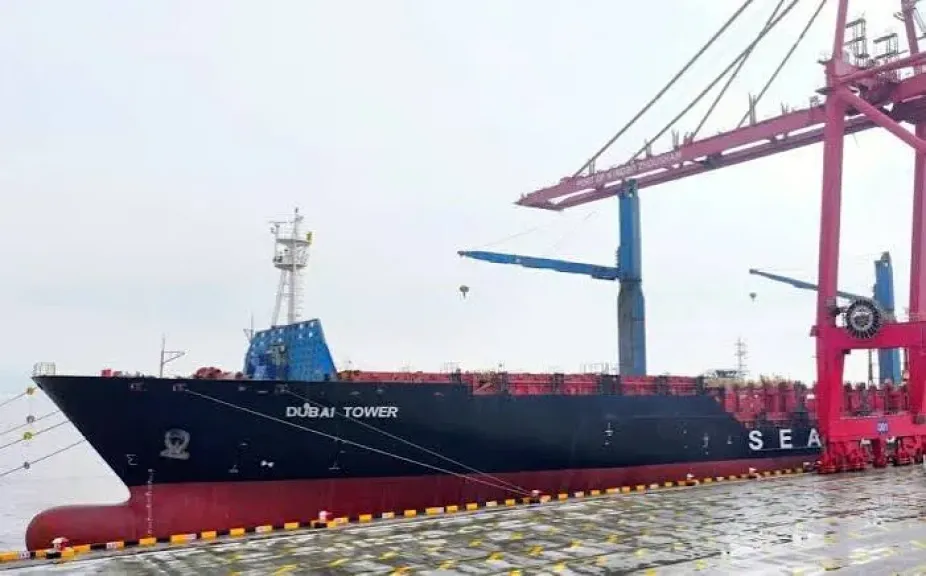
South Korea is preparing today, Saturday, to send its first commercial container ship through the Arctic. This voyage aims to test the commercial viability of a shipping route opened up by melting sea ice, at a time when conflict in the Middle East has caused widespread disruptions to global shipping.
The move follows U.S. and Israeli strikes on Iran in February, which unsettled global maritime trade and prompted governments and shipping companies to seek alternative routes to bypass geopolitical risks.
While the traditional sea route between Asia and Europe passes through the Suez Canal, the Arctic route can reduce the journey by approximately 7,000 kilometers (4,300 miles) and shorten transit time by about 10 days, according to the Korea Institute for International Economic Policy.
South Korean Vice Minister of Oceans and Fisheries, Nam Jae-heon, stated that the Arctic route is "certain to become an alternative" to shipping lanes through the Middle East, given rising geopolitical risks and technological advancements that enhance its competitiveness.
Test Voyage to Europe
The container ship "Panstar Acro" is scheduled to depart from South Korea's Busan New Port at 8:00 p.m. local time, barring unforeseen circumstances such as severe weather. The vessel will call at Felixstowe in the UK, Rotterdam in the Netherlands, and Gdansk in Poland before returning to South Korea, in a journey expected to take about 45 days.
Marc Lanteigne, a political science professor at the Arctic University of Norway, noted that a successful voyage will demonstrate South Korea's interest in developing alternative sea routes. This comes amid concerns of lagging behind Chinese companies, which are already expanding regular services via the increasingly viable Northern Sea Route.
Navigating the Sanctions Dilemma
Utilizing the polar route could expose South Korean vessels to risks related to Western sanctions on Russia, as ships must rely on Russian navigation and weather forecasting services for a fee. The oceans ministry announced this week that it has concluded "consultations with key relevant countries and entities" to finalize the administrative procedures for the voyage.
Vladimir Tikhonov, a professor of Korean studies at the University of Oslo, pointed out that U.S. and European sanctions are not, in a strictly legal sense, international law like UN sanctions. He added that prolonged uncertainty in the Middle East might leave South Korea with limited options if the polar route proves economically viable.
China's Ambitions and Environmental Concerns
Lanteigne believes China's ambitions regarding the Northern Sea Route are more politically driven than South Korea's, as Beijing views polar regions as "new strategic frontiers," raising security concerns among Western nations.
Conversely, environmental groups have warned that increased maritime traffic through the Northern Sea Route could accelerate the loss of Arctic sea ice, which is already retreating due to global warming. Major shipping lines, including CMA CGM, MSC, and Hapag-Lloyd, have pledged to avoid using Arctic sea routes entirely.
A South Korean environmental organization noted that while the route has become more accessible—as the Arctic warms nearly four times faster than the global average—making it commercially viable on a larger scale would require further warming, putting this development directly at odds with global efforts to combat climate change.
related topics
 Wheat Prices Hit Over One-Week High Amid Black Sea Supply Disruptions as...
 Toyota Braces for Fifth Consecutive Quarterly Profit Drop Amid Sales Slowdown and...
 Asian Equities Extend Gains on Semiconductor Rally, Defying Geopolitical Risks and Rising...
 C3 and HSBC Launch 'Nature Impact Accelerator' to Drive Ecosystem Restoration Across...
 HC Securities Expects the Central Bank of Egypt to Keep Interest Rates...
 MSC Revises Freight Rates Across Key Trade Routes as Global Shipping Costs...
 XDI Report: Global Data Center Boom Expands Into High-Risk Climate Zones
 Expo City Dubai Awards $700,000 to Seven Global Innovators Tackling Climate Change
 Noatum Ports Welcomes Giant ZPMC Cranes to Safaga, Marking a New Era...
 Federal Reserve Holds Interest Rates Steady Amid Inflationary Pressures and Global Uncertainty
 CIB CEO Highlights Regional Tensions, Risks, and Opportunities for Egypt Amid Hormuz...