


MCIT Spotlights Digital Skills, Freelance Empowerment Initiatives at WorkShift 2026
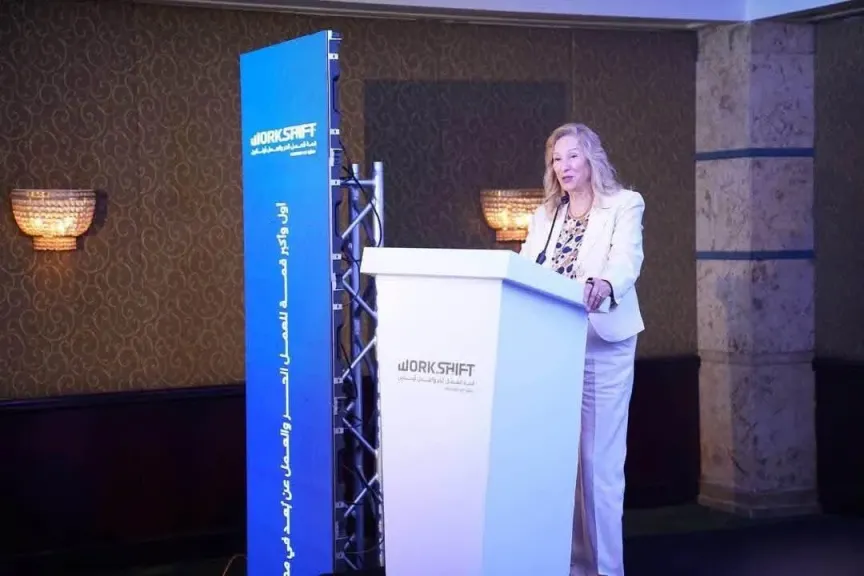
Advisor to the ICT Minister for Technology Talent Development Hoda Baraka has delivered a speech as honorary chair of WorkShift Summit 2026, an event focused on the future of freelancing, flexible work models, and the digital economy.
The summit was held under the auspices of the Ministry of Communications and Information Technology (MCIT), the Ministry of Labour, and the Ministry of Investment and Foreign Trade, in strategic partnership with the Information Technology Industry Development Agency (ITIDA), and the Chamber of Information Technology and Telecommunication (CIT).
The event was attended by Minister of Labour Hassan Raddad, Vice President of ITIDA for ICT Markets Development Mahmoud Sofrata, Founder and CEO of WorkShift Summit Nermine El Nemr, and Vice Chairman of CIT Mohamed Elhadad, alongside government officials, private-sector leaders, entrepreneurs, and industry experts, gathered to chart the course of Egypt's digital economy and the jobs of tomorrow.
In her remarks, Baraka stated that artificial intelligence has moved well beyond being just another new technology; it has become a defining force reshaping entire professions, redefining the skills employers demand, and opening career paths that didn't exist before. The real question, she argued, is no longer whether AI will disrupt the job market, but how well young people are prepared to meet that disruption and turn AI into a tool for productivity and excellence.
Baraka acknowledged that some jobs would change and some tasks will inevitably be automated, but she was quick to add that this same shift is generating fresh opportunities for anyone who can learn, adapt, think critically, innovate, and put digital tools to smart use. Investing in people, she said, is the one real guarantee of a secure future: digital fluency and the ability to harness AI at work are what will let young Egyptians compete in both local and global markets and turn their talents into genuine economic value. Freelancing and remote work, she added, aren't simply a reaction to a changing job market; they're among the most powerful paths available to young people for greater flexibility, wider opportunity, and deeper integration into the global digital economy.
She stressed that MCIT's philosophy is that true investment in the tech era isn't about hardware or networks alone. It's about people. Technology, however advanced, only creates real value once people have the knowledge, skill, confidence, and know-how to use it. That's why digital skills development sits at the core of the Digital Egypt strategy. Through initiatives like Digital Egypt Pioneers, the Ministry is building a generation equipped to work with AI tools, offering genuine career tracks in fields like artificial intelligence, data science, software development, cybersecurity, digital arts, entrepreneurship, and freelancing, all aimed at sharpening young people's competitive edge, connecting them with real projects, and helping them build independent, sustainable careers.
ITIDA, she explained, plays a pivotal role in linking training to job opportunities, matching skills to demand, and connecting Egyptian talent with international platforms and markets. This is achieved through initiatives such as Future Work Is Digital (Egypt FWD) and intensive freelance-readiness programs like ITIDA Gigs, along with various platforms supporting freelancers. In essence, ITIDA serves as the bridge between Egyptian talent and global demand for digital services: helping young people acquire the skills employers need, supporting companies, boosting Egypt's capacity to export tech services, and turning freelancing into an organized, professional path rather than something young people have to figure out alone against the market.
Empowering young people to work online, she noted, requires a whole ecosystem to fall into place: financial inclusion, digital payment solutions, social and insurance protections, fair legislation, a simplified tax system, workspaces, professional mentorship, and institutional trust. That's exactly what makes this summit significant; it brings together government, parliament, the banking sector, tech companies, universities, entrepreneurs, digital platforms, and freelancers, with the goal of moving past talk about the future of work and actually building it.
She affirmed that every relevant arm of the Egyptian government is working to build a more enabling environment for freelance work: MCIT is developing skills and digital infrastructure; ITIDA is growing the industry and linking talent to markets while strengthening the competitiveness of Egyptian digital services; the Ministry of Labour is a key partner in shaping policies that keep pace with new work models; and the Ministry of Finance and regulatory bodies are working to create simpler, fairer frameworks for bringing freelancers into the formal economy. When all these roles come together, she said, freelancing becomes a complete profession: skill, opportunity, financing, legislation, protection, and growth, all in one.
Baraka had a direct message for young people: keep developing your skills, keep acquiring new tools, don't wait around for a traditional job to come to you, start small projects now. Egypt, she said, has everything it needs to succeed: talented, ambitious young people who learn fast and work hard. She emphasized the importance of opening these opportunities to young people across all of Egypt's governorates, to young women, and to graduates from every academic background. Baraka also noted that freelancing isn't just for programmers; it spans designers, translators, marketers, analysts, content creators, project managers, data experts, and many other skilled professionals.
When young Egyptians succeed at delivering digital services to international markets, she added, it's never just a personal win; it strengthens the national economy, elevates Egypt's standing, and proves that Egyptian talent can compete on the world stage.
Baraka described WorkShift Summit as a national opportunity to convert youthful energy into productive digital power, turn challenges into solutions, and transform freelancing from scattered individual effort into an integrated national system. This demands real partnership: between the government and the private sector, banks and platforms, universities and the labor market, legislation and innovation, and experience and youthful drive.
Closing her remarks, Baraka reaffirmed the commitment of both MCIT and ITIDA to continue empowering Egypt's youth, developing their skills, and opening the digital economy to them, building a generation capable of leading the future and giving every young Egyptian a genuine shot at opportunity through Digital Egypt.
On the sidelines of the summit, the Minister of Labour and Baraka witnessed the signing of several agreements aimed at supporting freelance work and strengthening the digital economy.