


Egypt Targets $100 Billion in Exports While Positioning Itself as a Regional Automotive Manufacturing Hub
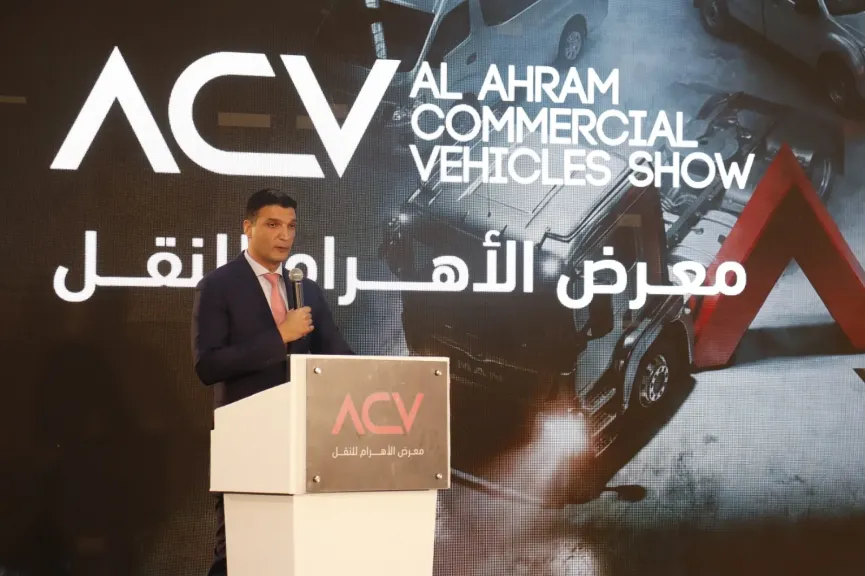
Egypt is pursuing an ambitious strategy to transform itself into a regional center for automotive manufacturing and boost exports to $100 billion by 2030, supported by unprecedented incentives for investors and a commitment to maintaining an open and competitive market, according to Khaled Hashem, Minister of Industry.
Speaking during the opening of the third edition of the Al-Ahram Commercial Vehicles Exhibition 2026 and in an exclusive interview with Hisham El-Ziny, Editor-in-Chief of Al-Ahram Auto, Hashem said the government's industrial strategy extends beyond attracting investment to include technology transfer, increasing local content, creating jobs, and strengthening Egypt's position within regional and global supply chains.
He noted that the exhibition serves as an important platform supporting the localization of automotive manufacturing and showcasing the latest technologies and commercial vehicle models available in the global market.
According to the minister, the government's strategy focuses on attracting both local and foreign investments while promoting advanced technologies and enhancing the competitiveness of Egyptian industry.
Hashem said the state has introduced a broad package of incentives and facilitation measures aimed at encouraging investment in automotive manufacturing and components production, with particular emphasis on increasing local value added and expanding the share of locally produced components.
The minister also revealed that Egypt aims to raise exports to $100 billion by 2030 through a comprehensive industrial strategy designed to support production, improve competitiveness, and strengthen domestic manufacturing capabilities.
He explained that the updated strategy builds on previous industrial plans while taking into account global economic developments and emerging challenges to ensure more effective outcomes over the coming years.
The strategy also places emphasis on human capital development, sustainability, support for struggling projects, and the launch of various programs designed to stimulate industrial growth and create an investment-friendly environment.
Addressing concerns about the automotive market, Hashem stressed that the government has no intention of imposing restrictions on vehicle imports, emphasizing that Egypt remains committed to free-market principles and fair competition.
“Regulating the automotive market does not mean closing it to imports,” he said. “Our objective is to maintain a balance between supporting local industry and preserving market openness, ensuring consumers have access to multiple options while creating a stable and attractive investment environment.”
Hashem added that competition plays a key role in improving product quality and services, noting that the ministry is working to ensure that distributors and importers comply with after-sales service and spare parts requirements to safeguard consumer rights and maintain market stability.
The minister reaffirmed that the Ministry of Industry will continue implementing policies aimed at building an integrated automotive industry capable of positioning Egypt as a regional manufacturing and export hub serving markets across Africa and beyond.