


Orange Egypt and AUC Bring the Harvard Health Systems Innovation Lab (HSIL) Hackathon to North Africa for the First Time
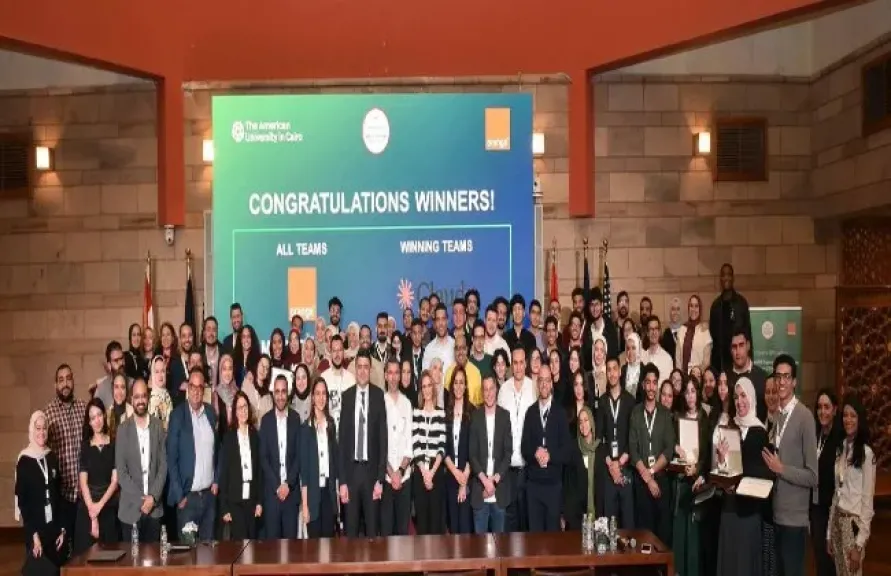
in strategic collaboration with The American University in Cairo (AUC), successfully hosted the 7th edition of the Harvard Health Systems Innovation Lab (HSIL) Hackathon, organized by the Harvard T.H. Chan School of Public Health. Held on April 10–11, 2026, the landmark event took place in Egypt, marking its first-ever edition in North Africa.
The hosting of this globally recognized initiative underscores the growing international confidence in Egypt’s capabilities and in the potential of its youth, while further consolidating the country’s position as an emerging regional hub for digital health innovation. The hackathon also provided a dynamic platform that connected local talent with one of the world’s leading programs dedicated to advancing artificial intelligence-powered solutions for healthcare systems.
Eng. Mohamed Shebl, Chief Business Officer at Orange Egypt, stated that hosting the event represents a strategic milestone reflecting the strength and maturity of Egypt’s digital infrastructure, as well as its readiness to attract and support major global technological initiatives. He noted that bringing an event of the stature of the Harvard Health Systems Innovation Lab (HSIL) Hackathon to Egypt is a significant achievement that highlights the sophistication of the country’s digital ecosystem and reaffirms Orange Egypt’s leading role in enabling organizations and individuals through advanced digital capabilities. This, he added, contributes to enhancing competitiveness and accelerating the digital transformation of key sectors in line with global best practices.
Hosting the hackathon marked a continuation of Orange Egypt’s expanding role in advancing digital transformation within the healthcare sector. This is reflected in its adoption of innovation and entrepreneurship initiatives in advanced technological domains, particularly artificial intelligence, alongside the provision of a supportive ecosystem that enables participants to design practical and implementable solutions. Such solutions contribute to enhancing the quality of healthcare services and improving the efficiency of the healthcare system.
Orange Egypt remains committed to investing in human capital, a cornerstone of sustainable development. This commitment is reflected in its continuous efforts to empower youth and expand opportunities to develop innovative technological solutions that enhance quality of life and align with the state’s vision of establishing a competitive, knowledge- and innovation-driven digital economy.
“Through this strategic partnership in the AI Health Hackathon, The American University in Cairo is reaffirming its commitment to preparing a new generation of leaders capable of driving technological transformation and creating meaningful impact in society,” said Lotfy Gaafar, Dean of the School of Sciences and Engineering at AUC. “At the School of Sciences and Engineering, we see artificial intelligence as a transformative force in building more resilient, inclusive, and high-value healthcare systems. Initiatives like the Harvard HSIL Hackathon provide students and young innovators with a vital platform to address real-world challenges through interdisciplinary collaboration, turning emerging technologies into solutions that improve lives and shape the future of healthcare.”
This edition of the hackathon carried particular significance, as it served as a practical platform for developing solutions designed to enhance the quality of healthcare services, improve the accuracy of early diagnosis, facilitate access to medical care, elevate the patient experience, and strengthen operational efficiency within healthcare institutions.
These efforts are aligned with Egypt’s Vision 2030, particularly its goals of enhancing quality of life, achieving universal health coverage, and accelerating digital transformation across key sectors through the provision of sustainable, high-quality healthcare services driven by advanced digital technologies.
Held under the theme “Building High-Value Health Systems: Leveraging AI,” the hackathon attracted more than 5,000 applicants from over 30 countries. Operating through 40 global innovation centers, participants developed more than 250 innovative technological solutions in the field of digital health.
Rather than functioning solely as a competitive platform, the hackathon was designed as a holistic ecosystem that brought together specialized training, academic mentorship, practical guidance, and incubation phases, thereby creating stronger pathways for transforming promising ideas into scalable and applicable models.
Additionally, Shebl stated: “Egypt has the essential foundations to emerge as a regional hub for healthcare innovation, and Orange continues to provide strategic business incubators aimed at shaping a new generation of startups capable of delivering innovative, agile solutions that combine high efficiency with operational sustainability in a vital sector such as healthcare. We provide an integrated technology ecosystem and strong advisory expertise that support the transformation of pioneering ideas into successful, scalable business models, both locally and regionally.”
Hosting this event marks another step toward strengthening the entrepreneurship ecosystem within the digital health sector, enhancing youth innovation capabilities, and broadening opportunities for engagement with global innovation networks, thereby reinforcing Egypt’s position as a regional hub for technology and innovation across the Middle East and Africa.
Orange Egypt reaffirmed that this initiative aligns with its forward-looking vision to contribute to building a sustainable innovation ecosystem, foster impactful partnerships, and support technological solutions that address development priorities while keeping pace with future transformations across vital sectors.