
Egypt Post-InstaPay Integration Proposed to Expand Instant Payments to 25 Million Customers
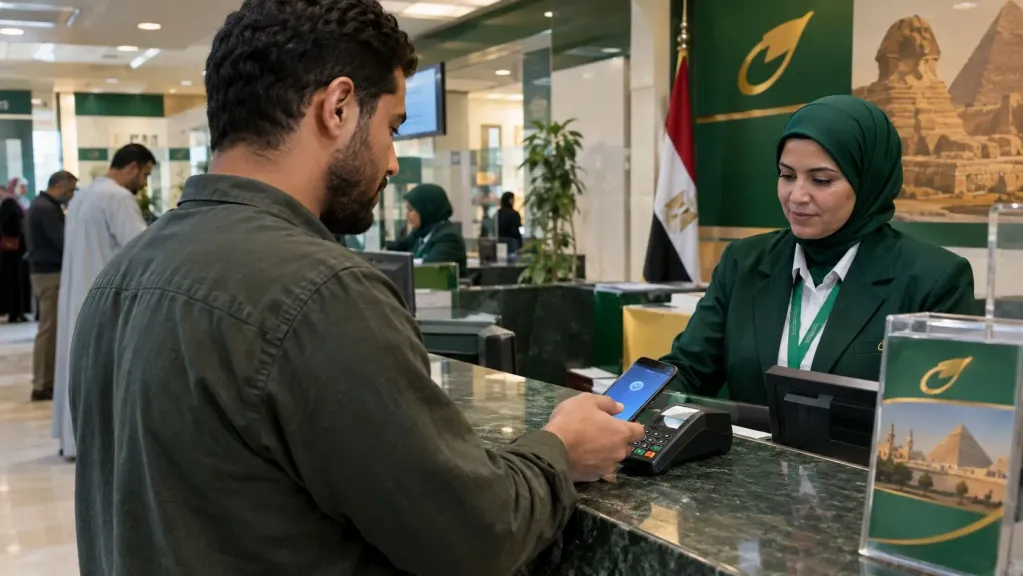
Egyptian MP Adel Farouk El-Badramany has submitted a parliamentary proposal calling for Egypt Post to be connected to the country's Instant Payment Network (IPN) and its consumer-facing application, InstaPay, potentially extending instant money transfer services to more than 25 million postal customers.
The proposal, addressed to the Prime Minister, the Central Bank of Egypt (CBE) Governor and the Minister of Communications and Information Technology, seeks to integrate approximately 35.5 million postal cards into the instant payment infrastructure without requiring customers to open new bank accounts.
According to figures cited in the proposal, Egypt Post operates 4,649 branches nationwide. El-Badramany argues that this extensive network could help expand digital financial services, particularly in rural and remote communities where access to bank branches is limited.
The initiative remains a parliamentary proposal, not an approved government decision. Its implementation would depend on technical assessments, regulatory approval and agreement among the relevant institutions.
Three-Month Timeline Proposed for Integration
El-Badramany has called for an implementation timetable of no more than three months, with the initial phase prioritising pensioners and beneficiaries of the Takaful and Karama social protection programme.
The proposed integration is intended to allow postal customers to send and receive money digitally, reducing their reliance on traditional transactions at post office branches.
The MP has also requested that the proposal be referred to Parliament's Suggestions and Complaints Committee for discussion in the presence of representatives from the Central Bank of Egypt, Egypt Post and Egyptian Banks Company for Technological Advancement.
Another group highlighted in the proposal is farmers. El-Badramany argues that the absence of integration limits their ability to transfer funds to the Meeza Farmer Card, which is used in connection with fertiliser distribution.
How InstaPay Works and Why Postal Accounts Are Different
Understanding the proposal requires distinguishing between a financial account and the payment card used to access it.
The Instant Payment Network (IPN), launched by the Central Bank of Egypt on March 22, 2022, connects banks operating in Egypt and supports real-time financial transfers. InstaPay provides a digital interface through which eligible customers can access their accounts and conduct transactions around the clock.
The network supports transfers between bank accounts, Meeza cards and electronic wallets. However, having a postal card does not automatically make it eligible for registration on InstaPay.
The key issue is the underlying financial product. A postal card may be linked to a savings account, a prepaid balance or another financial service. Each product has different operational and regulatory characteristics.
Egypt Post's postal savings accounts are managed within the postal financial services framework, whereas bank accounts operate under the banking regulatory framework. Consequently, connecting postal customers to IPN would require an approved mechanism for account identification, transaction processing, data exchange and settlement between participating institutions.
EasyPay Infrastructure and Potential Technical Challenges
Egypt Post has already developed digital financial services that could provide a foundation for further integration.
On July 5, 2026, the Ministry of Communications announced the launch of an upgraded version of Egypt Post's EasyPay application, developed in cooperation with eFinance.
The application enables customers to manage postal cards and accounts, transfer funds between postal customers, check balances and account statements, and make various electronic payments.
However, the existence of these digital services does not mean that Egypt Post is already connected to the national instant payment network.
Potential technical requirements include developing secure interfaces between the postal and banking systems, establishing reliable customer authentication procedures, preventing fraudulent transactions and ensuring accurate real-time settlement.
Other issues would need to be addressed, including transaction limits, applicable fees, handling failed or pending transfers, dispute resolution and responsibility for financial errors. Cybersecurity and the protection of customer information would also be central considerations given the scale of the proposed integration.
Central Bank Approval Remains a Key Requirement
Regulatory approval is likely to be a decisive factor in determining whether the proposal can proceed.
The Central Bank of Egypt describes IPN as an interoperable national infrastructure connecting operating banks, with provisions for integration with financial technology companies under applicable service regulations. Extending access to Egypt Post's financial products would therefore require an appropriate technical and regulatory framework.
Egypt Post has already demonstrated its ability to cooperate with other financial institutions. In July 2026, it entered into an agreement with Nasser Social Bank to facilitate pension and salary disbursements through the shared 123 payment and ATM network at post offices.
Meanwhile, Egypt's instant payment ecosystem has continued to expand. The number of registered users of IPN and InstaPay exceeded 24 million, while transaction values reached approximately EGP 7 trillion during the first nine months of 2026, according to figures announced by the Central Bank of Egypt.
As of November 29, 2026, no official announcement has confirmed CBE or Egypt Post approval of the proposed InstaPay integration, and no government implementation timetable has been announced.
The next step will be the parliamentary review and consultations with the relevant authorities, which will determine whether postal accounts and cards can be incorporated into the instant payment network, and under what technical and regulatory arrangements.
