
Cybersecurity: How a French Attack on 700 Supermarkets Raises Risks for Smart Malls in Egypt and the UAE
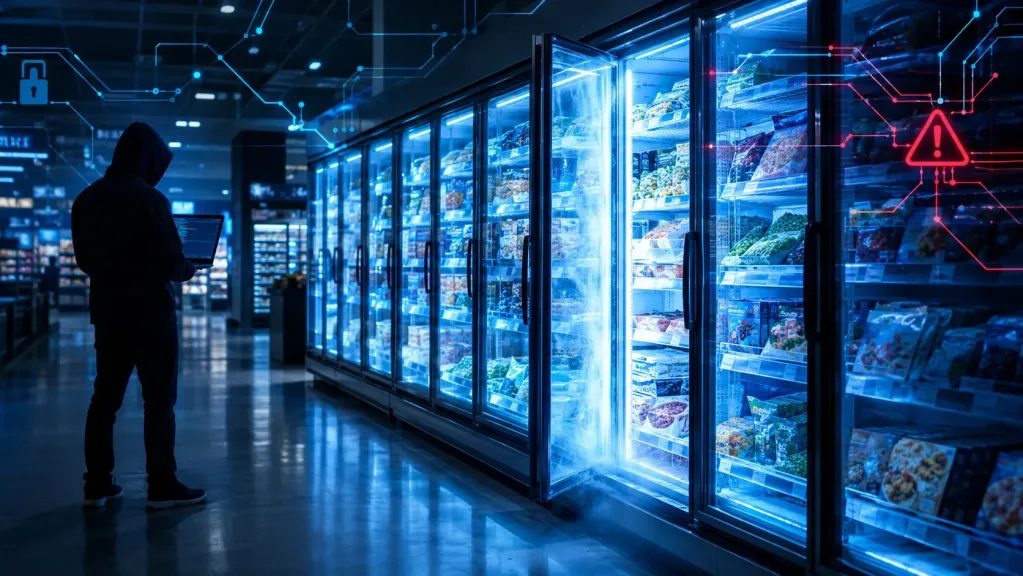
Cyberattack Disrupts Refrigeration Systems at 700 French Stores
A cyberattack targeting refrigeration systems at approximately 700 supermarkets across France in October 2026 has highlighted the growing cybersecurity risks facing connected retail infrastructure and smart buildings. Hackers manipulated refrigeration control settings, causing fresh and frozen food to spoil and raising concerns about whether shopping malls, supermarket chains and hotels in Egypt and the UAE are adequately protected against similar attacks.
According to Khaleej Times, the incident affected major retail chains, including Carrefour, Intermarché and Leclerc. The attack targeted electronic controllers responsible for managing refrigeration temperatures and defrost cycles. France's official cyber crisis coordination centre confirmed that approximately 700 commercial sites were affected, with fires reported at at least 15 locations.
How a Simple Setting Change Caused Major Losses
The attackers did not need sophisticated malware to disrupt the stores. Instead, they manipulated existing control functions, extending overnight defrost cycles from approximately one hour to eight hours and raising temperatures inside some refrigeration units to as high as 50 degrees Celsius.
The changes caused cold-storage rooms and freezers to overheat overnight, with many stores discovering the damage only the following morning. Retailers had to discard large quantities of fresh and frozen products to avoid compromising food safety and the cold chain. Media estimates put the potential losses at tens of millions of euros, although the final nationwide financial impact had not been established when the initial reports were published.
The Critical Vulnerability: One System Controls and Monitors Itself
One of the key weaknesses highlighted by experts is the reliance on the same control unit to execute operational commands and report equipment status. If attackers manipulate the controller, its monitoring data may also become unreliable, potentially allowing abnormal operations to continue without triggering an independent warning.
Experts quoted by Khaleej Times stressed that conventional temperature alarms are not always sufficient to detect such attacks. They recommend independent monitoring systems that compare actual temperatures with compressor activity, energy consumption and defrost-cycle patterns. This additional monitoring layer can identify suspicious behaviour even when the primary control dashboard appears normal.
Could Smart Malls in the UAE and Egypt Face Similar Risks?
The incident is particularly relevant to the UAE, where shopping malls, supermarkets, hotels and commercial properties increasingly rely on connected building management systems. These platforms integrate air conditioning, refrigeration, lighting and security functions, creating operational efficiencies but also expanding the potential attack surface.
The UAE has established regulatory frameworks addressing these risks. Dubai's Electronic Security Center has issued standards covering Internet of Things security and industrial control systems, while Dubai's Building Code includes requirements for digital infrastructure in smart buildings.
In Egypt, the Supreme Cybersecurity Council oversees national cybersecurity policy, while the Egyptian Computer Emergency Readiness Team (EG-CERT) handles incident response, threat monitoring and the protection of information infrastructure. However, the existence of national frameworks does not establish that every commercial property operates with the same level of cybersecurity protection.
What Retailers and Property Operators Should Do
Shopping malls, supermarket chains and hotels should begin by mapping all internet-connected refrigeration, air-conditioning and building management systems. They should identify who operates and maintains each system and review all remote-access permissions.
Essential measures include replacing default passwords, introducing multi-factor authentication, assigning individual accounts to technicians and contractors, and maintaining records of every login and operational setting change. Operators should also separate operational technology (OT) networks from information technology (IT) networks, restrict unnecessary internet connectivity, secure remote maintenance channels and regularly update controllers and software.
Independent temperature monitoring and backup alarms should also be tested regularly rather than relying exclusively on the primary control system.
Questions Every Facility Manager Should Ask
Facility managers should establish who owns the passwords controlling refrigeration and air-conditioning systems, whether contractors retain permanent remote access, and whether independent monitoring can detect abnormal equipment behaviour.
They should also review whether their cyber insurance policies cover physical damage resulting from cyberattacks, including spoiled inventory, damaged equipment, business interruption and recovery costs.
If a system displays normal readings despite signs of malfunction, operators should treat the situation as a potential operational and cybersecurity incident. They should verify temperatures using independent instruments, compare operational logs with actual equipment behaviour, investigate suspicious access and isolate compromised connections without disrupting essential safety systems. Food products should be transferred to functioning refrigeration units where necessary, while digital evidence and access records are preserved.
The French incident demonstrates that cybersecurity is no longer limited to protecting customer information and payment systems. It also involves safeguarding the physical infrastructure that keeps businesses operating. A single manipulated setting in a connected refrigeration system can generate substantial financial losses without stealing customer data or shutting down an entire network.
