
Abu Dhabi Warns of Fake QR Code Stickers on Parking Machines: How to Protect Your Banking Details
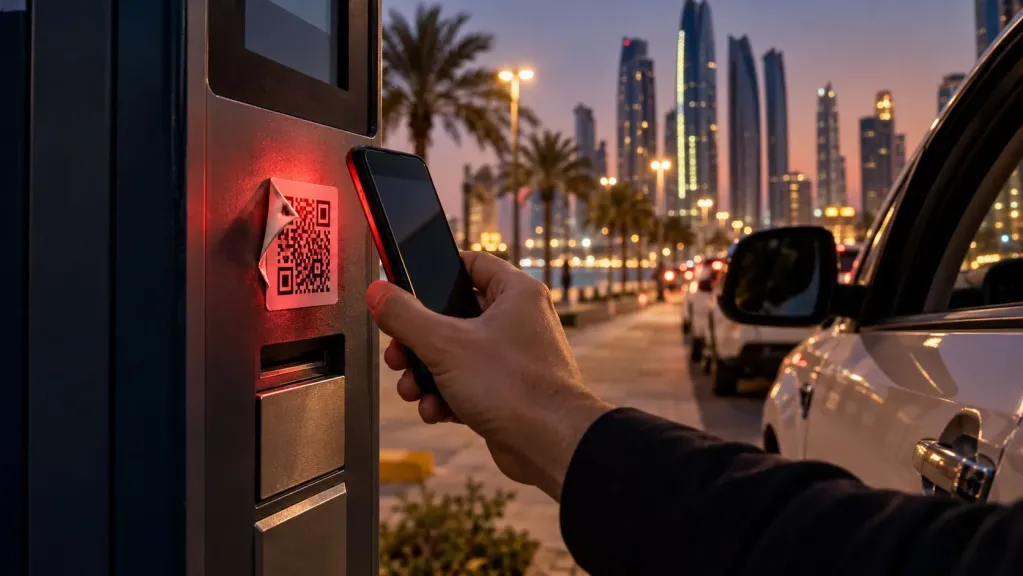
Abu Dhabi motorists have been warned about a QR code scam targeting parking payment machines, in which fraudulent stickers are placed on payment devices to redirect users to fake websites designed to steal personal and banking information. Q-Mobility, the operator of Abu Dhabi's public and private parking services and the Darb toll system, urged customers not to scan unauthorised QR codes or stickers and to use official payment channels instead.
The warning was reported by Emirates 24|7 on November 26, 2026. The company said fraudulent QR codes could lead customers to websites attempting to collect sensitive information, including banking details and one-time passwords (OTPs). No figures were published regarding the number of affected machines, reported victims or financial losses.
How the Fake QR Code Scam Works
The scam exploits the convenience and familiarity of QR codes in everyday payment transactions. Fraudsters place counterfeit stickers on or near legitimate payment devices, encouraging motorists to scan what appears to be an official payment code.
Once scanned, the code may redirect users to a fraudulent website designed to imitate a legitimate payment platform. Victims may then be asked to enter their bank card details, personal information or verification codes, potentially exposing their accounts to unauthorised transactions.
The technique is particularly concerning because it does not necessarily require hackers to compromise the payment machine itself. Replacing or covering an original QR code with a fraudulent sticker may be enough to deceive unsuspecting customers.
How to Identify a Suspicious QR Code
Users should inspect parking payment devices before scanning any code. Warning signs include additional stickers covering original codes, uneven sticker edges, differences in paper colour or texture, and QR codes that appear inconsistent with the machine's original design.
Dubai's Electronic Security Center has previously published guidance highlighting these indicators, advising that QR codes in public spaces should be integrated into original printed materials rather than attached as separate stickers or overlays.
Users should also check the website address displayed after scanning a code. A familiar company logo is not sufficient proof that a website is genuine. Personal or banking information should never be entered on unfamiliar or unverified websites.
Official Payment Channels and Immediate Precautions
Q-Mobility recommended using the official Darb and TAMM applications to pay parking fees. These channels provide an alternative to scanning unfamiliar stickers attached to public payment equipment.
Anyone who encounters a suspicious QR code should avoid interacting with it and report the affected device to the operator. If banking information has already been entered, users should immediately contact their bank through official channels, request appropriate card or account protection, review recent transactions and report any unauthorised payments.
Could the Scam Spread to Cairo and Other Cities?
The threat is not limited to Abu Dhabi. In December 2025, Dubai parking operator Parkin addressed an incident involving fraudulent QR codes placed on parking signage. The company said identified fraudulent codes had been removed and affected codes updated to redirect users to the official Roads and Transport Authority website.
With QR-based payments expanding across retail outlets, restaurants and public services, similar schemes could potentially target users in Cairo and other cities. However, this possibility should not be confused with evidence of confirmed incidents in Egypt.
Preventive measures should include regular inspections of payment devices, physical protection of original QR codes, clear reporting channels and rapid replacement of compromised codes. Public awareness campaigns are equally important in ensuring that convenience does not come at the expense of financial security.
