
Huawei and IPv6 Forum Launch African Initiative to Strengthen Telecom Network Security and Resilience
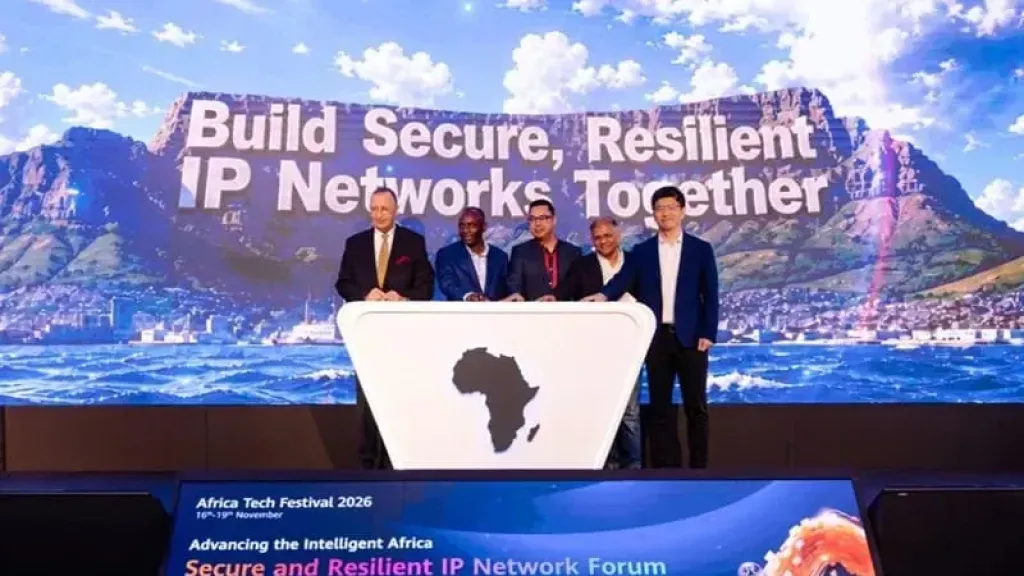
Huawei, in collaboration with the IPv6 Forum and several African regulatory authorities and telecommunications operators, has launched a joint initiative aimed at strengthening network security and resilience across the continent.
The initiative was announced during the Africa IP Network Security and Resilience Forum, held as part of Africa Tech Festival 2026 in Cape Town, South Africa. The event brought together representatives from the IPv6 Forum, regulatory bodies, telecom operators and technology companies to discuss the future of secure digital connectivity.
Named "Building Secure and Resilient IP Networks Together," the initiative encourages African telecommunications operators to collaborate on improving network protection, maintaining reliable services and exploring new business opportunities enabled by artificial intelligence.
It also calls for closer cooperation between regulators and operators to bridge the digital divide while protecting critical telecommunications infrastructure against increasingly sophisticated cyber threats.
Network Security Becomes a Key Driver of Telecom Growth
Arthur Wang, Vice President of Huawei's Data Communication Product Line, emphasized that network security and resilience are no longer limited to infrastructure protection. They have also become essential factors in helping telecommunications companies unlock new growth opportunities and achieve commercial success in the artificial intelligence era.
Latif Ladid, President of the IPv6 Forum, noted that AI is driving a major technological transformation comparable to the impact the internet had on global communications.
He highlighted the importance of IPv6 and SRv6 as fundamental technologies for building flexible, reliable networks capable of supporting the next generation of digital connectivity.
Ladid also stressed that aligning international standards with national implementation roadmaps is essential to advancing trusted digital transformation across different economies.
Kenya Highlights Its National Digital Infrastructure Strategy
Jesse Kiviu Maroti, CEO of Kenya's Information and Communications Technology Authority, presented the country's experience with its national Digital Superhighway initiative.
The program aims to accelerate digital transformation through broader broadband infrastructure deployment, improved connectivity and stronger network security.
He explained that Kenya is working to establish a secure and reliable digital ecosystem that supports digital financial services, e-government platforms and innovation across key sectors, including agriculture, healthcare and education.
These investments are expected to contribute to inclusive economic growth, improve service delivery and advance sustainable development.
Huawei Presents a Multi-Layer Network Security Architecture
Luo Jiangang, Head of the Telecom Operators Sector within Huawei's Data Communication Product Line, outlined the company's approach to developing next-generation telecommunications networks through a framework based on multi-layer security and multidimensional resilience.
The architecture integrates security capabilities across three main layers: devices, networks and operations. This approach is designed to strengthen self-protection capabilities while reducing the risks of cyber intrusions, data leakage and the spread of security threats.
Huawei's strategy also includes proactive threat detection and prevention, intelligent fault identification and localization, as well as improvements in network operations and maintenance efficiency.
These capabilities are intended to help operators maintain service continuity and respond more effectively to security and operational challenges.
IPv6 and SRv6 Support the Evolution of Future Networks
Huawei explained that its vision for secure next-generation network architecture relies on three interconnected levels.
The device layer focuses on self-protection and intrusion prevention, while the network layer applies defense-in-depth mechanisms to prevent data leakage. The operations layer, meanwhile, emphasizes coordinated security measures to contain threats and prevent them from spreading across network components.
Regarding network autonomy, Huawei stated that the telecommunications industry has entered a new phase of single-domain autonomy.
The company cited a November 2026 announcement by China Mobile Guangdong and Huawei regarding what they described as the world's first practical application at this level.
The implementation uses an integrated intelligent system to manage network operations and maintenance across multiple scenarios, including service provisioning, fault diagnosis, risk mitigation and customer complaint handling.
This development represents a transition from limited AI-assisted applications to broader network-domain autonomy.
The African initiative comes amid growing demand for secure and reliable telecommunications infrastructure as AI adoption and digital services continue to expand. Strengthening network resilience is becoming increasingly important to protecting data, maintaining connectivity and supporting the growth of Africa's digital economy.
