Trump’s Close Ties With Jensen Huang Raise Questions Over Nvidia’s China Policy
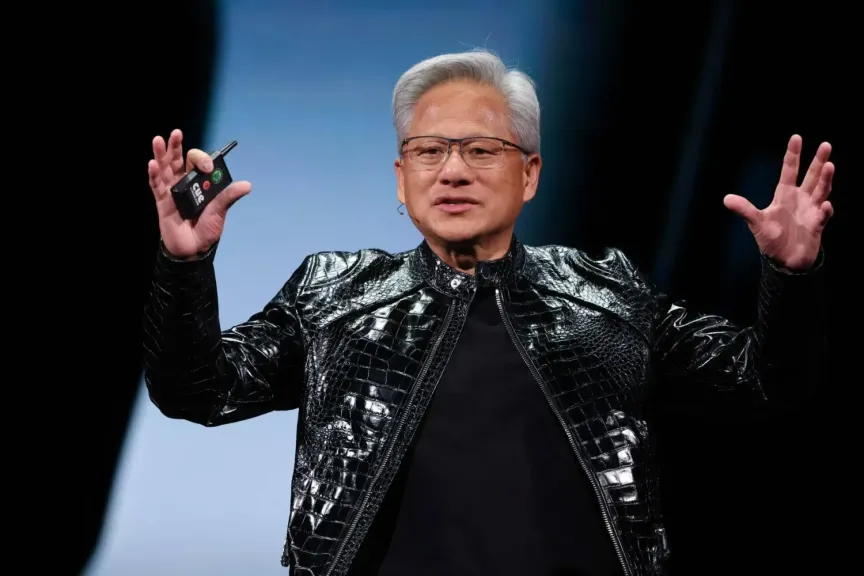
US President Donald Trump’s close relationship with Nvidia chief executive Jensen Huang is facing renewed scrutiny as reports of suspected Chinese intelligence links involving a Singapore-based company raise questions about Washington’s export controls, national security safeguards and the influence of major technology executives.
Huang has been among a select group of business leaders with direct access to Trump. He has met the president repeatedly, travelled with him to Britain and joined him aboard Air Force One during his trip to China in May.
Beyond his business interests, Huang has become an influential voice in one of the administration’s most contentious debates: how much access China should have to America’s most advanced technology.
Nvidia chips at the centre of US-China tensions
Washington has restricted exports of Nvidia’s most advanced processors to China since 2022, citing concerns that the technology could strengthen Beijing’s military and technological capabilities.
Enforcing those restrictions has proved difficult. Chips can be legally purchased by customers in countries such as Singapore and Malaysia before being redirected to China. Chinese companies can also rent computing capacity through data centres located overseas.
Huang has repeatedly argued that the restrictions are counterproductive, depriving Nvidia of a major market while encouraging Chinese companies to develop their own alternatives.
Trump appeared sympathetic to that position. Last year, he allowed Nvidia to resume selling some chips to China in exchange for a share of the revenue, although the company’s most advanced Blackwell processors remain restricted.
Alice Huang and the Megaspeed controversy
The relationship has become more complicated following allegations involving Alice Huang, a former executive at Singapore-based Megaspeed who is not related to Jensen Huang.
US intelligence agencies reportedly suspect that Alice Huang has links to Chinese intelligence services. Beijing rejects the allegations.
Nvidia’s board has said it has no reason to believe that company secrets or national security have been compromised.
The controversy has also focused attention on Megaspeed, an Nvidia customer suspected of helping divert advanced chips to China.
On Thursday, Megaspeed chief executive Tan Yong Boon, also known as James Tan, said the company took its obligations under US export-control laws extremely seriously and was committed to constructive and transparent cooperation with the US government.
He added that Megaspeed had cooperated with inspections conducted by the Department of Commerce.
Howard Lutnick faces mounting scrutiny
Commerce Secretary Howard Lutnick is now under pressure over his department’s handling of the case.
Reports say Lutnick was briefed on a highly classified memorandum outlining concerns involving Alice Huang and Megaspeed, but opposed taking action against the company.
Other senior officials reportedly wanted a tougher response. Treasury Secretary Scott Bessent was among those questioning why Megaspeed had not been placed on the Commerce Department’s blacklist.
The New York Times also reported that Nvidia’s general counsel contacted Commerce Department investigators examining alleged chip smuggling through Megaspeed, invoking a senior official appointed by Trump.
The department subsequently froze its investigation and referred the matter to the Justice Department, highlighting divisions within the administration over its approach to China.
Congress demands answers
The controversy has triggered scrutiny on Capitol Hill. Democratic lawmakers have launched an investigation into how the Commerce Department vets Chinese companies authorised to purchase AI chips, while Republicans have also begun questioning the administration’s approach.
Republican Representative John Moolenaar, chairman of the House Select Committee on China, said it was in the national interest for Nvidia and other American AI companies to succeed. However, he warned that their commercial interests must never come at the expense of national security by giving Chinese companies access to their most advanced processors.
Senator Elizabeth Warren, the top Democrat on the Senate Banking Committee, said Huang’s resignation did not absolve him of responsibility. She urged Lutnick to explain why weaknesses remained in the US export-control system.
Huang’s team told Republican lawmakers on Wednesday that he intended to cooperate with their request to testify in a closed-door session.
The White House did not respond to the BBC’s request for comment. However, it told the New York Post that Trump had full confidence in Lutnick, describing him as the most transformative commerce secretary in modern history.
The endorsement comes amid reports that officials are considering whether Lutnick should be forced out of his position.
The remaining questions reach beyond Nvidia and the Commerce Department. What did Trump know about the intelligence concerns? How much influence did Huang have over decisions on chip exports to China? And who ultimately bears responsibility for protecting America's most sensitive technologies?