Noventiq Bets on Egyptian Talent as It Turns Cairo Into a Global Technology Delivery Hub
The technology company has more than doubled its workforce in Egypt in less than two years, surpassing 100 employees, as it expands capabilities in cybersecurity, cloud computing, artificial intelligence and managed services.
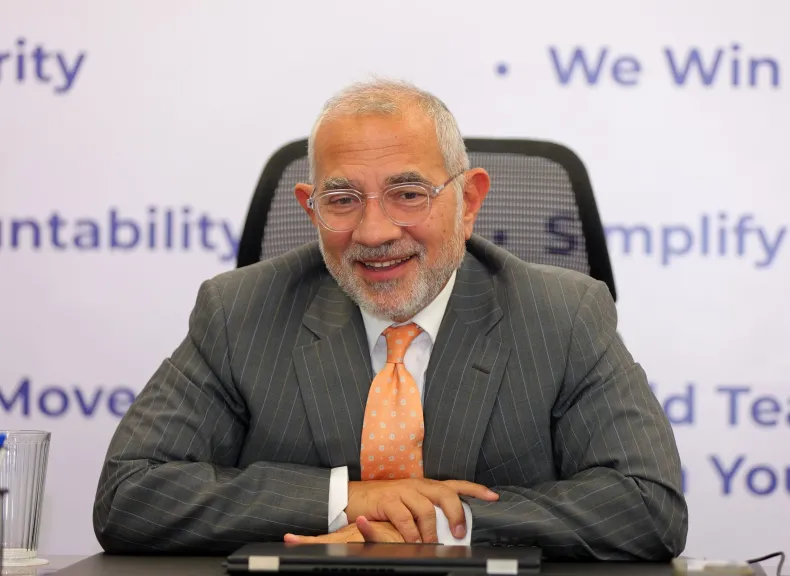
The shift is part of a broader regional growth strategy led by Mohamed Mostafa, CEO of Noventiq Egypt and Saudi Arabia. The two markets have delivered a compound annual growth rate of 22% over the past four years, while operating profitability also improved during the first half of 2026 compared with the previous year.
By 2029, Mostafa wants Egypt to become one of Noventiq’s most important international delivery centers, with Egyptian specialists running advanced technology projects for customers across multiple markets.
Egypt Is Already Serving Asia
The strategy has moved beyond planning.
Noventiq operates across more than 60 countries and has 11 global service delivery centers, with Egypt now part of that network.
Mostafa said Egyptian teams have begun delivering services to markets including Vietnam, Malaysia and Indonesia as integration between Noventiq’s Middle East and Asian operations expands.
That is significant because the model is not intended to compete solely on Egypt’s lower operating costs.
Noventiq wants its Egyptian operation to export higher-value capabilities, including cloud and hybrid infrastructure design, application modernization, data management, AI use cases, cybersecurity monitoring and response, technical consulting and complex project management.
“Egypt is not just a local market for us, but part of a global service delivery network,” Mostafa said.
Egypt’s talent pool, geographic position, time-zone proximity to Europe, the Gulf and Africa, and ability to provide services in Arabic and English all contribute to the model.
The challenge, according to Mostafa, is turning those advantages into internationally certified specializations and execution capabilities that can scale.
From Technology Reseller to Digital Systems Integrator
The expansion comes alongside a change in Noventiq’s business model.
The company has been moving beyond its historical focus on software licensing toward consulting, cloud, cybersecurity, data and AI, managed services and hybrid infrastructure.
Mostafa describes the company’s role as closer to an architect of a customer’s digital environment than a supplier of individual technology products.
That approach is supported by relationships with global technology companies including Microsoft, Amazon Web Services and IBM.
Instead of starting with a particular vendor or product, Noventiq says it begins with the business problem, evaluates performance, security, cost and scalability requirements, and then builds the technology stack around those objectives.
The change mirrors a broader shift in enterprise technology spending.
Customers increasingly want to know how an investment will reduce costs, increase productivity, secure data or improve customer experience rather than simply comparing licenses and hardware specifications.
22% Annual Growth as Egypt and Saudi Arabia Become More Connected
Noventiq is also building a more integrated operating model between Egypt and Saudi Arabia.
The company sees Saudi Arabia as a major market for large-scale digital projects driven by Vision 2030, while Egypt provides a substantial base of engineering and technical talent capable of supporting regional delivery.
Across the two markets, Noventiq has recorded a four-year compound annual growth rate of 22%.
The company does not disclose country-level revenue, but Mostafa said its focus is increasingly on improving the revenue mix toward services and higher-value technology solutions rather than simply increasing sales volumes.
That creates a complementary model: Saudi Arabia provides demand for major digital transformation programs, while Egypt can increasingly supply part of the expertise needed to design, implement and operate them.
AI Projects Need a Business Case, Not a Publicity Case
Artificial intelligence represents one of Noventiq’s main growth areas, but Mostafa cautions against adopting the technology without a measurable commercial objective.
“AI should not be a public relations project,” he said. “It should be an investment with an owner, a budget and a clear return indicator.”
Egyptian enterprises are gradually moving from experimentation toward production deployments, although the level of maturity varies considerably.
Among the applications showing earlier measurable results are employee knowledge assistants, document summarization, customer-service automation, data analysis, sales support, software development and automation of selected financial and administrative processes.
Noventiq’s approach is to start with a clearly defined use case, establish performance indicators and measure improvements in time, cost or service quality before expanding deployment.
AI Agents Will Require More Than an AI Model
The arrival of AI agents capable of executing tasks across enterprise systems creates a more complicated challenge.
Mostafa argues that organizations cannot simply give an AI agent access to business processes without first addressing data quality, identity and access management, systems integration and governance.
Companies also need auditable decision records and clear boundaries defining what an agent can recommend, what it can execute autonomously and which decisions must remain under human control.
Rather than waiting until every part of an organization is ready, Mostafa recommends beginning with lower-risk activities such as information summarization, draft preparation and tightly defined internal processes before gradually increasing autonomy.
That makes enterprise AI as much an infrastructure and governance challenge as a model-selection problem.
Cybersecurity Accreditation Opens a New Growth Track
Cybersecurity is emerging as another major pillar of Noventiq’s Egyptian expansion.
The company has received Category One accreditation from Egypt’s National Telecommunications Regulatory Authority to provide cybersecurity services.
Mostafa said the accreditation strengthens Noventiq’s position with government, financial services, telecom, energy and other organizations operating sensitive data or critical infrastructure.
It also gives the company room to expand beyond individual security products into broader services covering assessment and consulting, network, identity, application and data protection, vulnerability management, testing, monitoring and incident response.
Demand is already changing.
Mostafa said organizations increasingly view cybersecurity as a business-continuity and revenue-protection issue rather than an additional IT expense, particularly as AI increases the speed and sophistication with which attacks can be executed.
Cybersecurity Could Become Another Egyptian Technology Export
Noventiq now wants to use its Egyptian operation to deliver managed cybersecurity services internationally.
The model would combine local teams with regional capabilities and Noventiq’s global centers, creating a distributed service that can support customers inside and outside Egypt.
Building that capability requires investment in certified cybersecurity professionals, monitoring and automation platforms, operating processes, governance and service-level frameworks.
The company is developing Egyptian expertise in areas including cloud and data security, penetration testing and security operations center services.
The longer-term goal is to make Egypt not simply a consumer of cybersecurity technology but a producer and exporter of cybersecurity services.
Workforce More Than Doubles in Less Than Two Years
The strategy is already changing Noventiq’s physical footprint in Egypt.
The company has moved into a new office roughly four times the size of its previous location, while its workforce has grown by more than 100% in less than two years to over 100 employees.
Mostafa said headcount alone is not the main measure of investment.
“In this industry, the real investment is not in assets and buildings, but in people and specialized capabilities,” he said.
That philosophy also explains Noventiq’s partnerships with the Information Technology Industry Development Agency and training organizations including the National Telecommunication Institute.
Mostafa argues that the success of training programs should ultimately be measured by professional certifications, employment outcomes, participation in real projects and the export revenue generated by trained specialists, rather than simply the number of people completing courses.
Noventiq Egypt has also received Great Place to Work certification, which the company sees as strategically relevant as Egyptian technology specialists gain access to an increasingly global employment market.
Freelancing Creates Opportunity, but Companies Still Offer a Different Career Path
Remote work and freelancing have intensified competition for Egyptian technology professionals.
Mostafa does not see freelancing as a negative development. It can give young professionals access to international customers and potentially higher incomes, while entrepreneurship can create entirely new companies.
The challenge is maintaining long-term professional development.
Inside technology companies, engineers can work alongside more experienced colleagues, participate in multidisciplinary teams, gain certifications and gradually take responsibility for larger and more complex projects.
For Noventiq, exporting services from Egypt offers another option: engineers can gain international project experience without necessarily leaving the country.
Cairo ICT Puts Microsoft, AWS and IBM Under One Noventiq Strategy
At Cairo ICT 2026, Noventiq is bringing several parts of that strategy together.
Its participation centers on AI and digital transformation, cybersecurity, and cloud and hybrid infrastructure, with Microsoft, IBM and AWS among the major partners represented through demonstrations and expert sessions.
The company is also highlighting its strengthened cybersecurity capabilities and its relationship with IBM, including its position as IBM’s only Mainframe partner in Egypt.
That combination is important to Noventiq’s positioning.
Enterprise digital transformation increasingly requires companies to connect new AI and cloud workloads with existing mission-critical systems rather than replacing entire technology environments at once. Cybersecurity then has to protect the resulting hybrid infrastructure.
The 2029 Target Is Bigger Than Headcount
Noventiq expects its next phase of growth in Egypt to come from government, financial services, telecom, energy, manufacturing, education and large enterprises.
On the technology side, it is targeting cloud migration and application modernization, cybersecurity and managed services, data and AI, and modernization of core infrastructure.
But Mostafa’s benchmark for 2029 is not simply a larger Egyptian office.
He wants Egyptian teams to be managing AI, cloud and cybersecurity projects for customers across multiple countries, with Egypt established as one of Noventiq’s most important international specialist delivery centers.
If that happens, Noventiq’s Egyptian expansion will represent something broader than the growth of one technology company. It will demonstrate a shift in Egypt’s technology export model from supplying relatively standardized outsourced services toward exporting the engineers and expertise needed to build, secure and operate sophisticated digital infrastructure globally.