Financial Inclusion 2.0 at Cairo ICT 2026: Technology and AI Drive the Transition Toward Financial Wellness
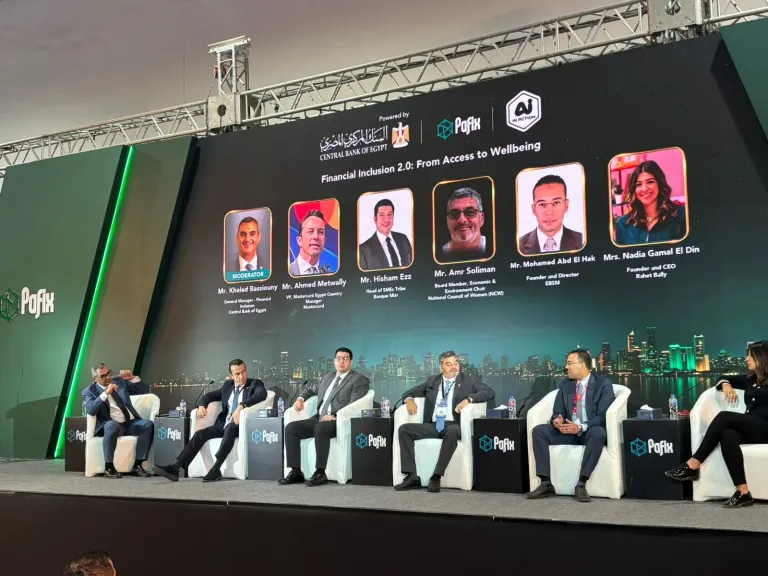
The session titled "Financial Inclusion 2.0: From Access to Financial Wellness," held as part of Cairo ICT 2026, discussed strategies for advancing the banking sector by leveraging modern technology and artificial intelligence. The discussions focused on moving beyond mere account accessibility toward ensuring sustainable usage and achieving long-term financial well-being, with an emphasis on underserved groups including SMEs, youth, and rural women.
A Quantum Leap in Egypt's Financial Inclusion Indicators
Khaled Bassiouny, General Manager of Financial Inclusion at the Central Bank of Egypt (CBE), highlighted that Egypt's financial inclusion rate surged from 27% in 2016 to 79% by June 2026. He noted that the primary challenge moving forward is reaching geographically remote demographics, stressing the importance of engaging directly with beneficiaries to craft solutions tailored to the needs of youth and rural women.
AI and Machine Learning Powering Small Enterprise Growth
Hisham Ezz (Banque Misr) presented the success of the "Express" digital platform, which drastically reduced SME loan application processing times from 40 days down to just 5 days using machine learning algorithms and credit scoring models. Meanwhile, Ahmed Metwally (Mastercard) revealed that Mastercard aims to connect 500 million individuals and businesses to the digital economy by 2030, deploying AI to elevate payment security, detect fraud proactively, and personalize financial tools.
Empowering Youth and Women: Digital Solutions for Social Challenges
Panelists shed light on key structural hurdles facing young consumers and female entrepreneurs. Mohamed Abdel Haq (EBSM) pointed out that procedural complexities in opening accounts, paired with cyber-fraud anxieties, cost banks up to 70% of their prospective youth market. Addressing solutions, Amr Suleiman (National Council for Women) highlighted the "Tahwisha" digital savings and loan initiative, which reached 400,000 women across 24 governorates through accessible fintech tools. Complementing this, Nadia Gamal El-Din (Rahet Baly) emphasized building "financial confidence" and championed hyper-personalized AI financial advisors to guide women toward independent financial decision-making.