
HP Study Finds Students Value Human Skills Over Technical Expertise as 82% Question AI’s Impact on Learning
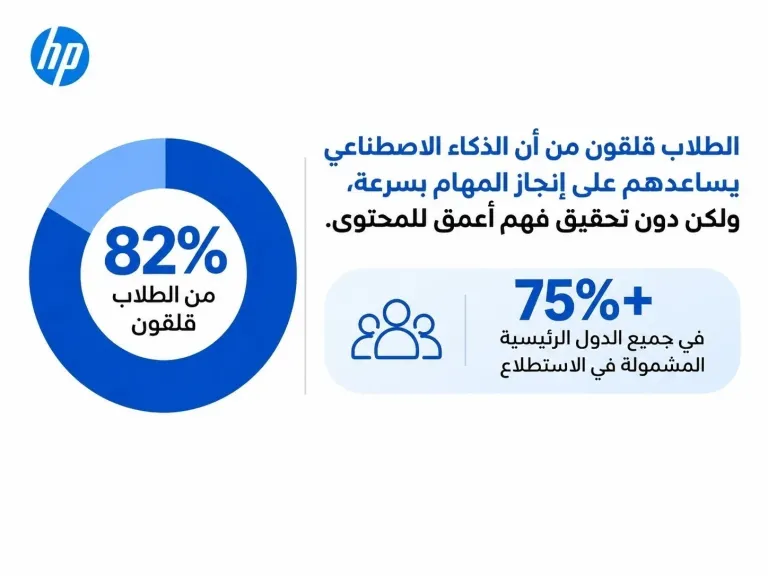
A new global study by HP Inc. suggests that students believe human skills will remain central to professional success as artificial intelligence reshapes education and the workplace.
The HP Futures 2026 report, based on responses from 6,206 students in 37 countries and contributions from 58 education and future-of-work experts, examines how education systems can prepare young people for an economy increasingly influenced by AI. The initiative is led by HP in partnership with the World Learning Council and the Education Leaders Forum.
Students Put Human Capabilities at the Top of the Skills Agenda
Creativity and critical thinking emerged as the leading priorities in the survey, with 56% of students identifying each as important for the future job market. Communication and collaboration were selected by 52% of respondents.
By comparison, AI and digital literacy received 44% of responses, while technical and programming skills ranked eighth at 29%.
The results suggest that students see value in combining technological knowledge with human capabilities that can be applied across different roles and industries.
David McCurry, Chief Commercial Officer at HP and Chair of HP Futures, said preparing young people for future opportunities and challenges requires shared responsibility among educators, policymakers and employers.
He emphasized that the rapid changes AI is bringing to education and work make it increasingly important for education systems to help students build capabilities that will continue to matter as technology advances.
Faster Task Completion Raises Questions About Understanding
One of the report’s key findings concerns the relationship between AI use and the quality of learning. While artificial intelligence can help students complete tasks more quickly, 82% of respondents expressed concern that it may reduce the depth of their understanding of educational material.
This concern underlines the need to ensure that students do not rely on AI-generated answers without evaluating them. The report highlights critical assessment, independent thinking and deeper comprehension as important elements of learning in an AI-enabled environment.
Nevertheless, students remain optimistic about AI’s employment potential. Some 61% expect the technology to create more jobs than it displaces, while 80% are confident they will be able to use AI effectively in their future careers.
Furthermore, 81% believe their current education is preparing them to enter the workforce.
HP Highlights the Importance of Student Perspectives
Mayank Dhingra, Director and Global Head of Education and Strategy at HP, said the report provides a distinctive view of how young people understand the skills they will need and the ways AI is influencing their thinking, daily lives and career prospects.
He pointed out that students recognize the benefits of AI in speeding up tasks and feel confident using it, yet remain concerned about whether they are developing the same depth of understanding through their learning experiences.
Dhingra said student perspectives should play a prominent role in discussions about future curricula and assessment approaches as education systems consider how to respond to technological change.
Report Urges Education Systems to Rethink AI Integration
HP Futures 2026 calls for greater attention to skills that can retain their value over the long term, particularly creativity, critical thinking and communication, alongside technical knowledge.
It also stresses the contribution of teachers in reinforcing foundational capabilities, expanding hands-on learning and guiding students toward responsible use of AI.
For policymakers, education leaders and employers, the report recommends reconsidering curriculum structures so that enduring human capabilities become fundamental elements of education rather than secondary activities.
It specifically highlights a “set of thinking skills” that includes critical, systems, design and adaptive thinking.
Another recommendation is to consider the “AI + X Model,” which places AI as a supporting and enabling layer that strengthens digital fluency while building on foundational knowledge and human capabilities. Under this approach, AI is not intended to replace deep expertise in a subject or independent critical thinking.
Survey Scope and Research Approach
HP Futures conducted its online survey between May and June 2026, collecting 6,206 responses from students across 37 countries. The questionnaire was made available in six languages: English, Spanish, Portuguese, Indonesian, Italian and Arabic.
Respondents ranged from under 12 years old to over 25. Students aged 12–17 represented 88% of those who provided their age.
In addition to the survey, the report incorporated contributions from 58 experts through group discussions and individual interviews. It also included practical case studies from educational institutions, employers, NGOs and public-sector organizations worldwide.
HP Inc. is a global technology company listed on the New York Stock Exchange under the ticker HPQ. Operating in more than 170 countries, it offers devices, services and subscription solutions spanning personal computing, 3D printing, hybrid work, gaming and other technology markets.
The complete HP Futures 2026 report can be accessed through HP’s website.