Egypt Informatics University Hosts the First Meeting of the ”GAINAfrica” Alliance to Advance AI Solutions Across Africa
An International Partnership Backed by "Horizon Europe"
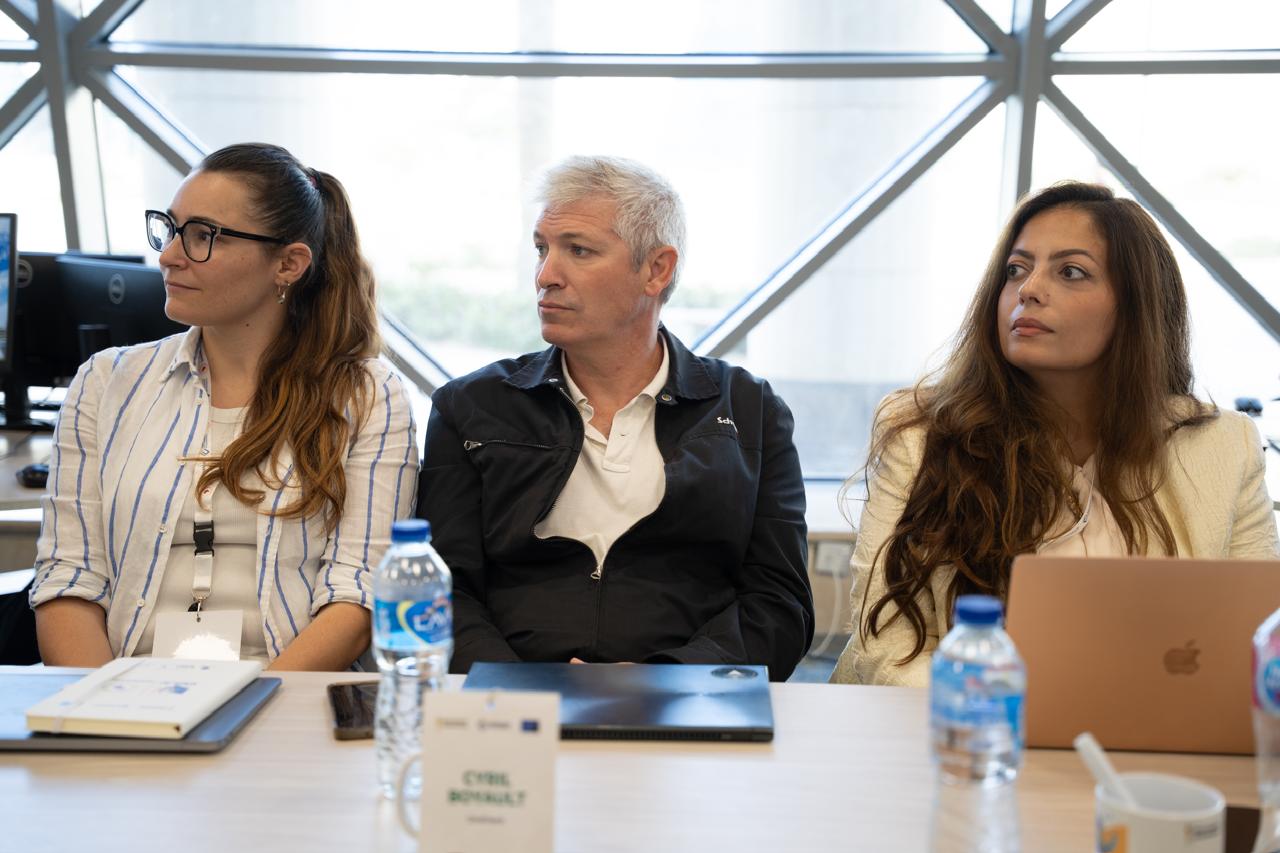
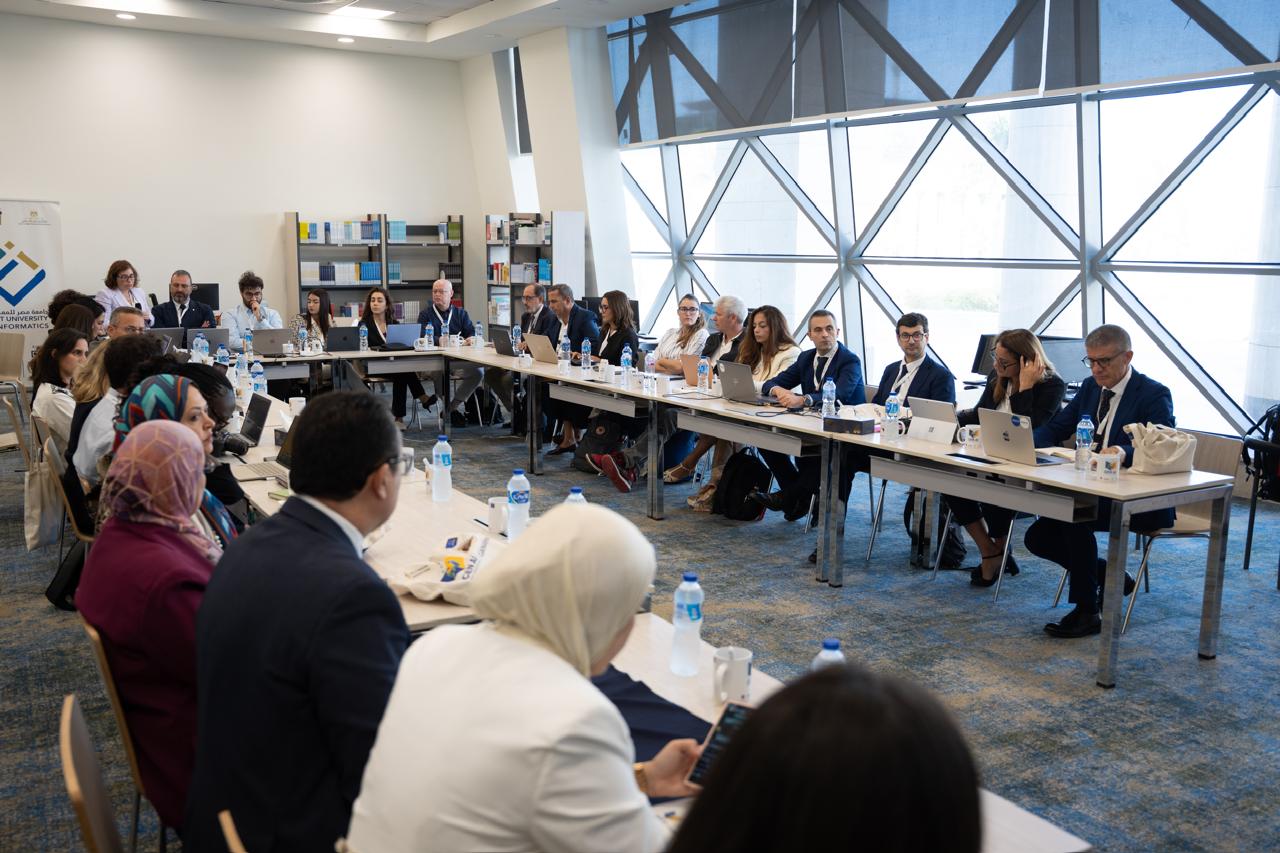
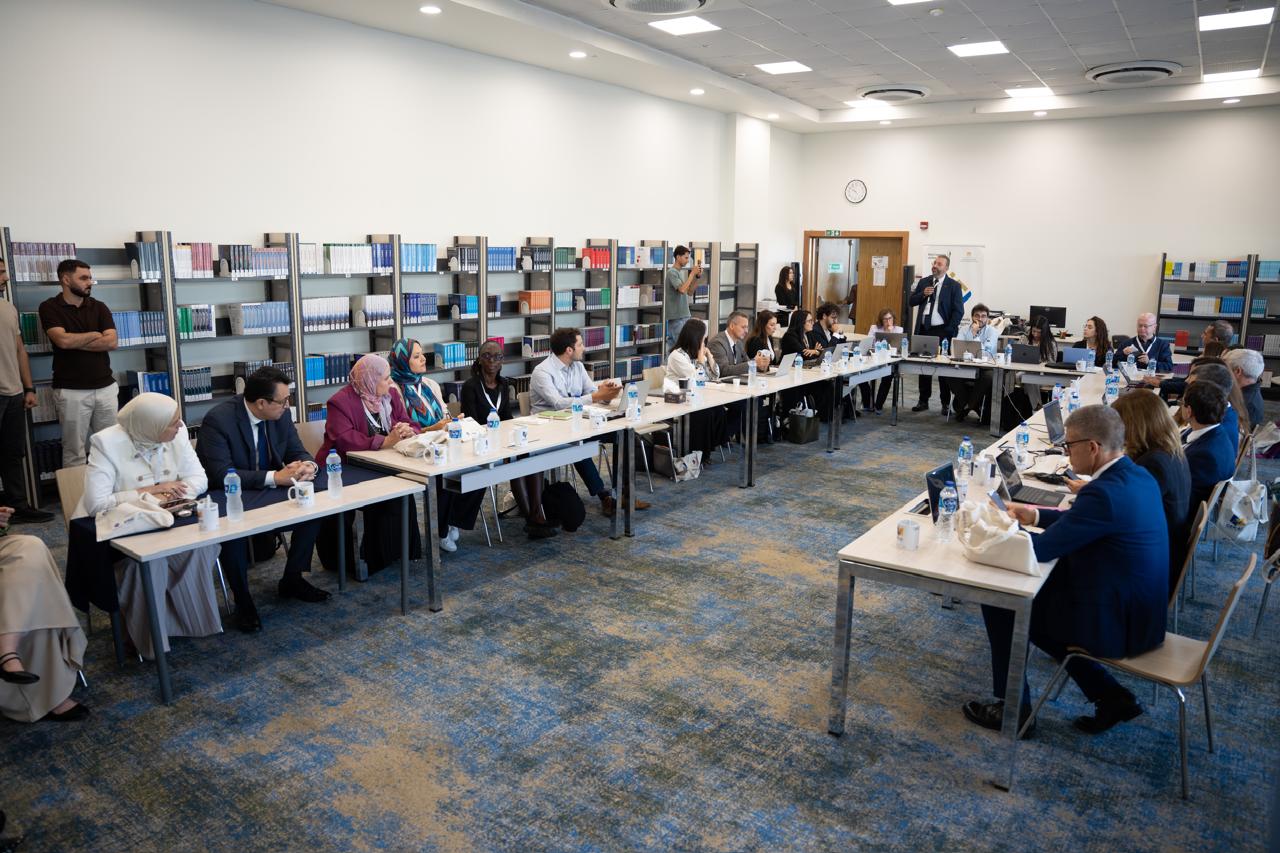
Egypt Informatics University (EUI) hosted the inaugural meeting of the consortium implementing the "AI for Africa" (GAINAfrica) project at its campus in Knowledge City, the New Administrative Capital. The alliance brings together 13 partners from seven countries (Egypt, Italy, France, Tunisia, Morocco, Benin, and Uganda) and is funded by Horizon Europe, one of the European Union's largest programs for research and innovation funding.
Strategic Vision and Field Pilots Over the Next 3 Years
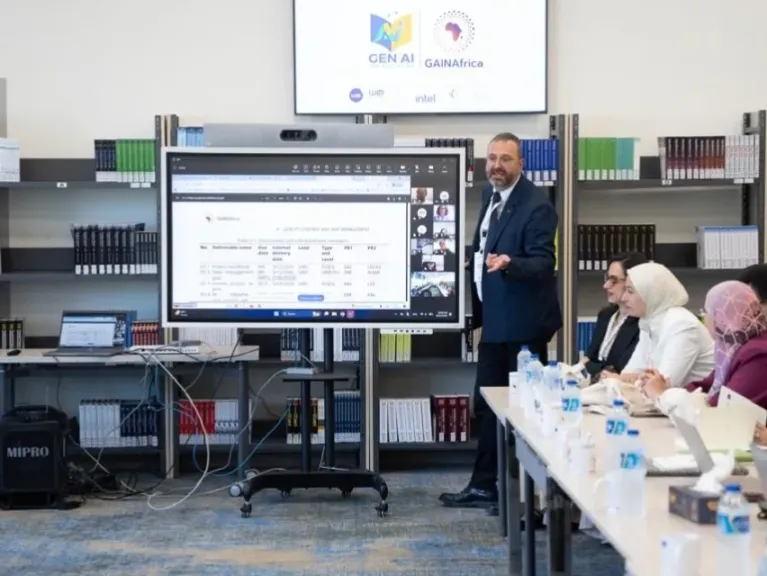
Prof. Dr. Ahmed Hamad, Acting President of the University, stated that the meeting aimed to establish a shared vision for executing the project over the next three years. Discussions focused on mapping needs and creating a roadmap for AI laboratories and pilot projects to be deployed across five African nations (Egypt, Morocco, Tunisia, Benin, and Uganda), fostering local innovation ecosystems and empowering startups. The meeting also featured presentations from the finalists of the "Generative AI for Education 2026" Hackathon.
Tailored Solutions Driving Inclusion and Social Equity
Prof. Dr. Ahmed Hamad emphasized the critical importance of the project, which targets development gaps in education, healthcare, agriculture, urban planning, and infrastructure across Africa. He highlighted that the project does not offer ready-made or imported solutions; instead, solutions are co-created alongside local communities—including women and marginalized groups—to ensure local contexts are respected and no one is left behind.
4 Key Focus Areas for Actionable Impact
Dr. Amani Eissa, Executive Director of the Entrepreneurship and Innovation Center at EUI, revealed that the meeting concentrated on four core priorities:
Defining Use Cases: Targeting four critical sectors—Agriculture, Healthcare, Education, and Smart Cities.
Accessibility: Addressing tech barriers such as linguistic diversity and digital literacy.
Ethical Innovation: Embedding ethical frameworks within co-creation processes.
Actionable Execution: Translating coalition goals into tangible steps that benefit both Africa and Europe through co-created knowledge.
Elite Global Institutions and Research Centers
Dr. Amani Eissa noted that the alliance features prominent international partners, including:
French Defense Research Institute (DRI): A multidisciplinary research institute specializing in IT and cybersecurity.
Almaviva Group (Italy): A leader in ICT and digital transformation with over 40 years of experience.
Sapienza University of Rome (Italy): The top-ranked university in Italy.
University of Sfax (Tunisia): One of Tunisia’s leading universities.
Phi Hub: The first innovation center focused on a preventive approach to building sustainable, smart health ecosystems across the continent.
Onetreck: Developers of next-generation autonomous medical systems and clinical AI engineered for degraded and challenging environments.
LGI Sustainable Innovation & K&I: European consultancies and institutions focused on sustainable strategy and societal research.
Action for Rural Women's Empowerment (ARUWE): An NGO in Uganda dedicated to promoting the rights, welfare, and equality of women and girls.
Diplomatic Support and High-Level Participation
The meeting witnessed strong engagement, bringing together 28 consortium representatives alongside Karim Said, Attaché for Scientific and University Cooperation at the French Embassy in Egypt, and Domenico De Martinis, Scientific Attaché at the Italian Embassy in Egypt. Both diplomatic officials delivered presentations underscoring the value of AU-EU collaborative initiatives in knowledge generation and sustainable development.