
Money Fellows Manages EGP 150 Billion in Savings Circles as It Eyes Its Next Regulatory Chapter
Turning Egypt’s Traditional “Gameya” Into a Fintech Platform
Money Fellows has transformed one of Egypt’s most familiar informal savings practices into a digital financial service, using technology to organize and manage traditional rotating savings circles.
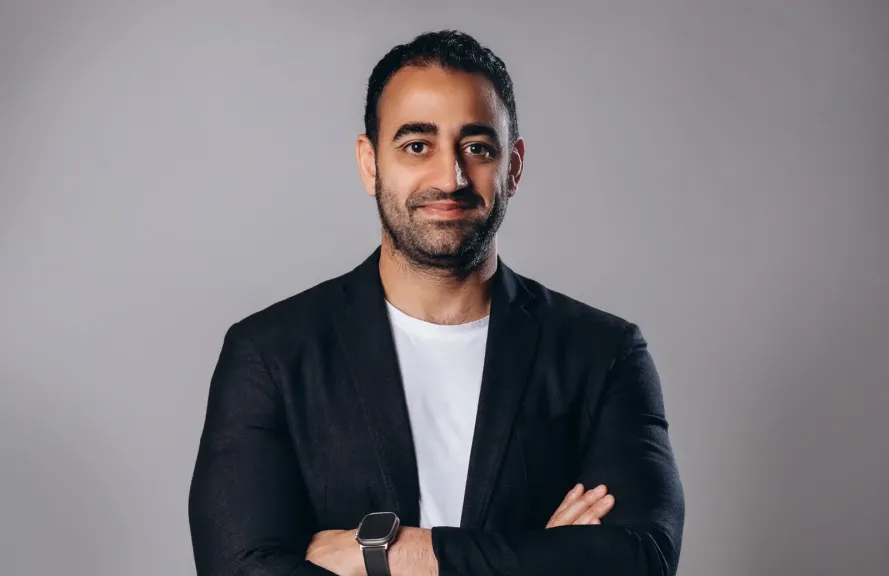
Speaking at Egypt Forum 2026, Money Fellows Founder and CEO Ahmed Wadi said the company has built a user base of more than 9 million people, including over 1.2 million active customers.
The company has managed savings circles worth more than EGP 150 billion and attracted more than $60 million in investment from sovereign funds and international investors.
The figures highlight how the traditional “gameya” model can evolve into a large-scale fintech service when technology is combined with an established consumer behavior.
The Technology Behind a Familiar Financial Habit
The traditional gameya allows groups of people to contribute money regularly to a shared pool, with members receiving the accumulated amount in turn.
Rather than replacing this behavior with an entirely new financial product, Money Fellows used technology to organize and digitize the process.
The approach allows users with different financial capabilities to participate while giving the traditional savings model a more structured digital framework.
Wadi said the company's idea was driven by an interest in using technology to solve everyday problems and create financial services that help people achieve specific goals.
He also emphasized a problem-first approach to entrepreneurship, arguing that startups should begin by identifying a genuine problem affecting a sufficiently large group of people.
Egypt’s Low Savings Rate Creates a Larger Opportunity
Money Fellows sees significant room for growth in Egypt's savings market.
Wadi pointed to a gap between savings rates in Egypt and those of other emerging markets, citing savings rates of around 28% of income in Morocco and 30% in India, compared with less than 10% in Egypt.
According to his view, the gap creates an opportunity for fintech companies to make saving easier and help consumers organize their finances around specific goals.
For Money Fellows, the potential market therefore extends beyond simply digitizing existing savings circles.
The larger opportunity is to turn a familiar financial habit into a structured digital savings experience.
Four Years Inside Egypt’s Regulatory Sandbox
Money Fellows' growth also illustrates the challenges fintech companies can face when their business models develop faster than existing regulatory frameworks.
Wadi said there was no clear regulatory framework covering the company's model when it began operations.
The fintech regulatory sandbox provided a controlled environment in which Money Fellows could operate and refine its model under regulatory oversight.
According to Wadi, the company has spent around four years inside the sandbox.
Its next stage is now focused on moving toward a licensing framework that would allow it to continue scaling, attract additional investment and serve a larger customer base.
The transition could represent a major milestone as Money Fellows moves from testing an unconventional financial model under supervision toward operating at greater scale within a dedicated regulatory framework.
Money Fellows Has Raised More Than $60 Million
Money Fellows has attracted more than $60 million from sovereign funds and international investors, according to Wadi.
The funding reflects institutional interest in fintech businesses built around financial behaviors that are already established in emerging markets.
Rather than importing an entirely new financial model, companies such as Money Fellows can use technology to modernize practices that consumers already understand.
Wadi, however, stressed that raising capital should not be the starting point for entrepreneurs.
His approach is to identify a problem with sufficient scale, develop a solution, test it quickly and refine the product according to how customers use it.
He also described failure as part of the entrepreneurial process rather than an endpoint.
Regulatory Sandboxes Help Test New Business Models
The Money Fellows case also highlighted the role of regulatory sandboxes in supporting financial innovation.
Dr. Mohamed Farid Saleh, Minister of Investment and Foreign Trade, said regulatory sandboxes are intended for companies developing business models for which clear legal or regulatory frameworks may not yet exist.
They allow new models to be tested in practice and assessed for viability before regulators establish an appropriate framework.
Money Fellows, he said, demonstrates how this approach can help startups move through different development stages until they are ready to operate under a regulatory structure suited to their activities.
Digital Infrastructure Can Help Fintechs Scale
Dr. Amr El-Abd, Advisor to the Prime Minister for Entrepreneurship, also highlighted the importance of digital infrastructure and services in supporting technology-driven businesses.
A stronger digital environment can help startups scale domestically while creating opportunities to expand into Arab and African markets.
For fintech companies, this infrastructure can be particularly important as digital financial services increasingly depend on connected platforms, digital customer journeys and scalable technology.
From a Local Financial Habit to a Scalable Fintech Business
Money Fellows' experience reflects a broader opportunity for fintech companies in emerging markets.
Innovation does not always require creating an entirely new financial behavior.
In some cases, the larger opportunity is to identify something millions of people already do and rebuild the infrastructure around it.
For Money Fellows, that behavior was the traditional savings circle.
With more than 9 million users, EGP 150 billion in managed savings circles and over $60 million in investment, the company's next challenge is no longer proving that the concept can work digitally.
The next test is whether Money Fellows can successfully move from Egypt's regulatory sandbox into a fully licensed framework capable of supporting its next phase of growth.