
Future of Egypt: Private Sector Participates in 53 Companies, Plans to List Projects on Egyptian Exchange
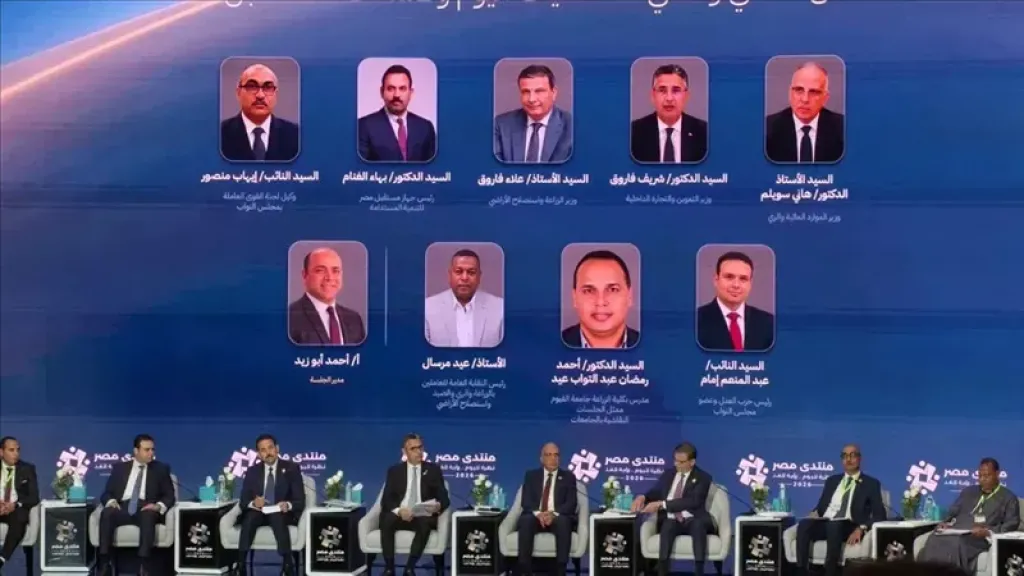
Future of Egypt for Sustainable Development participates in more than 53 companies and plans to exit projects by preparing their assets for potential listings on the Egyptian Exchange or offering them to the private sector, Chairman Baha El-Ghannam said.
El-Ghannam said the Future of Egypt owns stakes in more than 55 companies, including only two companies that are fully owned by the organization. The organization holds stakes exceeding 40% and 50% in several companies, reaching 75% in some cases.
He added that more than 1,000 private-sector companies are involved in various Future of Egypt projects, stressing that the organization’s role is focused on driving and organizing development rather than competing with or taking over private-sector activities.
El-Ghannam made the remarks during a session titled “Food and Water Security: Today’s Challenges and Future Guarantees” at Egypt Forum 2026, held under the patronage and attendance of President Abdel Fattah El-Sisi.
Future of Egypt Targets Project Exits and Asset Listings
El-Ghannam said the organization does not seek to acquire economic activities or compete with the private sector. Instead, its strategy focuses on implementing projects, preparing assets, and developing the infrastructure required before making them available to private-sector companies and investors.
He said the organization plans to exit projects it develops after completing the preparation of their assets, either by listing them on the Egyptian Exchange or offering them to the private sector, in line with Egypt’s State Ownership Policy Document.
The participation of private-sector companies in more than 53 companies, alongside the involvement of more than 1,000 companies in Future of Egypt projects, reflects the organization’s development role through partnerships with companies and investors.
100% of Future of Egypt Surpluses to Be Directed to State Budget
Regarding governance and transparency, El-Ghannam said Future of Egypt underwent a comprehensive restructuring following the issuance of legislation regulating its activities.
He confirmed the organization’s commitment to paying its taxes, social insurance contributions and customs duties, while applying competitive neutrality rules.
He also said directives issued during discussions of the organization’s law called for 100% of Future of Egypt’s surpluses to be directed to the state’s general budget, instead of the 20% share stipulated in the provision governing the allocation of surpluses.
El-Ghannam added that the organization relies on its own resources for financing and does not use bank guarantees. He explained that the diversity of its activities enables it to cover the costs of infrastructure projects supporting food security, including associated losses.
He also stressed that there is full transparency in pricing services related to the land and assets managed by the organization.
4 Million Feddans Targeted for Agricultural Reclamation
El-Ghannam said Future of Egypt is working to reclaim around 4 million feddans of agricultural land across several areas, including the New Delta, Aswan, Minya, Beni Suef, Sinai and Al-Lahun.
He explained that achieving food security requires ensuring the availability of essential commodities across different seasons and over the long term, particularly given Egypt’s limited water and agricultural resources and annual population growth of around 1.5%.
He noted that agricultural expansion began with the 1.5-million-feddan initiative launched in 2014, while infrastructure projects supporting the food security system began in 2018.
He described the reclamation of 4 million feddans in less than 12 years as a major development, noting that Egypt’s agricultural land area declined from around 9 million feddans to 8 million feddans due to building violations, according to his remarks.
El-Ghannam: Egypt Witnessing Genuine Economic Openness
El-Ghannam said Egypt is witnessing genuine economic openness, stressing that government policies aim to achieve broader economic openness.
He highlighted the country’s human resources, infrastructure and companies that have entered the market since 2014, as well as the importance of enabling future generations to understand the concept of sustainable development.
Future of Egypt Clarifies Position on Farmers’ Land
Regarding farmers’ rights, El-Ghannam said Future of Egypt has not withdrawn land from farmers. He explained that the organization acts as a governmental authority responsible for assets transferred to its jurisdiction and assumes the related state obligations.
He added that the organization addresses encroachments on state-owned land and works to legalize the status of unregistered land without excessive legalization fees.
Future of Egypt also pays government claims related to such land, including cases where citizens have not settled state dues for more than 14 years.
The organization is also working to preserve productive agricultural cultivation on some encroached lands and is developing infrastructure to serve them while taking citizens’ circumstances into account within the framework of the law.
Lake Management and Support for More Than 25,000 Fishermen
El-Ghannam said Future of Egypt does not own any fishing boats in the lakes under its management.
He explained that its role is regulatory, focusing on combating illegal and excessive fishing practices and ensuring equal opportunities among fishermen.
The organization also coordinates with relevant authorities to address untreated industrial and sanitary wastewater affecting the lakes.
Its area of responsibility includes more than 25,000 fishermen and between 6,000 and 7,000 fishing licenses, he said.
5 Million Tons of Locally Produced Wheat Collected
El-Ghannam said Future of Egypt cooperates with the Ministries of Supply and Agriculture to regulate markets through a system covering the commodities exchange, logistics and agricultural infrastructure, production inputs, crop planning, manufacturing, marketing, exports and imports.
Coordination among the relevant authorities contributed to bringing wheat imports to their lowest levels this year, alongside the collection of 5 million tons of locally produced wheat, he said.
He added that the organization is working to develop agricultural policies, support farmers, ensure fertilizers reach eligible beneficiaries, combat fertilizer and pesticide fraud, and address monopolistic practices to protect agricultural land, consumers and the efficiency of the food security system.