
Google Launches Gemini AI Agent to Automate Enterprise Workflows
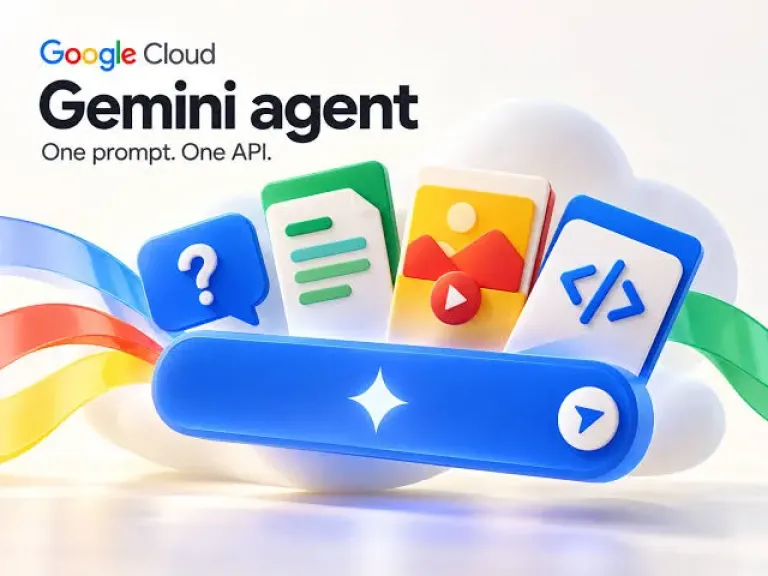
Google has introduced a new AI agent within its Gemini platform designed to plan and execute tasks on behalf of employees, extending AI assistance beyond answering questions and handling simple commands. The launch underscores Google's push to make autonomous AI agents part of everyday business operations.
The company is initially rolling out the agent to businesses and enterprises, with individual users expected to gain access later. Google says Gemini serves more than one billion monthly users, while approximately 90% of Fortune 100 companies use Gemini Enterprise in their workplaces.
Rather than requiring detailed instructions for every step, the agent allows users to define an objective and then develop an execution plan, select suitable tools and skills, and draw on internal company systems to complete the task.
Its potential applications include writing code, scheduling meetings, managing files and data, coordinating workflows, and handling multistep assignments that require collaboration across different systems.
Support for Multiple AI Models
Gemini automatically selects the model best suited to a task by default, while allowing users to choose a model themselves. Google is introducing support for Anthropic's Claude models and plans to expand the available options to include open-source and other proprietary models.
The agent can also work with related files, folders, and projects, connecting them to the tools and data required for a particular workflow instead of treating every request as a separate conversation.
Its integrations span Google Workspace, Microsoft 365, Slack, Jira, Confluence, Git, BigQuery, Databricks, Postgres, and Snowflake. It can also connect to Model Context Protocol (MCP) servers inside or outside corporate networks, expanding access to business tools while accommodating enterprise security controls.
A Dedicated Work Identity and Activity Tracking
Google is providing a dedicated task interface that lets employees monitor execution stages and progress, see work delegated to subagents, and review the specialized skills and code used during execution.
The agent receives its own account within Workspace, including an email address and an independent work context. This allows it to access relevant information about teams, time zones, approval contacts, and calendar events.
Employees can interact with the agent by mentioning it directly, emailing it, sharing files and information, or adding it to group conversations, bringing its capabilities into existing workflows rather than requiring a separate tool.
The agent also creates an audit trail of its actions, attributing recorded operations to its own account rather than the employee who assigned the task. This gives organizations a clearer way to track AI-driven activity.
Access will extend across iOS and Android devices, Windows and Mac computers, and a command-line interface, as well as Google Workspace, Microsoft 365, ServiceNow, and Slack.
Early Enterprise Users and Spending Controls
Early testing included sportswear brand On, e-commerce platform Shopify, and PayPal. Gemini Enterprise customers also include BNP Paribas, Bradesco, Merck, Orange Spain, Santee Cooper, SOMPO, Ulta Beauty, and Wesfarmers.
Google is also developing more flexible ways for businesses to manage AI spending. These include coordinating work across multiple models, routing tasks to appropriate models, and setting real-time spending limits.
The launch reflects a broader shift in enterprise AI toward agents that can independently carry out tasks rather than simply generate text or provide answers. By embedding these capabilities into Gemini, Google aims to make AI agents part of routine business operations, working across company systems, data, and teams to complete assignments from start to finish.