
?Gold Falls Sharply, but Investors Keep Buying: What Does It Mean for Long-Term Holders
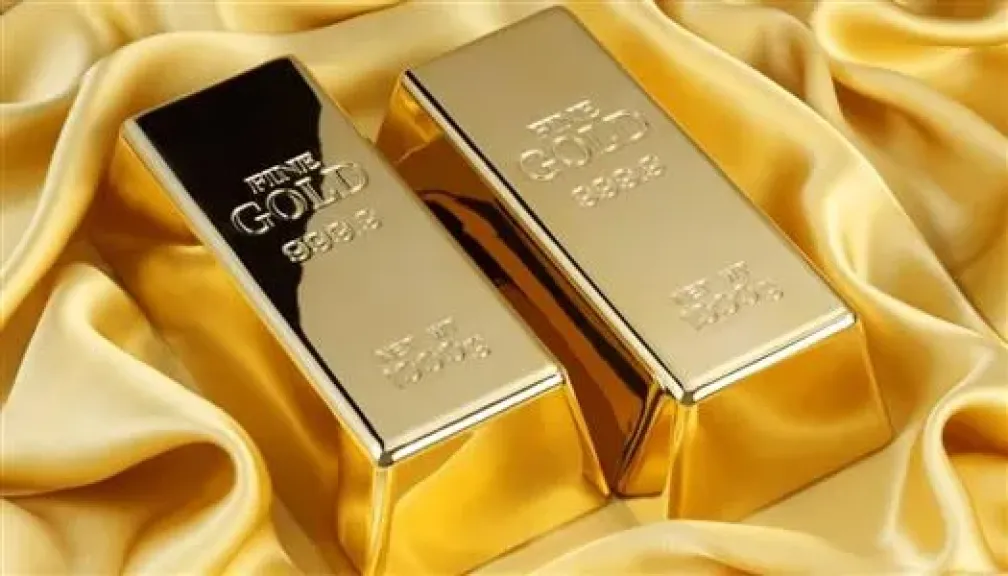
Gold has suffered a sharp correction, falling more than 8% in September and extending its weakness into October. Yet beneath the price decline, an unusual development is unfolding: investors are continuing to pour billions of dollars into gold-backed funds.
The divergence raises an important question for long-term investors. If gold is losing value while investment demand remains strong, is the market signaling a deeper change in its outlook, or simply adjusting to higher interest rates and a stronger US dollar?
The latest data suggest that the answer is more complicated than the price chart alone indicates.
According to the World Gold Council, gold ended September at approximately $4,176 per ounce, down 8.5% during the month.
The metal subsequently fell to a two-month low on October 7, before recovering modestly on October 8, when spot gold traded around $4,127 per ounce.
The correction has been significant, but the behavior of institutional investors suggests that falling prices have not eliminated gold's appeal as a long-term portfolio asset.
Gold Prices Are Falling, but Investment Demand Tells Another Story
One of the most striking developments in the gold market is the contrast between price performance and investment flows.
During September, global gold exchange-traded funds attracted approximately $10 billion in net inflows, even as the metal recorded one of its steepest monthly declines of the year.
Gold-backed ETF holdings increased by 67 metric tons to a record 4,256 tons.
For the third quarter as a whole, global gold ETFs attracted a record $31 billion in investment.
This creates an unusual market picture.
While prices have been falling, investors have continued accumulating gold through financial products backed by physical holdings.
The divergence does not guarantee a price recovery. ETF inflows represent only one component of the broader market, and selling through futures markets can exert substantial downward pressure.
Nevertheless, the figures indicate that at least some investors are maintaining or increasing their exposure despite short-term losses.
Why Is Gold Falling?
The immediate pressure on gold has come largely from the US dollar and government bond yields.
Gold does not generate interest or dividends.
When Treasury yields rise, investors can earn higher returns from interest-bearing assets, increasing the opportunity cost of holding bullion.
A stronger dollar also makes gold more expensive for investors using other currencies.
These forces were particularly visible in September.
The World Gold Council reported that the US 10-year Treasury yield increased by approximately 53 basis points during the month, while the US Dollar Index gained around 2%.
Together, those movements contributed to the decline in gold prices.
The pressure continued into October as investors reassessed the Federal Reserve's interest-rate outlook.
On October 7, spot gold fell to approximately $4,108 per ounce, its lowest level since early August.
The following day, prices recovered modestly as investors weighed the prospect of further monetary tightening against concerns over rising government debt.
The 7% Question: How Much Does the Time Frame Matter?
A decline of around 7% can appear alarming when viewed in isolation.
But its significance depends heavily on the period being measured.
A 7% decline over several trading sessions carries different implications from a similar decline over six months.
The World Gold Council's mid-year outlook showed that gold was down approximately 7% for the year as of late June, despite having previously reached record levels above $5,500 per ounce in January.
By the end of September, the metal had experienced another substantial monthly correction.
These figures illustrate why investors should distinguish between daily price movements, monthly performance, year-to-date returns and declines from historical peaks.
A fall from a recent high does not necessarily mean that an investment has produced a negative return over several years.
Equally, a strong historical performance does not protect investors from substantial future losses.
Central Banks Are Still Treating Gold as a Strategic Asset
Another important element in the long-term outlook is demand from central banks.
Despite rising bond yields, monetary authorities continue to view gold as a tool for diversifying reserves and managing geopolitical and financial risks.
At an international bullion industry conference in Italy on October 5, senior central bankers emphasized gold's continuing role as a strategic reserve asset.
Their arguments focused on concerns about government debt, geopolitical instability and the concentration of reserves in traditional financial assets.
A World Gold Council survey published earlier in 2026 also found that 45% of surveyed central bank reserve managers expected global official gold holdings to increase over the following 12 months.
That does not mean central bank purchases will prevent further declines.
It does, however, suggest that part of the demand for gold is driven by long-term reserve management considerations rather than short-term trading opportunities.
Could Higher Interest Rates Keep Gold Under Pressure?
One of the biggest risks to the gold outlook is that interest rates remain elevated for longer than investors expect.
Higher yields can continue attracting capital toward bonds and cash-like instruments, particularly when investors are seeking income rather than protection against financial uncertainty.
A sustained rise in real interest rates could therefore place additional pressure on gold.
The dollar is another important variable.
If US monetary policy remains relatively restrictive compared with other major economies, dollar strength could continue making bullion more expensive internationally.
But the relationship is not always straightforward.
Gold can sometimes remain resilient despite higher yields when concerns about sovereign debt, inflation or financial instability increase demand for diversification.
That tension is central to the current market.
What Does the Correction Mean for Long-Term Investors?
For investors holding gold as a long-term portfolio diversifier, the key issue is whether the reasons for owning it have changed.
Gold is generally used for several purposes: diversification, protection against certain economic risks and preservation of purchasing power over extended periods.
It does not, however, provide guaranteed protection against inflation over every investment horizon.
Nor does it consistently rise during every financial crisis.
The metal can experience prolonged periods of weak performance, particularly when real interest rates are attractive and confidence in other financial assets improves.
The World Gold Council's historical analysis identified eight episodes since 1971 in which gold declined by more than 20% after reaching a record high.
Those episodes had an average peak-to-trough decline of approximately 36%.
That historical volatility is a reminder that gold can be a long-term investment while still exposing holders to substantial short-term and medium-term losses.
Should Investors Buy More After a Decline?
A lower price does not automatically make gold a better investment.
The decision depends on an investor's existing exposure, financial objectives, liquidity requirements and tolerance for volatility.
For someone whose portfolio already contains a large allocation to gold, buying more after a correction could increase concentration risk.
For an investor with limited exposure, the same price movement may create an opportunity to reconsider portfolio diversification.
But attempting to identify the exact market bottom is inherently uncertain.
The more useful distinction is between investors seeking short-term price gains and those holding gold as part of a diversified strategy over several years.
Both groups may own the same asset, but their responses to volatility can be very different.
Three Signals That Could Shape Gold's Next Move
The first is the direction of US Treasury yields and the dollar.
If both remain elevated, gold may continue facing pressure even if investment demand stays relatively strong.
The second is whether inflows into gold-backed ETFs continue.
September demonstrated that investment demand can remain substantial during a price correction, but sustained inflows are not guaranteed.
The third is central bank demand and broader concerns about inflation, debt and geopolitical instability.
These factors could continue supporting gold's strategic role, although they cannot eliminate market volatility or establish a reliable price floor.
The Bigger Question Is Not Whether Gold Will Recover Tomorrow
The current correction illustrates a fundamental distinction between an asset's market price and the reasons investors choose to hold it.
Gold has fallen sharply as higher bond yields and a stronger dollar have made competing assets more attractive.
At the same time, investment funds and central banks continue to demonstrate demand for bullion as a diversification asset.
Neither development cancels out the other.
For long-term investors, the most important question may therefore be less about whether gold will recover next week and more about whether their allocation remains appropriate for their investment horizon and financial objectives.
A 7% decline is not, by itself, evidence that gold has lost its long-term investment role. But continued institutional buying is not proof that prices have reached a bottom either.
The market is sending two messages simultaneously: gold remains strategically important to many investors, and that importance does not make it immune to significant losses.