
Mohamed Kiwan.. Building Trust Before the Digital Economy Made It Essential
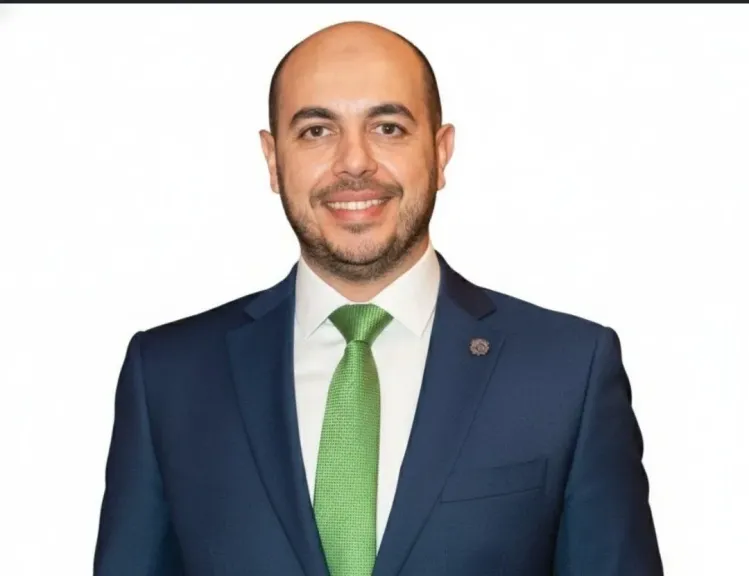
Long before digital identity, electronic signatures and trusted digital transactions became central to Egypt’s digital transformation, Mohamed Kiwan was already building his career around a simple but increasingly critical question:
How do you create trust in a world where transactions no longer need paper, a physical signature or even a face-to-face meeting?
It is a question that has followed Kiwan through much of his professional journey.
Today, as CEO of Egypt Trust, he operates at the heart of an industry that most people rarely see, but increasingly depend on every day.
Behind a digitally signed document, a verified electronic identity or a secure government transaction lies an infrastructure designed to answer one fundamental question: Can this digital interaction be trusted?
For Kiwan, that infrastructure has been more than a business.
His professional background has been closely connected to Public Key Infrastructure (PKI), information security, electronic signatures, secure digital transactions and digital transformation — areas that were highly specialized when he entered them, but have since become essential building blocks of the digital economy.
And there are early signs in his career of where that journey was heading.
Back in 2012, Kiwan worked on a project exploring the electronic registration of births using mobile digital signatures, with the idea that the same model could eventually extend to other government services.
At the time, the concept sounded ambitious.
Today, digital identity, electronic authentication and paperless government services are increasingly becoming part of everyday life.
That evolution has placed companies such as Egypt Trust in a very different position.
The conversation is no longer simply about replacing handwritten signatures with electronic ones.
It is about building an environment where citizens, businesses, banks and government institutions can interact digitally while knowing who is on the other side — and knowing that the transaction itself can be protected, authenticated and audited.
This is where Kiwan’s technical background becomes particularly relevant.
His experience combines technology with an understanding of governance, security, compliance and the regulatory environment surrounding digital transactions.
It also explains a recurring theme in the way he speaks about the industry:
Digital trust is not simply a technology product. It is an infrastructure.
Under his leadership, Egypt Trust has continued to expand its role in electronic signatures and digital trust services, supporting the wider shift toward secure digital transactions across regulated sectors.
But technology alone is not enough.
As more services move online, the challenge becomes increasingly complex. Cybersecurity, identity protection, business continuity and regulatory compliance must work together. A digital transaction may happen in seconds, but the infrastructure behind those seconds must be built to withstand risks that are constantly evolving.
That philosophy was reflected again in 2026 as Egypt Trust strengthened its information security and business continuity framework, while Kiwan continued to advocate for electronic signatures as an essential component of secure digital transformation.
His journey also carries an interesting contrast.
The more invisible digital trust becomes to the user, the more successful it probably is.
People do not want to think about certificates, encryption keys or authentication infrastructure every time they complete a transaction.
They simply expect it to work.
And they expect it to be safe.
Perhaps that is the best way to understand Mohamed Kiwan’s professional journey.
It has been built around technologies that were once highly specialized, but are now becoming fundamental to how economies, governments and businesses operate.
Because as the economy becomes more digital, trust is no longer something technology supports.