
National Bank of Egypt Backs Upper Egypt’s First Cyclotron Unit to Bring Advanced Cancer Diagnostics Closer to Patients
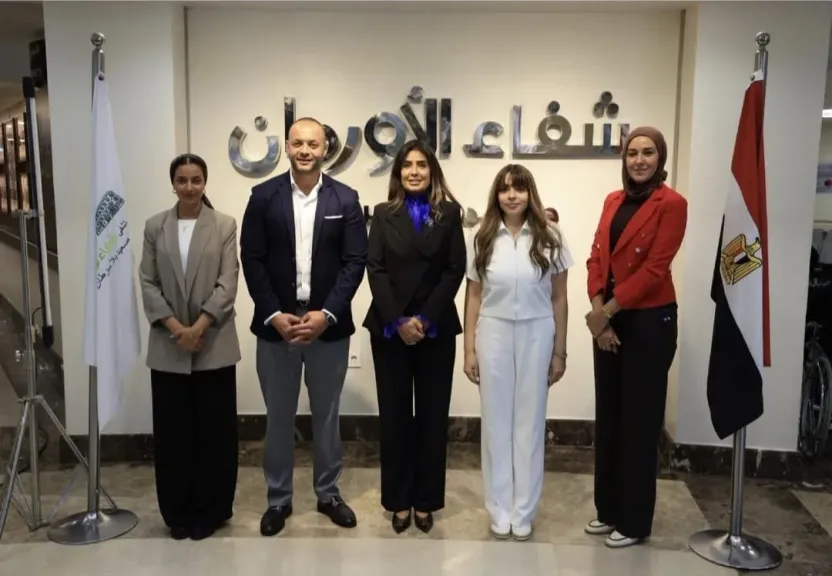
The National Bank of Egypt has supported the opening of what it describes as the first and largest cyclotron unit in Upper Egypt at Shefaa Al-Orman Hospitals in Luxor, bringing technology used to produce short-lived radioactive isotopes closer to cancer patients across the region.
The project, developed in cooperation with Shefaa Al-Orman Foundation, addresses a challenge that extends beyond simply adding another piece of medical equipment. Radioisotopes produced by cyclotrons are used in advanced medical imaging and cancer diagnostics, but their short half-lives make proximity between production and medical facilities particularly important.
Locating this capability in Luxor could therefore reduce the need to transport certain radioactive materials over long distances while expanding access to advanced diagnostic services for patients in Upper Egypt.
The unit was inaugurated in the presence of Minister of Social Solidarity Maya Morsy, Minister of Local Development and Environment Manal Awad, Luxor Governor Abdel Mottaleb Emara, Central Bank of Egypt Deputy Governor Ghada Tawfik, NBE Head of Marketing and Community Development Dina Abou Taleb and Shefaa Al-Orman Foundation Chairman Khaled El-Noury.
Why a Cyclotron in Upper Egypt Matters
A cyclotron is a particle accelerator used in healthcare to produce radioactive isotopes required for sophisticated diagnostic procedures, including examinations used in oncology.
Many of these isotopes have short half-lives, meaning they decay rapidly after production.
That creates a logistical challenge: the further patients and hospitals are located from production facilities, the more difficult it becomes to efficiently provide some nuclear medicine services.
The new facility brings isotope production capacity directly to Upper Egypt, potentially strengthening the medical infrastructure surrounding advanced cancer diagnosis in the region.
According to the project partners, the unit will support more accurate diagnosis, earlier cancer detection and monitoring of patients’ responses to treatment.
Moving Advanced Cancer Technology Closer to Patients
The significance of the project is particularly relevant for patients who previously needed to travel considerable distances to access specialized medical services.
Centralizing sophisticated healthcare technologies in Cairo and other major urban centers can impose additional financial, physical and logistical burdens on patients and their families.
The Luxor facility is designed to help narrow that geographical gap.
By locating advanced diagnostic infrastructure within Upper Egypt, the project aims to allow more patients to receive specialized examinations closer to where they live.
That turns the investment into an infrastructure project as much as a healthcare donation.
NBE Puts Healthcare at the Center of Social Investment
The National Bank of Egypt said the project forms part of its strategy to direct community-development spending toward initiatives capable of creating sustainable and measurable impact.
Healthcare is one of the bank’s priority areas for social investment, with its approach increasingly focused on financing infrastructure and equipment that can continue serving communities beyond the initial contribution.
The cyclotron unit fits that model because the investment creates permanent diagnostic capacity rather than funding a temporary healthcare campaign.
NBE also said its community-development investments are selected using field studies intended to assess their potential impact on beneficiaries.
Banking Support Meets Specialized Healthcare Infrastructure
The project also illustrates a broader model of cooperation involving government institutions, the banking sector and civil society organizations.
Shefaa Al-Orman provides the specialized healthcare platform, while NBE’s contribution supports the infrastructure required to expand the level of medical technology available within it.
The bank said this model demonstrates how private and institutional capital can be directed toward development projects that complement public healthcare infrastructure.
For Shefaa Al-Orman, the new unit expands the range of cancer-related services that can be provided from Luxor to patients across Upper Egypt.
From Funding Treatment to Building Medical Capacity
Corporate and banking social-responsibility programs in healthcare frequently focus on covering treatment costs or purchasing individual pieces of equipment.
The cyclotron project represents a different approach because it adds specialized production capacity to the healthcare system itself.
Producing short-lived radioactive isotopes locally can support a wider diagnostic ecosystem and help hospitals perform sophisticated examinations used throughout a cancer patient’s treatment journey.
That makes NBE’s involvement more significant than conventional healthcare sponsorship. By helping bring cyclotron technology to Upper Egypt, the project invests in the infrastructure behind cancer diagnosis — potentially reducing the distance between patients and some of the advanced medical services they need.