
ZTE Egypt’s Ivan Yang: We Are Studying Local Manufacturing and a Regional Hub for Africa and the Middle East
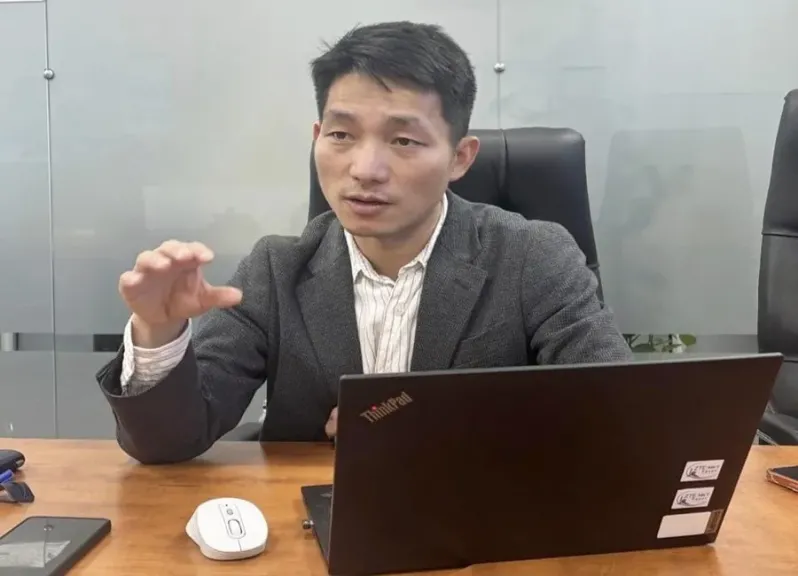
Chief Technology & Information Officer at ZTE Egypt tells TechnoTime that the company is expanding beyond traditional telecom infrastructure into data centers, computing, cloud and AI
Yang: Egypt could see a major data center boom, while 5G is still at the beginning of its journey
Computing now accounts for more than 35% of ZTE’s global revenue as the company accelerates its “Connectivity + Computing” strategy
ZTE is studying the possibility of locally manufacturing some of its products in Egypt and establishing a regional hub that could serve markets across Africa and the Middle East, as the company enters a new phase of expansion beyond traditional telecom infrastructure.
In an exclusive interview with TechnoTime, Ivan Yang, Chief Technology & Information Officer at ZTE Egypt for Communications, said the company sees growing opportunities in data centers, intelligent computing, cloud and AI infrastructure, alongside its established telecom business.
Yang said ZTE is actively exploring data center opportunities in Egypt and expects the company to showcase its first project in this area in the near future.
With nearly 14 years of experience in the ICT industry and almost two years in Egypt, Yang believes the convergence of cloud computing, 5G and artificial intelligence is creating a new technology cycle in which Egypt has an opportunity not only to adopt new technologies, but also to build local capabilities and generate economic value from them.
He also sees Egypt’s geographic position, extensive submarine cable infrastructure and technology talent as key assets that could strengthen the country’s ambition to become a regional digital hub.
Here is the full interview:
Egypt Is Becoming a Strategic Market for ZTE
TechnoTime: You have spent almost two years in Egypt. How important is the Egyptian market today within ZTE’s strategy?
Ivan Yang: Egypt is becoming increasingly important to ZTE. It is a strategic market for us.
What makes the ICT industry particularly exciting today is that cloud computing, 5G and AI are coming together. For Egypt, this is not simply about adopting new technologies. It is also about developing local capabilities and turning technology into economic value.
Egypt has a significant geographic advantage. It sits at a strategic point connecting Africa, Asia and Europe, with a large number of submarine cables passing through the country and carrying substantial international traffic.
This gives Egypt a strong opportunity to achieve its ambition of becoming a regional digital hub.
ZTE already has many projects in Egypt, particularly with Telecom Egypt, and we also work with operators including Vodafone and Orange across traditional telecom infrastructure.
Competition is strong, including with other global vendors, but I believe Egypt has a healthy competitive environment. It is a large market with room for multiple players.
Egypt’s 5G Journey Has Just Started
TechnoTime: Egypt has commercially launched 5G. From a technology perspective, how advanced is the market today?
Yang: I would say Egypt’s 5G journey has just started.
A commercial launch does not mean that 5G deployment has reached maturity. Spectrum availability will be very important to the next stage of network development.
There are moves toward making additional spectrum available, particularly in the 3.5 GHz band, which should give operators greater capacity to expand their networks and improve services.
So, from my perspective, Egypt is still at an early stage of its 5G journey, with considerable room for growth.
Egypt Could See a Data Center Boom
TechnoTime: Egypt is witnessing growing investment in data centers. Do you see this as a sustainable opportunity or simply a temporary investment wave?
Yang: I believe a strategic window has opened for Egypt, and data centers could become one of the country’s biggest technology opportunities.
AI is the first major driver. You cannot build serious AI capabilities without computing infrastructure and data centers. Egypt has already started moving toward building sovereign AI and sovereign cloud capabilities.
But AI is not the only driver.
Geopolitical developments in the region are also causing organizations to reconsider where they host their data and infrastructure. Egypt has an important advantage because of its location and its proximity to the Gulf, Africa and Europe.
For that reason, I believe demand for data centers in Egypt will not come only from domestic AI requirements. Egypt could also attract regional demand.
I expect this market to grow significantly.
ZTE Eyes Its First Data Center Showcase in Egypt
TechnoTime: Is ZTE already pursuing data center projects in Egypt?
Yang: Yes. We are actively exploring a number of potential opportunities and projects in the Egyptian market.
We have started discussions with several entities, although I cannot disclose their names at this stage.
What I can say is that we are not simply observing the market. We are actively working on opportunities, and I believe you will see our first showcase project in this area in Egypt soon.
TechnoTime: Would ZTE’s role be limited to supplying equipment, or can the company deliver an entire data center?
Yang: We can act as an integrator and support an end-to-end data center project.
Our capabilities cover planning and design, power systems, cooling systems, networks, civil works and consultancy.
One of ZTE’s particular strengths is the MEP side, especially power and cooling. In other areas, we work through an ecosystem of specialized partners.
We work with global companies and are in discussions and cooperation with companies such as Schneider Electric. We also cooperate with Cummins on generator solutions, in addition to working with a large network of local contractors and partners.
So our approach is not simply to supply individual pieces of equipment. We can participate in building an integrated data center solution.
Computing Now Accounts for More Than 35% of ZTE Revenue
TechnoTime: ZTE is increasingly talking about its “Connectivity + Computing” strategy. How significant is computing to the company today?
Yang: Computing has become a major pillar of ZTE’s business alongside connectivity.
This does not mean connectivity is becoming less important. Telecom networks remain fundamental to us.
But the numbers demonstrate the scale of the change. In the first half of 2026, ZTE’s computing-related revenue increased by around 55% year on year and accounted for more than 35% of the company’s total revenue.
The opportunity today is no longer limited to mobile networks, transmission or fixed broadband. It now extends to servers, data centers, computing and AI infrastructure.
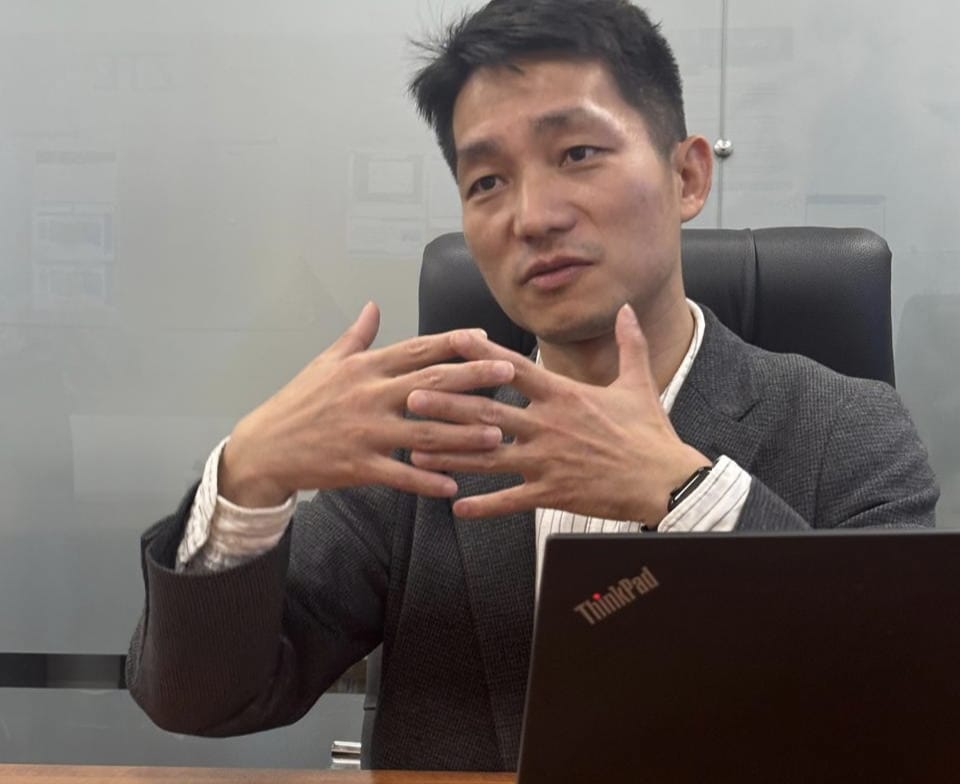
“We Don’t Need to Build Everything Ourselves”
TechnoTime: AI and computing put ZTE in competition with some of the world’s largest technology companies. How is your strategy different?
Yang: Our strategy is not to build everything ourselves.
The AI ecosystem has several layers, from energy and infrastructure to chips, models and applications. ZTE wants to focus on the areas where we have strong capabilities, particularly infrastructure, including data centers and servers.
For models and applications, we can work with strong ecosystem partners.
Alibaba, for example, has a very comprehensive technology stack, and we believe Qwen is one of the strong large language models coming from China. Ant Group also has significant capabilities in areas such as fintech.
Our approach is to combine the strengths of different partners to provide greater value to customers rather than trying to compete at every layer of the technology stack.
First Apsara Private Cloud Deployment Could Be Coming to Egypt
TechnoTime: Does ZTE intend to build a public cloud business that directly competes with players such as Huawei Cloud?
Yang: Our strategy is quite clear.
For the telecom sector, ZTE has its own telecom cloud capabilities, including the infrastructure required for telecom applications and core networks.
But when it comes to the broader enterprise and private cloud market, we are working with Alibaba Cloud.
We have strong cooperation around Apsara Cloud. A senior Alibaba Cloud executive recently visited Egypt, and together we met a number of potential customers.
I believe you could see the first Apsara Private Cloud deployment in Egypt very soon.
Sovereign AI Is About Choice and Control
TechnoTime: Egypt is building its sovereign AI capabilities. What does “sovereign AI” actually mean from your perspective?
Yang: For me, sovereign AI and sovereign cloud are not only about keeping data localized. They are about choice and control.
The question is whether a country has control over its technology, whether it has alternatives, and whether it can develop intelligence based on its own requirements.
Egypt has been moving forward with its national AI and cloud strategies, while data center infrastructure is becoming increasingly important.
This creates an opportunity to build an ecosystem in which Egypt can have greater control over its data, computing resources and AI capabilities.
Open Models Could Give Egypt Greater AI Independence
TechnoTime: You believe open Chinese AI models could offer an opportunity for Egypt. Why?
Yang: Open models give countries and organizations greater flexibility to build their own intelligence.
There are strong open models today, including Qwen, DeepSeek and Kimi.
Instead of developing everything from zero, an organization can start with an open model and then carry out post-training using its own data and according to its own requirements.
This can provide a more flexible and cost-effective route to building AI capabilities.
I believe Chinese technology companies can offer significant value in this area.
“Every Enterprise Will Need Its Own Intelligence”
TechnoTime: You take the sovereignty argument beyond governments and say enterprises will eventually need to “own their intelligence.” What do you mean?
Yang: I believe sovereign AI will not be limited to governments. Enterprises will also need their own AI and cloud capabilities.
Today, many organizations use tools such as ChatGPT or Gemini to extract intelligence from their data. But if enterprise data is sent remotely to an external cloud, an important question arises: where is that data going, and who controls it?
We are already seeing demand from enterprises asking how they can build their own AI capabilities and their own intelligence.
So the future will not simply be about whether a company uses AI. It will also be about whether it can turn its own data, knowledge and processes into intelligence that it controls.
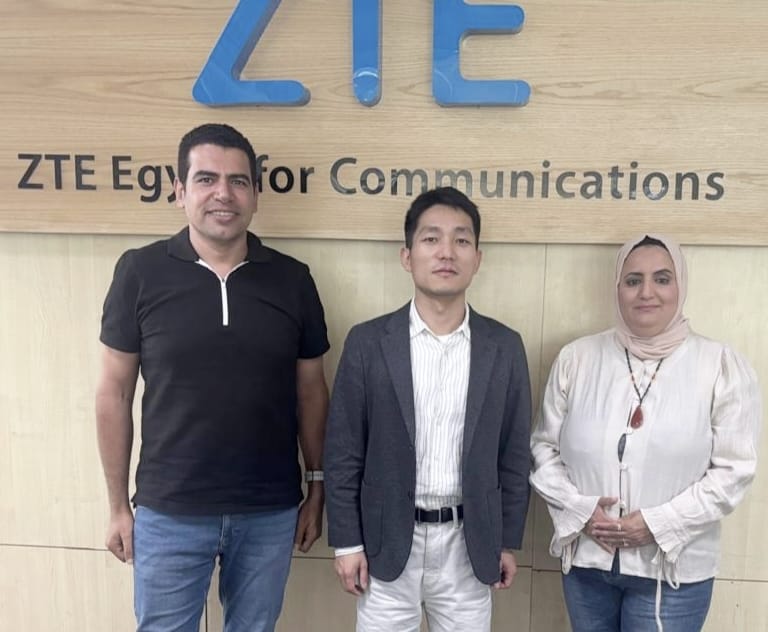
China Is Moving Beyond the “Low-Cost Product” Era
TechnoTime: AI infrastructure can be expensive. How can ZTE compete on cost in a market such as Egypt?
Yang: I believe cost efficiency is one of our strengths, supported by China’s mature manufacturing ecosystem.
But there has also been a major change in what Chinese companies bring to global markets.
In the first stage, Chinese exports were often associated primarily with low prices, and quality was not always their strongest point.
Then we moved into another stage in which China developed highly competitive manufacturing capabilities in areas such as electric vehicles, solar panels and lithium batteries.
Now we are entering what I would describe as a third stage. China is increasingly exporting technology — cloud, AI models and even AI agents — rather than simply manufactured products.
That represents a fundamental change in the value Chinese technology companies can bring to international markets.
AI Can Make Telecom Networks Cheaper to Operate
TechnoTime: Can AI genuinely reduce the cost of running telecom networks?
Yang: Absolutely. It is already happening.
ZTE uses AI in radio networks to improve spectrum efficiency and reduce power consumption.
Network traffic changes significantly throughout the day. During off-peak periods, AI can help place certain network components into sleep mode and reactivate them when demand increases.
AI can also forecast traffic and predict potential faults.
All of this improves efficiency and reduces operating costs, particularly energy consumption. As network efficiency improves, I believe the cost of connectivity can also continue to fall.
Telecom Operators Could Move Beyond Selling Gigabytes
TechnoTime: Cost reduction is important, but telecom operators also need new revenue streams. Can AI change their business model?
Yang: I believe this is one of the biggest opportunities.
AI can help telecom operators move beyond simply providing connectivity and create new revenue streams around cloud, computing and AI services.
Telecom operators in Egypt are already considering how to develop their own cloud capabilities.
There is also growing discussion globally around the “token economy,” and some Chinese telecom operators have already started developing businesses around this concept.
I believe telecom operators will gradually move beyond selling connectivity and data alone. They will also be able to provide computing capacity and AI services with higher value.
Before 5G-Advanced, Operators Need to Monetize 5G
TechnoTime: When do you expect Egypt to move toward 5G-Advanced?
Yang: Before discussing 5G-Advanced, the telecom industry needs to answer a more fundamental question: how do we monetize the investment already made in 5G?
Operators around the world have invested billions of dollars in 5G infrastructure, but the industry is still looking for clearer paths to generate returns from those investments.
Egypt is still at an early stage of 5G, so I believe the focus should first be on use cases that can create real economic value.
I see two particularly important opportunities in Egypt: private networks for different industries and Fixed Wireless Access.
5G-Advanced will take this further by bringing more AI capabilities and sensing into the network. That is clearly part of the future, but Egypt is still at the beginning of the journey.
ZTE Is Studying Local Manufacturing in Egypt
TechnoTime: Could we eventually see ZTE products manufactured in Egypt rather than imported?
Yang: Yes. We are currently studying the possibility of locally manufacturing some products in Egypt.
We are still evaluating the opportunity, so I cannot disclose which products or provide details before we have reached a conclusion.
But we have started thinking seriously about local manufacturing.
Egypt has another important advantage beyond its location: it has a large population of young, well-educated and talented people. That is an important factor when we evaluate opportunities like this.
Egypt Could Become a ZTE Regional Hub
TechnoTime: Could Egypt move from being a market for ZTE to becoming a base serving other countries?
Yang: Yes. We are also considering establishing a ZTE hub in Egypt.
The idea would be for our local colleagues not only to support the Egyptian market, but also to serve markets across Africa and the Middle East.
Egypt’s location and its talent base give it a real opportunity to play a larger regional role for ZTE.
ZTE’s Egypt Strategy: Two Pillars for the Next Phase
TechnoTime: What will be the main priorities for ZTE Egypt over the next year?
Yang: Our strategy will have two main pillars.
The first is our traditional telecom infrastructure business. We will continue supporting our customers across mobile networks, fixed broadband, transmission and core networks. These areas will remain very important.
The second pillar will focus on the new opportunities emerging around data centers, intelligent computing, cloud, AI infrastructure, enterprise digitalization and new digital services.
We will work hand in hand with strategic partners such as Alibaba Cloud and Ant Group, as well as other technology ecosystem partners, to support telecom operators and local enterprises in their digital transformation.
So this is not about moving away from connectivity. It is about adding computing, cloud and AI to the capabilities we have already built in telecom infrastructure.
“Egypt Does Not Lack Talent — It Needs More Opportunities”
TechnoTime: You started your career as a software engineer and today lead Technology & Information at ZTE Egypt. After almost two years in the country, what is your assessment of Egyptian technology talent?
Yang: I have met many talented people in Egypt, and I believe the country has very strong human capabilities.
One thing that stands out is language. Many young Egyptians speak very good English, some also speak French, and there is strong French and German education in the country.
That multilingual capability is a major advantage when you want to provide services to global markets.
From my perspective, the limitation is not the quality of Egyptian talent. It is the number of opportunities available to that talent locally.
Egypt has capable people. What they need are more platforms and positions where they can demonstrate and develop those capabilities.
More Global Tech Companies Could Help Reverse Egypt’s Talent Drain
TechnoTime: Is that why so many Egyptian professionals are working in Gulf markets?
Yang: Yes. You can find Egyptians in senior leadership positions at major companies outside the country, which demonstrates the quality of the talent.
Many Egyptians work in the Gulf and other markets because the local market has not always been able to provide enough positions matching their capabilities.
But I am optimistic.
More international technology companies are expanding in Egypt. ZTE and Huawei already have a presence here, and I understand Alibaba has plans to establish an office in Egypt. There are also global technology companies such as Microsoft and Amazon.
As more technology companies and regional operations come to Egypt, they will create more opportunities for local talent. Competition for skilled people will also increase, and I believe that will eventually have a positive impact on salaries.
I see a very bright future for Egyptian technology talent.