
Egypt Explores New Investment Partnerships with Algeria, India and Global Institutions
Egypt Turns to Afreximbank and SACE to De-Risk Expansion of Egyptian Companies Across Africa
Egypt is looking to strengthen the financial infrastructure behind its companies’ expansion across Africa, bringing Afreximbank and Italy’s export credit agency SACE into discussions focused on financing, export guarantees and reducing the risks businesses face when entering new markets.
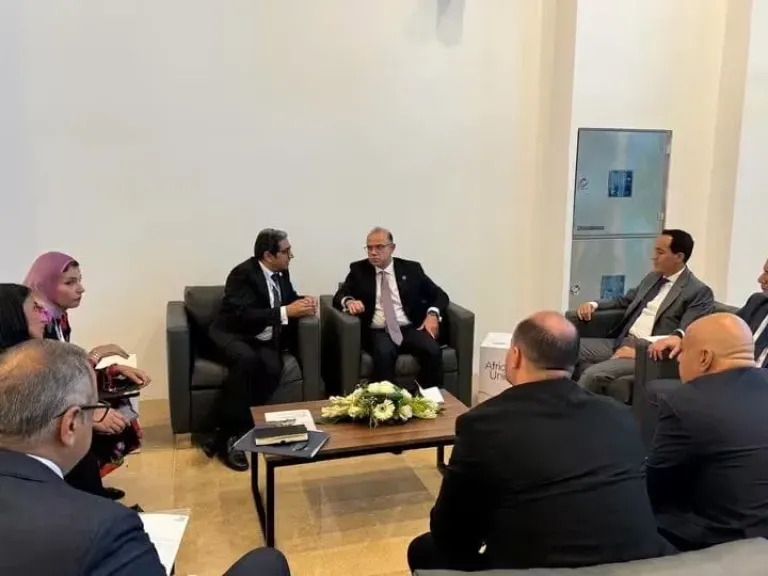
Investment and Foreign Trade Minister Mohamed Farid Saleh held talks with Haitham El Maayergi, Executive Vice President of the African Export-Import Bank, and Ciro Aquino, SACE’s Head of Middle East and Africa, on the sidelines of the Alamein Africa GO63 Forum.
The meetings brought together officials from the General Authority for Investment and Free Zones, The Sovereign Fund of Egypt and the Export Development Authority, reflecting a broader government effort to connect Egyptian companies with financing institutions capable of supporting their expansion beyond the domestic market.
Rather than focusing only on increasing exports, the discussions addressed a more fundamental challenge: how Egyptian businesses can finance projects, protect commercial transactions and manage the risks associated with entering African markets.
Financing Becomes Part of Egypt’s Africa Expansion Strategy
Farid said developing financing instruments and trade credit guarantees could reduce the risks associated with international expansion while making it easier for Egyptian companies to finance projects in new markets.
The government is seeking to identify the specific financial challenges companies encounter and connect them with institutions capable of providing solutions tailored to their expansion plans.
That approach marks an important shift in how export growth is being addressed.
Finding a buyer in another African country is only one part of a cross-border transaction. Companies may also need working capital, project financing, guarantees against non-payment and mechanisms to manage political, commercial and currency risks.
For companies pursuing infrastructure, industrial or energy projects, those financing requirements can become considerably larger.
Afreximbank Could Connect Egyptian Companies to African Capital
Discussions with Afreximbank focused on potential cooperation under the Egypt Goes Exporting initiative, which aims to connect Egyptian companies with financing and commercial opportunities across African markets.
The relationship builds on earlier talks between Egypt and the pan-African bank.
In May, the two sides discussed innovative financing solutions for exporters and investors, greater use of the Pan-African Payment and Settlement System, and opportunities in mining, tourism and construction.
They also examined the possibility of strengthening Egypt’s role as a continental re-export hub by using its ports, logistics infrastructure, free zones and special economic zones to connect trade flows between Africa and other regions.
Afreximbank’s role could therefore extend beyond providing individual loans.
Its presence across African markets gives the bank the ability to connect financing, trade facilitation and payment infrastructure — three elements Egyptian companies may need simultaneously when expanding across the continent.
Export Guarantees Could Remove One of the Biggest Barriers
The discussions with SACE add another dimension.
Export credit agencies are designed to help companies conduct business in markets where conventional lenders may be reluctant to accept all of the commercial or political risks involved.
Guarantees can make transactions more financeable by transferring part of that risk away from exporters and lenders.
For Egyptian companies, that could become particularly important when bidding for large projects or supplying goods and services under long-term contracts in markets where payment risk can otherwise restrict expansion.
The talks examined how SACE’s export credit and financing instruments could support Egyptian companies pursuing opportunities outside the country.
Renewable Energy and Green Projects Enter the Discussions
Cooperation with SACE could also extend beyond conventional export finance.
The two sides discussed opportunities involving renewable energy and the green transition, opening the possibility of financing structures linked to Egyptian companies participating in energy and infrastructure projects across African markets.
That matters because African expansion is not limited to exports of manufactured products.
Egyptian construction, engineering, energy and infrastructure companies increasingly compete for projects that require substantial upfront financing and long repayment periods.
For those businesses, access to credit guarantees and institutional financing can influence whether they can compete for a project at all.
Egypt Wants Finance to Follow Its Companies Abroad
The meetings fit into a wider government strategy that has been taking shape during 2026.
Egypt has been examining mechanisms to support companies investing across Africa rather than relying exclusively on traditional export promotion.
Government discussions have included proposals for an investment entity focused specifically on Africa, financing and guarantee mechanisms for Egyptian investments, and closer coordination between economic, diplomatic and financial institutions.
The objective is to create a support system that follows Egyptian companies into overseas markets.
That could include identifying opportunities, connecting companies with local partners, arranging financing, providing guarantees and helping businesses navigate regulatory and commercial challenges.
Afreximbank Relationship Is Moving Beyond Traditional Export Finance
Egypt’s discussions with Afreximbank have also expanded into the infrastructure surrounding intra-African trade.
Earlier talks covered the Pan-African Payment and Settlement System, which is designed to allow businesses to settle cross-border transactions using local currencies rather than relying exclusively on major international currencies.
For Egyptian exporters, reducing friction around payments could become almost as important as obtaining financing.
A company may have a competitive product and an African buyer but still encounter difficulties around foreign currency availability, settlement costs or cross-border payment mechanisms.
Combining financing with payment infrastructure could therefore address several barriers within the same transaction.
Egypt Is Trying to Turn Geography Into a Financing Advantage
The government also sees Egypt’s location and infrastructure as part of the equation.
Its ports, Suez Canal connections, logistics networks, industrial zones and proximity to European, Middle Eastern and African markets create an opportunity to position the country as a manufacturing and re-export base serving multiple regions.
But infrastructure alone does not automatically create trade flows.
Companies still need access to competitive financing if they are to manufacture in Egypt, export into African markets and compete with suppliers backed by powerful international export-credit systems.
Bringing institutions such as Afreximbank and SACE into that strategy could help narrow that financing gap.
The Real Test Will Be Converting Discussions Into Financial Products
No specific financing facility, guarantee volume or new funding commitment was announced from the latest meetings.
That distinction is important.
The talks establish areas for cooperation but do not yet represent a dedicated financing package available to Egyptian companies.
The next stage will therefore determine their practical significance: whether the discussions result in identifiable credit lines, export guarantees, project-finance structures or programs that Egyptian businesses can actually access.
For companies considering expansion into Africa, the difference between an available market and an executable business opportunity often comes down to precisely those instruments.
Egypt’s emerging Africa strategy is therefore moving beyond the question of where its companies can sell. The more difficult question is how they can finance expansion, protect transactions and compete for projects once they arrive — and that is where institutions such as Afreximbank and SACE could become increasingly important.