
AI-Driven Disinformation Raises New Cybersecurity Challenges, Expert Warns
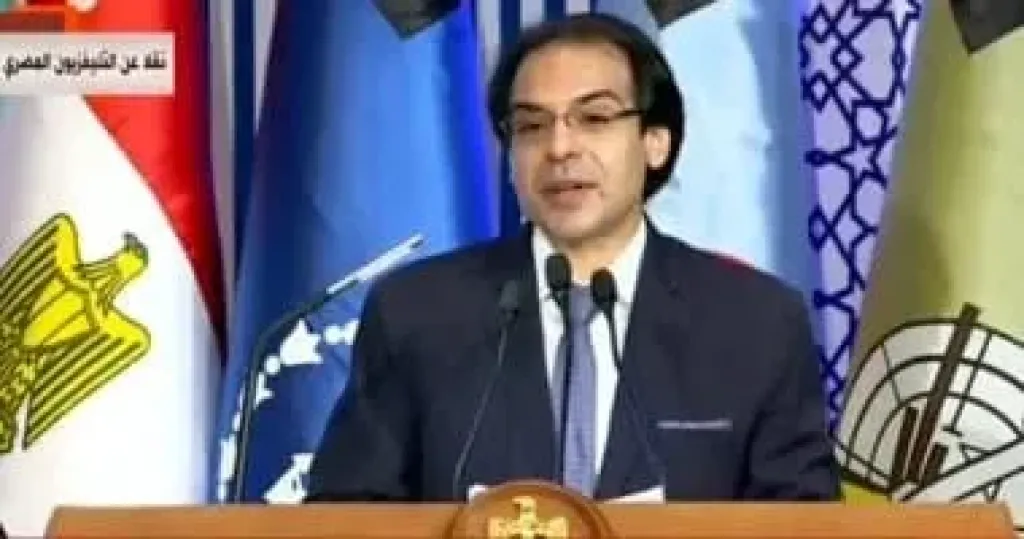
AI-Powered Manipulation Raises New Challenges for Digital Trust, Cybersecurity Expert Says
The rapid development of artificial intelligence is creating new challenges in the fight against digital disinformation, as increasingly sophisticated tools can manipulate audio, images and video while making misleading narratives harder to identify, according to cybersecurity expert Dr. Mohamed El-Gendy.
Speaking during a meeting attended by President Abdel Fattah El-Sisi, senior officials, military and police leaders, local community representatives, and a number of experts and specialists at the Strategic Command headquarters in the New Administrative Capital, El-Gendy said digital influence campaigns have evolved beyond simply spreading false claims.
He explained that modern disinformation efforts can target how people perceive events, information and institutions, with the ultimate effect being a loss of trust rather than the acceptance of one particular false narrative.
How a False Claim Can Gain Momentum
El-Gendy described a common pattern in which an unverified claim first appears through an obscure or unfamiliar source before being amplified across social media.
Some accounts involved in spreading the information may be sponsored or portray themselves as specialists, giving the claim an appearance of credibility and encouraging users or media outlets to share it before its origins have been established.
He presented the ABCDE model as one approach to understanding such campaigns. The framework examines the actors behind a narrative, their behavior, the content being distributed, the reach of the source and the eventual impact.
According to El-Gendy, analyzing these elements can help investigators determine how a piece of information was introduced, how it moved between platforms and what effect it was designed to produce.
As a hypothetical example, he described a fabricated technical document claiming that the Suez Canal faced operational problems that could threaten navigation.
A claim of this nature could move from an unknown website to social media accounts and subsequently reach news platforms and financial markets, potentially producing consequences even if the original claim has no factual basis.
The example, he said, demonstrates that the real target of a campaign may be public perception surrounding a facility rather than the facility itself.
Real Content Can Also Be Misused
Not every misleading post necessarily contains fabricated material, El-Gendy noted.
An authentic photograph, for example, can be removed from its original context and accompanied by a false explanation to support an unrelated claim.
He referred to an image circulated in connection with Ras El-Hekma, saying that tracing the photograph to its original source revealed a different context from the one presented alongside its later circulation.
The same approach can be applied to genuine video footage. Changing its audio or falsely associating it with another event can transform authentic material into a tool for spreading a misleading narrative.
For users, checking where an image or video originally appeared and understanding the circumstances in which it was produced are therefore essential parts of verification.
Creating Uncertainty Can Be the Objective
El-Gendy also highlighted a form of manipulation in which the goal is not to persuade people to believe a particular claim, but to make them uncertain about what can be trusted.
He cited historical campaigns surrounding the tobacco industry as an example, noting that promotional efforts attempted to cast doubt on scientific research concerning smoking and lung cancer by emphasizing uncertainty within individual studies.
He said modern disinformation can similarly exploit emotions, including fear and anger, while repetition, urgency and identity can make certain narratives more influential.
Personalized Feeds Can Reinforce Existing Beliefs
Social media algorithms represent another factor in the spread of misleading information, according to El-Gendy.
Because platforms use information about users’ interests and online behavior to personalize the content they see, different people can be exposed to very different versions of the information environment.
Repeated exposure to similar viewpoints can create “echo chambers,” where users encounter the same type of narrative from multiple accounts and sources.
This repetition may increase a person’s confidence in a claim without necessarily providing independent evidence that the claim is accurate.
El-Gendy also linked notifications and continuous browsing to the broader attention economy, in which platforms seek to keep users engaged for longer periods.
AI Makes Fake Audio and Video More Difficult to Detect
The growing availability of AI-powered content-generation tools is adding another dimension to these challenges.
El-Gendy warned that manipulated voices, images and videos can now be produced with a level of sophistication that makes simple visual inspection unreliable in some cases.
He pointed to the potential use of such technology in identity fraud, blackmail and defamation. He cited a case involving the imitation of a company chairman’s voice to issue instructions for transferring millions of dollars, with investigators later determining that earlier recordings had been used to reproduce the executive’s voice.
AI can also generate fictional digital characters and fabricated advertising materials, further increasing the need for stronger verification practices.
Verification Should Start With the Original Source
El-Gendy said the most important defense against digital manipulation is not necessarily a detection tool, but a more careful approach to information.
Users should go beyond asking whether a statement appears true or false and instead investigate where it came from and whether the original material can be located.
He urged users to verify the source of photographs, videos and statements and to avoid treating AI systems as unquestionable sources of information.
Particular attention should also be paid to headlines and posts designed to trigger fear, anger or excitement, he said.
Although specialized tools can help identify manipulated images, videos and audio, the sophistication of modern content-generation systems means that technology-based detection should be combined with human judgment and source verification.
Building Digital Resilience Requires Collective Action
According to El-Gendy, protecting society from disinformation requires cooperation among individuals, families, media organizations and state institutions.
Users should consider the potential consequences before sharing content, while families can help younger people develop the ability to question and verify information encountered online.
He also called for stronger early-warning mechanisms capable of detecting narratives that could develop into broader crises.
Such systems could monitor online discussions, identify information sources, assess their credibility and help organizations prepare responses through digital crisis simulations.
El-Gendy emphasized that improving public resilience also requires a better understanding of how audiences consume information and what influences their online behavior.
He advocated strengthening critical thinking, media literacy and information literacy within education so that younger generations can develop stronger habits for checking news and identifying reliable sources.
A Long-Term Approach to Digital Disinformation
El-Gendy said organizations should establish clear response strategies for misleading narratives, including deciding when a response is necessary, which party should deliver it, which platform should be used and how the effectiveness of the response will be evaluated.
He stressed that addressing disinformation should not be limited to issuing a denial after a narrative has already spread.
Instead, he described it as a continuous process involving monitoring, analysis, measurement and learning.
El-Gendy concluded by highlighting the importance of responsible communication and public awareness, noting that developing a better-informed society requires contributions from schools, families, religious institutions, media organizations and other community institutions.