
Egypt’s FRA Expands Women’s Access to Finance, Highlights New Capital Market Opportunities
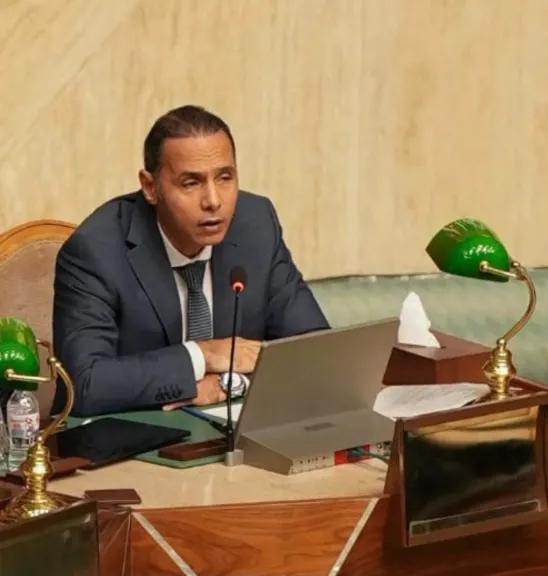
FRA Highlights Women’s Financial Inclusion and New Investment Opportunities in Egypt
The Financial Regulatory Authority (FRA) is expanding its efforts to strengthen women’s participation in Egypt’s non-banking financial sector while enhancing consumer protection and financial inclusion, according to Dr. Islam Ezzam, Chairman of the authority.
Speaking at the opening of the eighth session of the Arab Businesswomen Council at the Arab League headquarters, Ezzam outlined the FRA’s regulatory initiatives aimed at supporting women’s economic participation and ensuring equal opportunities across the sector.
Women held 26.9% of board positions at companies operating under the FRA’s supervision in 2025, representing 1,236 women. Ezzam attributed the progress to regulatory and governance measures designed to promote greater female representation in corporate decision-making.
The authority has also introduced incentives to encourage financial institutions to expand services targeting women. These include a 50% reduction in development fees and service charges for companies and entities whose services to women exceed 25% of their total services. The FRA has also reduced fees for reviewing securities offerings and sustainable development bonds, including those aimed at supporting women’s empowerment.
Women’s participation in microfinance has also continued to expand. By the end of the second quarter of the current year, women represented around 52.8% of Egypt’s microfinance beneficiaries, with approximately 1.8 million women among a total of 3.4 million beneficiaries. Financing extended to women reached EGP 33.7 billion, equivalent to about 45.4% of total outstanding financing.
Ezzam said the FRA is simultaneously strengthening customer protection mechanisms as the use of non-banking financial services grows. Recent measures include requiring one-time password (OTP) identity verification, real-time links between financing providers and the Egyptian Credit Bureau, and credit assessments based on customers’ financial behavior.
The FRA is also placing greater emphasis on financial literacy, with initiatives designed to help women identify secure financing and investment opportunities while understanding their rights, obligations and available channels for reporting fraud or other financial misconduct.
During his address, Ezzam also pointed to developments in Egypt’s capital market, highlighting what he described as significant investment opportunities emerging from the expansion of financial market instruments.
The FRA is expected to introduce short selling, which involves selling borrowed securities, within the coming weeks. The mechanism will operate alongside margin trading and is intended to support more efficient price discovery, increase trading activity and broaden investor participation.
Ezzam further highlighted the launch of Egypt’s derivatives market in March, the introduction of futures contracts, the regulation of hedge funds for the first time in the country, and the expected expansion of market-making activities to support liquidity.
He concluded that effective financial inclusion goes beyond simply making financial products and investment channels available. It also requires ensuring that these services are appropriate and effective for beneficiaries, while providing consumers with sufficient information about their rights and responsibilities.