
Steel and Engineering Sectors Warn of Supply Chain Disruptions Following Billet Import Tariffs
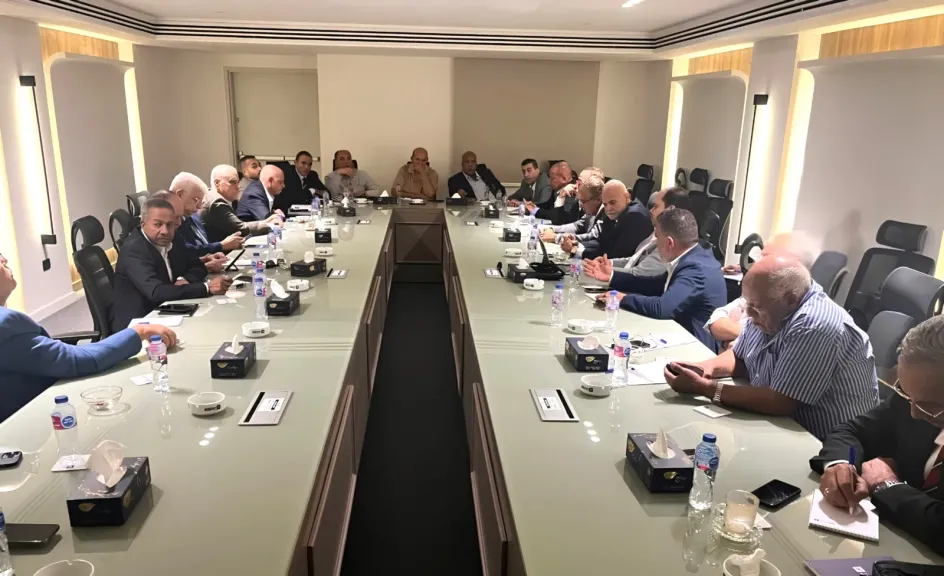
El-Ashry Steel Group hosted a broad coordination meeting convened by Ayman El-Ashry, Chairman of the Group and member of the Export Development Committee. The gathering brought together prominent national industry leaders, rolling mill representatives, and figures from the engineering and metallurgical sectors to address the repercussions of the Ministry of Investment and Foreign Trade's Decree No. 121 of 2026, which imposes final safeguard measures on billet imports.
Key attendees included Dr. Medhat Nafei, former Chairman of the Metallurgical Industries Holding Company; Eng. Mohamed El-Mohandes, Head of the Engineering Industries Chamber at the Federation of Egyptian Industries (FEI); Hassan Mabrouk, Head of the Home Appliances Division at the FEI; Gamal El-Garhy, Chairman of El-Garhy Steel Group; Tarek Abdel Azim, Chairman of El-Madina Steel; Eng. Bahaa El-Dimitry, Executive at Fresh Electric; Hisham Fouad, representing Unionaire; and Sherif Ayad, representing Ayad Steel.
The gathering serves as a preparatory meeting ahead of an expanded workshop scheduled for October 11. This upcoming workshop will include companies affected by the decree, representatives from the energy sector, regulatory and consumer protection bodies, parliamentarians, and legal and economic experts. The goal is to finalize technical, legal, and economic studies and issue a comprehensive statement with recommendations to be escalated to the Presidency, the Cabinet, and relevant ministries to seek a balanced resolution.
During the meeting, participants outlined the severe negative impacts of Decree No. 121, explaining that the protective tariffs on billet imports have created a severe market gap due to insufficient local raw materials. The concentration of local billet supply among a few producers has led to record price spikes and unprecedented operational pressures, resulting in the actual shutdown of 22 rolling mills. This crisis now threatens thousands of jobs and the livelihoods of dependent families.
Industry leaders emphasized that the billet shortage extends beyond rolling mills, threatening the security of supply chains across the national industrial ecosystem. Rolling mills feed a vast array of downstream industries, and any disruption in raw material availability or cost inevitably passes down the value chain to the final product. This compromises the competitiveness of local manufacturing and burdens consumers, contradicting state directives aimed at deepening local production.
Ayman El-Ashry noted that rolling mills have engaged with official channels since the decree's issuance, providing documented data on market conditions, the scarcity of local billets, and the threat to production continuity. He recalled a similar scenario in 2008, where subsequent government reviews led to the reversal of such measures. El-Ashry stressed that billets are an intermediate input, not a final consumer product, meaning added tariffs directly inflate production costs. He urged the Industrial Development Authority (IDA) to prioritize the sustainability of existing investments and jobs over restrictive measures.
Dr. Medhat Nafei highlighted that maintaining balance across the steel industry's value chain is vital for market stability. He pointed out that the IDA’s recent offering of 8 new billet production licenses—with a total capacity of 2.8 million tons annually—proves the urgent need to increase local supply. Nafei noted a clear gap between licensed production capacities and the actual volumes supplied to the market, as integrated factories consume most of their own billet production. He warned that imposing tariffs on an intermediate good stifles downstream operational capacity and export potential.
Eng. Mohamed El-Mohandes added that the engineering sector is among the hardest hit by the billet tariffs, as rolling mill outputs are the primary raw materials for hundreds of feeder factories. He warned that the market is already facing a near-standstill due to successive cost increases, and failing to reverse these financial burdens will trigger further price hikes, severely weakening the local and global competitiveness of Egyptian engineering products.