
Abu Dhabi Climbs Eight Places in Global Real Estate Transparency Ranking
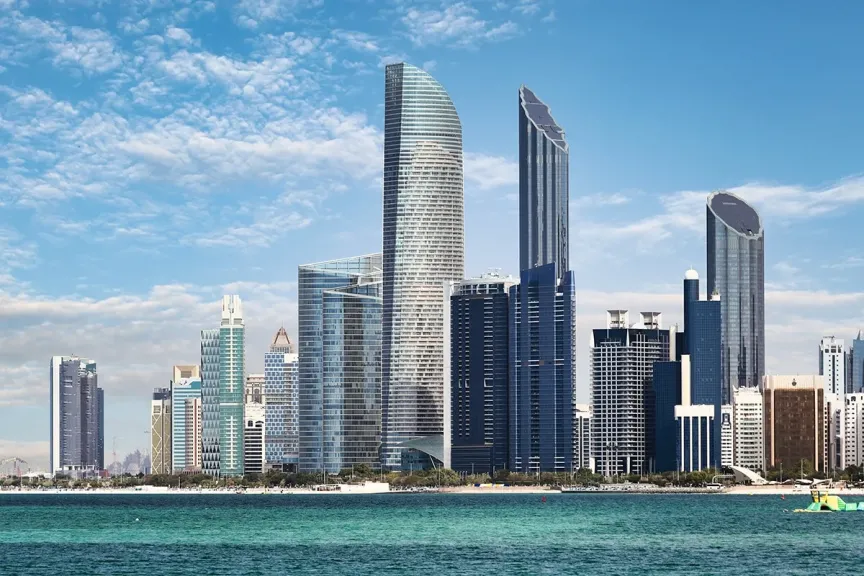
Abu Dhabi has climbed eight places in JLL’s 2026 Global Real Estate Transparency Index, ranking 33rd worldwide compared with 41st in 2024, with a score of 2.42.
The emirate recorded the largest improvement among the markets assessed in the latest edition of the biennial index, which evaluates real estate transparency based on factors including market data, governance, regulation, transaction processes and sustainability.
The stronger ranking comes as Abu Dhabi has expanded the amount of real estate information available to investors and the public. This includes transaction data, service charges and property-level information.
The Abu Dhabi Real Estate Centre (ADREC), which oversees the emirate’s real estate sector, has introduced publicly accessible market dashboards, interactive maps and open APIs to make property data easier to access and analyse.
ADREC has also set a target of placing Abu Dhabi among the world’s 25 most transparent real estate markets by 2030.
Rashid Al Omaira, Director General of the Abu Dhabi real estate and construction authority, said the emirate’s progress reflects improvements in governance, investor protection and access to reliable market information.
He added that the next stage would focus increasingly on turning available data into actionable insights through advanced analytics and artificial intelligence, particularly to identify trends in demand, risks and market performance.
Transparency gaps remain across emerging real estate sectors
Despite its improved ranking, the JLL assessment points to several areas where Abu Dhabi could further strengthen transparency.
These include improving data availability for alternative real estate sectors such as data centres, life sciences and student accommodation, where information remains relatively limited.
According to JLL, these asset classes now account for around 20% of global real estate transaction volumes, increasing institutional investors’ demand for consistent and comparable market data.
Building performance and energy consumption disclosures represent another area for potential improvement. More mature markets are increasingly requiring information on building performance, energy use and resilience, enabling investors to assess environmental and operational risks alongside traditional financial indicators.
Technology is also becoming increasingly important in measuring real estate transparency. JLL said more than 90% of tenants and investors globally now use artificial intelligence tools to analyse property data for portfolio analysis, optimisation and capital planning.
Mohamed Taqiuddin, JLL’s CEO for the Middle East and Africa, said access to reliable information is an important factor in attracting international investment.
James Allan, JLL’s CEO for the UAE, Egypt and Africa, also highlighted the role of stronger governance and technology-driven data systems in helping institutional investors assess and manage risks.
Global capital continues to favour transparent markets
Abu Dhabi’s improved ranking comes as transparency levels across global real estate markets continue to strengthen.
JLL reported that two-thirds of the markets covered by its 2026 index improved their transparency scores. Transaction volumes in markets classified as “highly transparent” increased by 64% over the past two years, accounting for more than 80% of global direct real estate investment, according to JLL data.
For Abu Dhabi, moving from 33rd place into the global top 25 by 2030 will require further progress in the coverage and quality of market data, technology-driven analytics, sustainability disclosures and information on newer real estate asset classes.
The Global Real Estate Transparency Index, produced by JLL and LaSalle Investment Management, has tracked real estate market transparency since 1999. Its 2026 edition evaluates 88 countries and 146 urban markets across 260 factors covering market data, governance, legal and regulatory frameworks, transaction processes and sustainability.