
-Financial Inclusion Must Shift from Access to Active Usage and ”Financial Health”, Says ADIB Egypt Executive
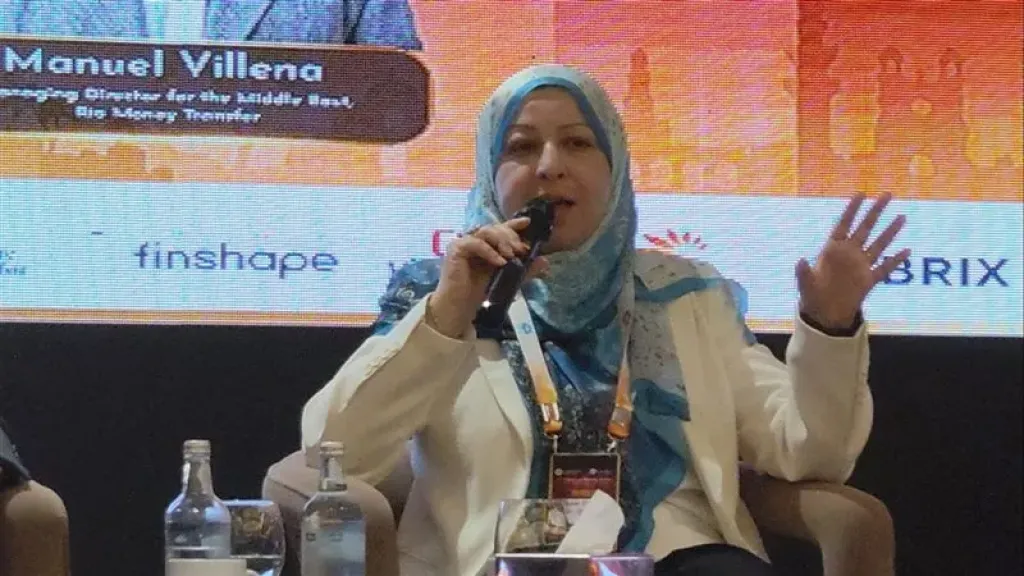
Rania El-Shafei, Head of Financial Inclusion at Abu Dhabi Islamic Bank (ADIB) Egypt, emphasized that the concept of financial inclusion has significantly evolved. It is no longer just about providing financial services or opening accounts, but rather focuses on actual usage, building trust, and enhancing financial literacy to achieve overall customer 'financial health.'
Speaking today at a panel titled 'Building a Secure, Inclusive, and Digitally Supported Banking Ecosystem' during the 27th Connected Banking North Africa 2026 Summit in Cairo, El-Shafei highlighted the intersection of financial access and digital literacy.
She noted that Egypt has made massive strides, achieving a 229% growth in financial inclusion since 2016. Currently, 79% of citizens aged 15 and above are financially included, marking a major milestone in the country's development journey.
The Gym Membership Analogy:
El-Shafei stressed that opening a bank account is the beginning of the journey, not the end. She likened dormant accounts to a gym membership—owning one does not mean a person actually goes to the gym. Similarly, Egypt no longer faces a core issue with access; the primary challenge now is driving consistent usage and closing the gap between merely owning an account and active financial engagement.
Financial Health & CBE Vision:
'Financial health' has become a central theme in these discussions. El-Shafei referenced the Central Bank of Egypt's (CBE) April 2026 conference, which focused on the transition from basic financial inclusion to comprehensive inclusive growth. The key question, she stated, is no longer how many people can be brought into the system, but how to make them feel confident enough to actively use it.
Customer-Centric Design & MSMEs:
Addressing diverse customer needs, El-Shafei explained that a tech-savvy user requires a fundamentally different digital journey than a hesitant, first-time user who might pause before clicking 'confirm' on a simple transaction. This tailored approach also applies to micro, small, and medium enterprises (MSMEs). A business owner might have a long commercial track record but lack a traditional credit history, necessitating flexible models rather than a one-size-fits-all approach. Digital services must be designed around the customer's actual needs, rather than the products the institution wants to push.
Embedded Financial Literacy:
On encouraging underbanked segments to adopt digital services, she highlighted the critical role of financial education. While standalone workshops—conducted by bank inclusion departments under CBE directives—are vital for teaching fraud prevention and basic banking, El-Shafei argued that education must be embedded directly into the digital application.
'The best way to financially educate a customer is to provide the information at the exact moment they need it—during the user experience itself—rather than three months after attending a workshop,' she concluded, calling for simple, in-app guidance that secures transactions without complicating the process.