
Egypt to Launch Trade Tech Sandbox and Innovation Hub in October
Egypt’s Ministry of Investment and Foreign Trade is preparing to launch a Trade Tech Sandbox and Innovation Hub in October, opening the door for startups and entrepreneurs to test technology-driven solutions for foreign trade, logistics and supply chains.
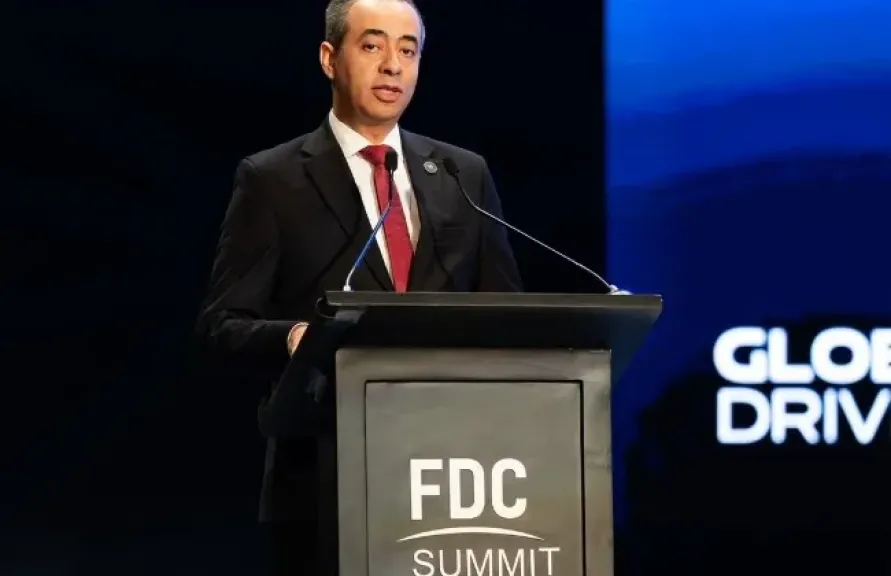
The initiative was announced by Sherif Yehia, Assistant Minister of Investment and Foreign Trade for Development and Digital Transformation, during the opening of the eighth edition of FDC Summit 2026, which is taking place from September 22 to 24.
The new platform will bring together government entities, specialized institutions and global companies while providing startups, entrepreneurs, university students and graduates with an environment to develop and test new Trade Tech solutions before moving toward wider deployment.
Bringing the FinTech model to foreign trade
Yehia said Trade Tech remains considerably less established in the Egyptian market than financial technology, despite the potential for technology to reshape a wide range of trade-related activities.
The ministry sees opportunities across logistics, supply chains, shipping, trade matchmaking and other processes connected to the movement of goods and services.
Rather than developing those solutions entirely within government, the ministry wants the private sector and entrepreneurial ecosystem to play a central role.
The model is intended to give emerging solutions a controlled environment in which they can be developed and tested, particularly where existing procedures or regulatory requirements may otherwise make experimentation difficult.
Yehia said a number of young Egyptian entrepreneurs are already developing promising technology platforms and services, but some remain limited in scale and face challenges moving from an early-stage product to broader commercial deployment.
The planned sandbox and innovation hub will seek to bridge that gap.
AI enters the trade infrastructure
Artificial intelligence is expected to form part of the new Trade Tech ecosystem as the ministry explores how emerging technologies can improve the efficiency of foreign trade processes.
The initiative could create opportunities for startups developing technologies around supply chain visibility, logistics, digital documentation and connecting companies with trade opportunities.
Its significance also extends beyond creating another startup program. A regulatory sandbox can provide a mechanism for testing whether emerging technologies can operate within existing rules — and identify where regulations or processes may need to evolve before solutions can scale.
Government wants data to move instead of investors
During his FDC Summit address, Yehia also outlined a broader transformation underway across investment services.
The ministry is reviewing procedures and workflows both internally and across other government entities involved in the investor journey.
One of the main challenges, he said, is that investment services frequently require interaction with multiple government bodies.
The objective is therefore not simply to digitize individual forms or services, but to redesign the entire process from beginning to end, allowing transactions and data to move electronically between government systems instead of requiring investors to navigate between different authorities themselves.
That distinction is critical to the ministry’s approach: digitizing an inefficient process does not necessarily make the investor journey simpler unless the underlying workflow is redesigned as well.
Remote electronic signatures planned
The ministry is also working with the Ministry of Communications and Information Technology to expand the use of remote electronic signing.
The technology could reduce dependence on conventional hardware tokens currently used for electronic signatures and allow investment procedures to be completed more flexibly.
Another project focuses specifically on foreign investors.
Yehia said the ministry is working on using e-Passports for digital identity verification of foreign users, potentially allowing them to authenticate themselves within the digital system and electronically sign documents.
Together, remote signing and e-Passport verification could address an important part of the digital investment journey: enabling foreign investors to authenticate and complete transactions without requiring every stage to be handled physically.
The Trade Tech Sandbox and Innovation Hub adds another layer to that transformation. Instead of government determining every digital solution internally, the ministry is seeking to create an environment where startups can experiment with technologies for trade, test them against real-world requirements and potentially scale successful models across Egypt’s foreign trade ecosystem.