
Egypt Targets 400 Digital Government Services, 220 AI Companies by 2030, ICT Minister Says
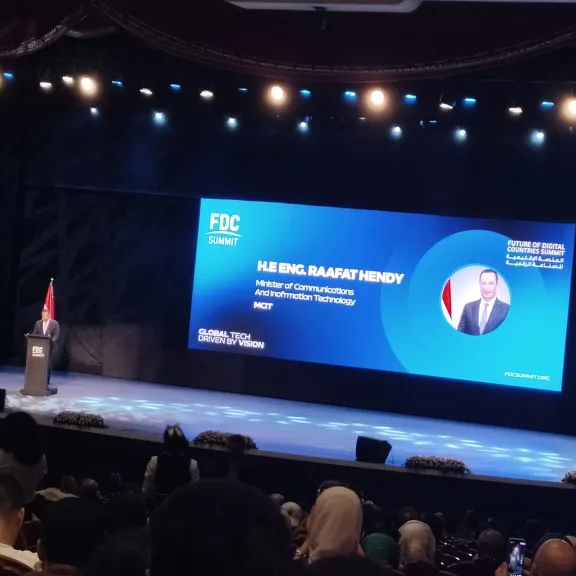
Egypt is moving into a new phase of its digital transformation strategy, with a focus on building a digital economy capable of creating jobs, transforming public services and strengthening digital sovereignty, Minister of Communications and Information Technology Raafat Hendy said on Tuesday.
Speaking at FDC Summit 2026, Hendy said the government is working toward an integrated model that would allow citizens to access more public services remotely, supported by digital identity and electronic signature infrastructure.
The government is targeting 400 digital public services, as part of a broader effort to reduce dependence on in-person procedures and create a more seamless digital experience for citizens.
Hendy said the ministry is also continuing to expand its entrepreneurship and skills-development programs through Digital Egypt Innovation Hubs, which are designed to support entrepreneurial talent, incubate startups and connect emerging companies with investors.
From AI readiness to economic impact
Artificial intelligence is becoming another major pillar of Egypt’s digital economy strategy, with Hendy saying the country has moved from building AI readiness toward a new phase focused on delivering measurable economic and social impact.
According to the minister, Egypt has advanced 59 positions in international AI readiness rankings, placing it first in Africa.
Under the country’s AI strategy through 2030, Egypt aims to support the creation of 220 AI companies and enable 36% of citizens to use AI-powered tools, reflecting a shift from developing the ecosystem itself toward wider adoption of the technology.
Hendy also highlighted Karnak, launched last month as Egypt’s first locally developed AI model, describing it as a model built by Egyptian talent.
Data centers emerge as a strategic priority
Egypt’s AI ambitions, however, will require significant computing capacity, Hendy said, pointing to high-performance computing infrastructure and data centers as critical components of the next stage of digital growth.
The government is therefore placing greater emphasis on developing Egypt’s data center industry, which Hendy described as one of the key arteries of the digital economy, supporting the continuity of government services while providing the computing capacity required by an increasingly data-driven economy.
Egypt’s geographic position could provide an additional advantage. Hendy said 20 submarine cables currently pass through Egypt, carrying data traffic between Europe and Asia.
The next objective is to build on that connectivity by expanding data center capacity and moving Egypt further up the digital value chain, positioning the country as a hub for exporting data and digital services rather than serving primarily as a transit point for international traffic.
Cybersecurity expands to AI and quantum computing
Hendy said the rapid expansion of digital services is also increasing the importance of cybersecurity.
Egypt is currently implementing the second edition of its National Cybersecurity Strategy, while preparations are underway for a third edition designed to address emerging risks, strengthen national cybersecurity capabilities, ensure business continuity and increase trust in digital services.
The minister added that Egypt’s cybersecurity capabilities are also being developed to address risks associated with artificial intelligence and quantum computing, particularly the new challenges these technologies could pose to data protection and digital infrastructure.
Hendy said the communications and information technology sector remains a government priority, pointing to its growing contribution to the Egyptian economy and noting that the sector recorded growth of around 24% in 2025, underscoring its expanding role as a driver of economic growth.