
Egypt Participates in AI Forward Summit 2026, Strengthens Presence at Parallel Regional Meetings
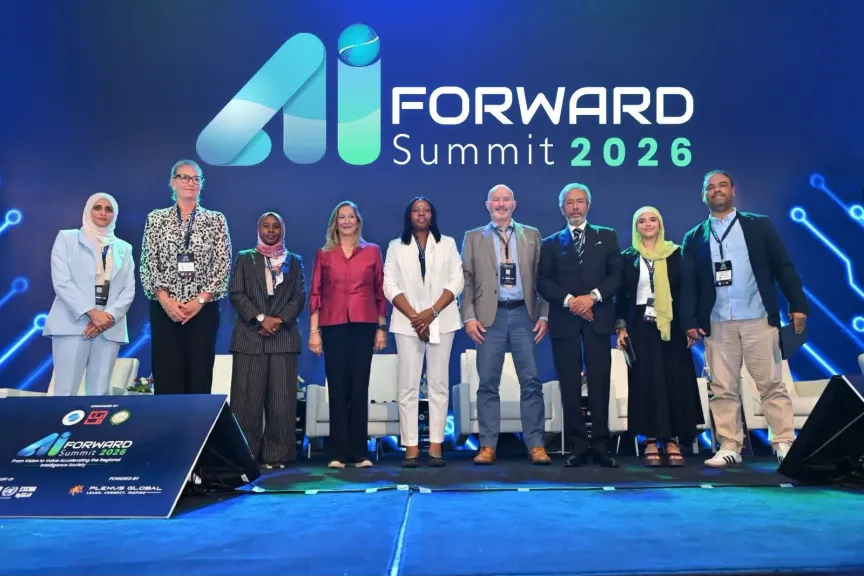
Egypt, represented by the Ministry of Communications and Information Technology (MCIT), participated in the second AI Forward Summit, held on September 7–10 in Hammamet, Tunisia, under the theme “Shaping the Intelligence Future: From Vision to Value."
The event was organized by the Arab Information and Communication Technologies Organization (AICTO), in collaboration with the League of Arab States (LAS) and Tunisia's Ministry of Communication Technologies and the Digital Economy, under the auspices of the International Telecommunication Union (ITU), the United Nations Educational, Scientific and Cultural Organization (UNESCO), and the United Nations Economic and Social Commission for Western Asia (ESCWA).
AI Forward Summit served as a strategic multistakeholder platform for exploring how AI can be transformed from a shared vision into tangible value and impactful outcomes. It brought together ministers, senior officials, technology CEOs, and global investors, with more than 650 participants and over 30 speakers.
Its agenda addressed key priorities shaping the AI era, including governance and trust, digital sovereignty, cybersecurity, innovation ecosystems, sustainable development, and inclusive leadership. Sessions also highlighted the intersection of AI, governance, and economic transformation, reinforcing the Arab world's ambition to lead in ethical, human-centered AI innovation.
During the event, MCIT took part in three sessions, addressing the advancements in responsible AI, regional cooperation, and inclusive digital transformation. One session was titled “Shaping Trust: Harmonized Frameworks and Resilient AI Ecosystem.” It focused on governance, trust, and digital sovereignty. Participants explored how global AI governance principles and scientific insights can be translated into a regional delivery agenda to enable coordinated action, strengthen trust, and promote digital sovereignty.
The Ministry also participated in the “Women Shaping the Intelligence Future” session. It marked the official launch of the Arab and African Women in Advanced Intelligence Leadership (AWAIL) Alliance, a regional network designed to foster collaboration, mentorship, capacity building, and leadership opportunities for women leaders across the Arab and African regions.
In addition, MCIT was an active participant in the “Shaping Tomorrow's AI Models: Intergenerational and Cross-Cultural Dialogues for Sovereign Intelligence” session. Discussions highlighted the importance of empowering the next generation, especially girls, in AI, cybersecurity, and emerging technologies.
On the sidelines of the summit, MCIT took part in the second coordination meeting of chairs and deputy chairs of the technical working groups under the Arab Permanent Committee for AI and Emerging Technologies, alongside officials from Tunisia, Saudi Arabia, Palestine, and Libya. The meeting focused on strengthening direct coordination among the committee's working groups, kicking off work on their action plans, setting priorities, and assigning roles and responsibilities. Participants also reviewed progress to date, proposed initiatives, and the challenges ahead. The meeting yielded several key recommendations, including exchanging preliminary work plans among the groups, continuing coordination to refine their structures, and staying on track with the approved timeline.
The Ministry also took part in a side event organized by the Council of Europe, in cooperation with AICTO, that brought together AI and data protection authorities from across the Southern Mediterranean region. The event, held within the framework of CoE’s South Programme VI, provided a platform for regulators to exchange experiences and discuss emerging governance challenges related to the use of AI in healthcare, with particular focus on the protection and use of patients' data and the common challenges facing data protection authorities across the region.
Through its participation, MCIT underscored Egypt's commitment to strengthening regional and international cooperation on responsible AI, and to building an inclusive digital ecosystem that engages all segments of society. This reflects the country’s role as a key partner in shaping the future of AI across the Arab and African regions.