
Omar Elsherbiny: AI is reshaping cybersecurity and forcing businesses to rethink resilience from the start
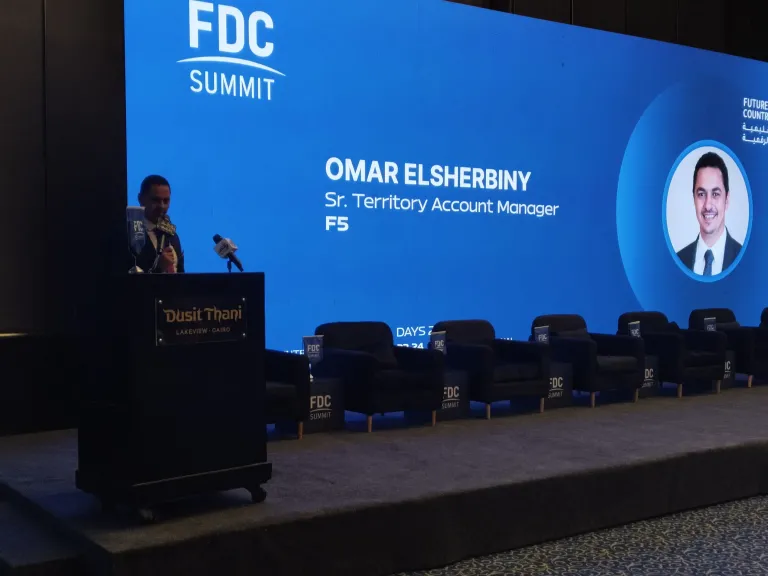
The rapid adoption of artificial intelligence is changing not only how technology is used, but also the speed, scale and sophistication of cyber threats, making resilience and security a core part of business planning from the earliest stages, according to Omar Elsherbiny, Senior Territory Account Manager at F5.
Speaking at FDC Summit 2026, Elsherbiny said the event has evolved over the years in line with the transformation of the technology sector itself, moving from discussions around digital applications and basic digital services to more complex areas such as data centers, cybersecurity and artificial intelligence.
He said the value of discussing future technologies lies in helping organizations prepare before major changes become immediate operational challenges.
“Technology is continuously evolving, and the discussion today is no longer limited to current issues. We also need to look ahead and understand what is coming next in order to be ready for it,” Elsherbiny said.
He added that F5, which has operated globally since 1996, focuses on securing and ensuring the availability of applications and systems across different technology environments, from traditional enterprise applications to more advanced AI-based workloads.
According to Elsherbiny, artificial intelligence is becoming one of the most important topics shaping the technology industry, offering major advantages in data processing, information accessibility and automation, while at the same time creating new security challenges.
The same capabilities that allow organizations to process data faster and build more advanced digital services can also increase the speed and potential impact of cyberattacks, he said.
This shift, he argued, means companies can no longer treat cybersecurity as a layer that is added after an application or service has already been built.
Instead, security, resilience and business continuity should be embedded into the design and planning process from the beginning.
Elsherbiny said future-ready organizations need to ensure that applications remain available, secure and resilient even as technology environments become more complex and cyber threats continue to evolve.
His remarks reflect a broader shift in enterprise technology strategies, where cybersecurity is increasingly being integrated with infrastructure planning, application development and business continuity rather than operating as a standalone technical function.