
Oil Holds Above $100 as Tanker Clashes in Strait of Hormuz Deepen Supply Disruption Fears
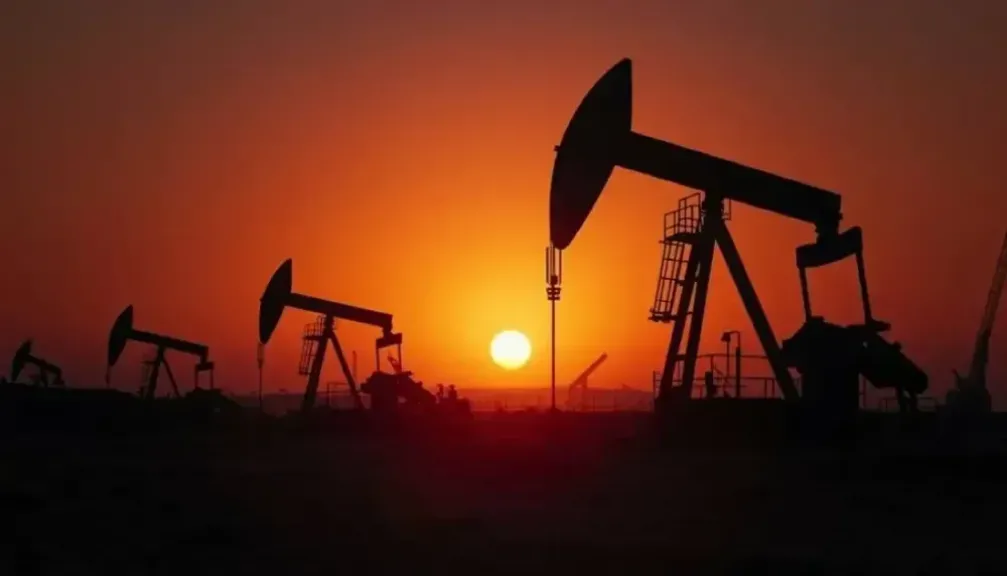
Crude oil prices held firm above the $100-per-barrel mark during Thursday’s trading session, driven by mounting anxieties over global crude supplies following renewed clashes involving oil tankers between the United States and Iran. The escalating maritime confrontation has intensified market expectations that supply disruptions through crucial trade arteries could persist over a prolonged period.
Brent crude futures edged down 0.1% to $101.10 per barrel by 02:56 GMT, while U.S. West Texas Intermediate (WTI) crude ticked up 0.2% to trade at $96.24 per barrel.
Brent’s stabilization above the psychological $100 threshold follows a steep rally that has lifted crude benchmarks by approximately 30% from their troughs in early August. Bullish momentum accelerated as diplomatic prospects for a sustainable cessation of hostilities between Washington and Tehran dissipated, giving way to resumed military actions later in the month.
Tanker Clashes Constrict Gulf Outflows
Iran announced on Wednesday that it targeted 10 vessels near the Strait of Hormuz in retaliation for the United States sinking five Iranian oil tankers. Meanwhile, the Islamic Revolutionary Guard Corps (IRGC) warned of intensified countermeasures against any subsequent operations.
The military escalation has renewed fears regarding the continuity of maritime energy flows departing the Arabian Gulf. Prior to the conflict, the Strait of Hormuz functioned as the transit choke point for approximately one-fifth of global petroleum and liquefied natural gas supplies.
Crude flows through the narrow waterway remain well below pre-conflict baselines, exacerbating market uncertainty regarding the actual volumes reaching international refiners. The opacity surrounding cargo throughput, combined with ongoing maritime logistics disruptions, continues to embed a substantial geopolitical risk premium into global oil benchmarks.