
Food Export Council Highlights Growth Opportunities in the Russian Market Ahead of World Food Moscow 2026
Egypt’s Food Export Council Eyes Russian Market Expansion Ahead of Moscow Expo
The Food Export Council (FEC) recently organized an extensive seminar titled "New Opportunities for Egyptian Food Industry Exports to Russia," preparing domestic companies for their participation in the 35th World Food Moscow exhibition, scheduled to take place from September 15 to 18, 2026.
The event featured high-level participation from Egyptian trade officials, Russian retail federation representatives, and leading Egyptian food manufacturers. Key attendees included May Khairy, Executive Director of the FEC; Ahmed Ayad, Commercial Minister Plenipotentiary in Moscow; and Shamil Magomedov, Deputy CEO of the Russian Retail Federation, alongside executives from Nile Garden and Obour Land.
Market Performance and Key Export Drivers
During the seminar, the FEC highlighted that Egyptian food exports to Russia have been on an upward trajectory, reaching approximately $97 million in 2025, up from $86 million in 2024. Despite this growth, the Council noted that this represents only a fraction of Russia's $2 billion annual food imports, signaling substantial untapped potential, especially given Egypt's total global food exports of $6.8 billion last year.
The structure of Egyptian food exports to Russia in 2025 was dominated by:
Frozen Strawberries: Ranked first with an export value of $42 million, representing 43% of the sector and achieving a 35% growth rate.
Frozen Vegetables: Ranked second at $31 million, marking a 27% growth.
Other Key Products: Pickled olives, juices, and canned vegetables.
Five Strategic Avenues for Growth
Minister Plenipotentiary Ahmed Ayad revealed that total bilateral trade between the two nations exceeded $6 billion in 2025, with Egyptian exports accounting for $810 million. Notably, Egypt topped the list of foreign vegetable suppliers to Russia with a value of $460 million (a 21% market share), followed by fruits at $270 million.
Ayad outlined five primary categories that offer significant expansion opportunities for Egyptian exporters:
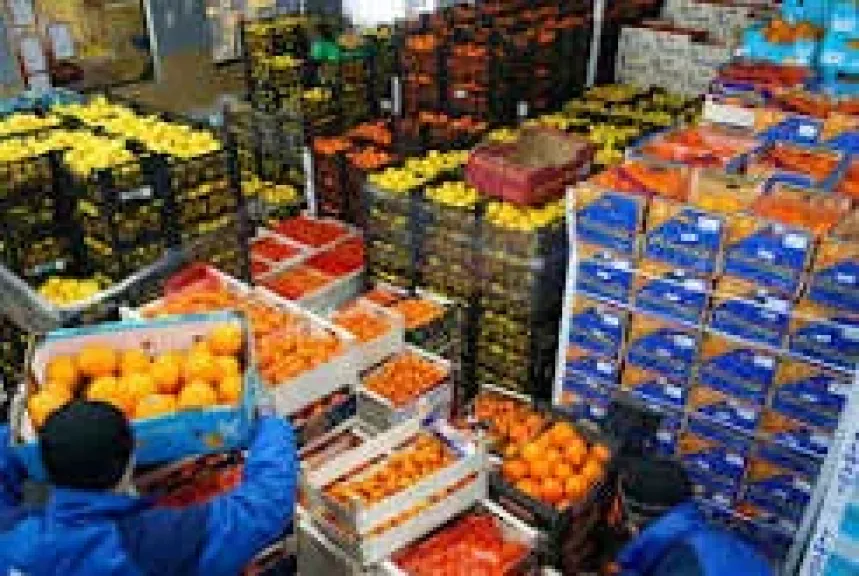
Fresh Fruits: Capitalizing on Egypt's strong reputation in oranges and mangoes by shifting toward direct sourcing contracts with Russian retail chains rather than spot deals.
Frozen Fruits: A rapidly growing segment with promising export potential.
Frozen Vegetables: Expanding the export base to include okra, spinach, and mixed vegetables.
Food Ingredients: Leveraging Russia’s "Import Substitution" policy, which has driven local factories to seek raw materials and production inputs from Egypt.
Herbs and Spices: Building on a strong baseline of $12.5 million in herb exports and increasing the footprint of Egyptian spices.
Navigating Supply Chain Shifts
The seminar fostered intense discussions on overcoming logistical, regulatory, and financial transfer challenges. Officials from the Russian Retail Federation and ITE Group (the exhibition organizers) urged Egyptian firms to capitalize on the import gaps left by the disruption of traditional Western supply channels. Industry executives from Nile Garden and Obour Land also shared their practical experiences navigating the Russian market.
The event concluded with a strong commitment from the FEC and the Egyptian Commercial Office in Moscow to provide comprehensive support to exporting companies, aiming to resolve logistical hurdles and maximize the return on investment from their upcoming participation in World Food Moscow.