
Egyptian Tax Authority Debates Third Facilitation Package; ATC Proposes Raising VAT and Exemption Thresholds
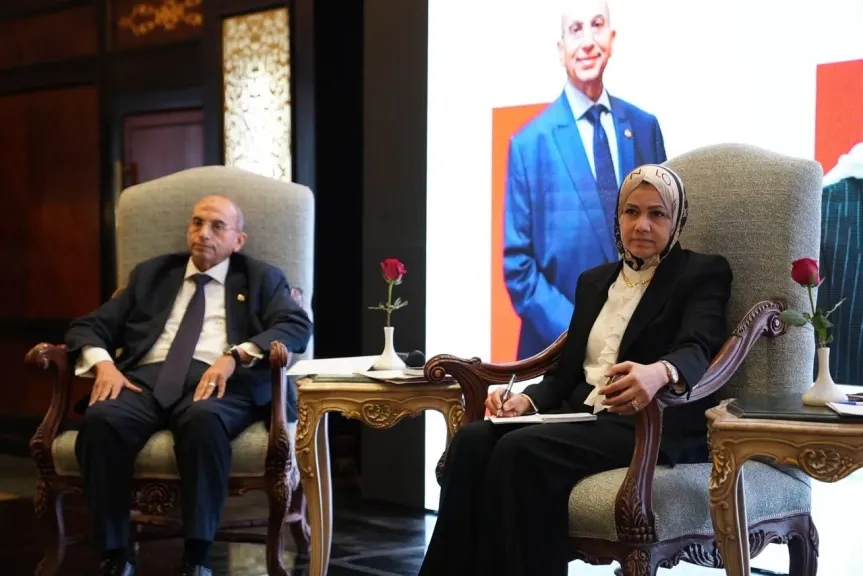
The ATC Group for Financial and Tax Consultations, led by MP Ashraf Abdel Ghani, Secretary of the Senate's Economic Affairs Committee, hosted a strategic panel discussion featuring Rasha Abdel Aal, Head of the Egyptian Tax Authority (ETA). The dialogue focused on shaping the upcoming third package of tax facilitations, building upon the 21 and 32 progressive measures introduced in the first and second packages, respectively.
The event saw active participation from MP Dr. Amani Fakher, Deputy of the Senate's Economic Affairs Committee, alongside ETA leaders, tax accountants, and prominent members of the business community.
Pioneering a Partnership Approach
ETA Head Rasha Abdel Aal expressed her commitment to an open-door policy, welcoming proposals from the tax community to optimize Egypt's business environment. She highlighted that the initial facilitation packages were designed to stimulate the business sector, which inherently boosts tax revenues and the broader economy.
Abdel Aal noted that while the digital transformation initiated in 2018 has yielded significant operational benefits, it is not a standalone solution. The ultimate goal is to evolve the relationship between the ETA and the business community from a purely regulatory one into a comprehensive, growth-oriented partnership. She also reaffirmed that "competitive neutrality" is a binding state policy aligned with Egypt's international agreements, not just a Ministry of Finance directive.
Record Revenues and Expanding the Tax Base
MP Ashraf Abdel Ghani praised the ETA’s recent shift in philosophy, citing the end of arbitrary assessments, the commitment to tax stability without imposing new burdens, and the drive toward horizontal expansion to integrate the informal economy.
He revealed that the first two facilitation packages yielded unprecedented results, prompting approximately one million new taxpayers to voluntarily join the formal economy. Consequently, total tax collections reached EGP 2.59 trillion, with revenues surging by over 30% in the first six months of the current fiscal year—the highest growth rate in Egypt's history.
Six Strategic Proposals for the Third Package
To sustain this momentum, Abdel Ghani presented a comprehensive six-point roadmap for the third tax facilitation package:
Personal Exemption Increase: Raise the annual tax exemption limit for employees to EGP 100,000, aligning with the recent minimum wage increase to EGP 8,000 monthly.
Tax Sukuk (Bonds): Introduce Tax Sukuk as an innovative financing tool, offering competitive yields comparable to bank certificates, alongside tax discounts if the returns are used to settle tax dues.
VAT Registration Threshold: Increase the Value Added Tax (VAT) registration threshold to a minimum of EGP 3 million. The current limit has remained unchanged since the law's enactment in 2016, despite significant inflation and exchange rate fluctuations.
Charitable Deductions: Allow full deductions for all charitable donations (cash or in-kind) from the corporate tax base to encourage corporate social responsibility (CSR) and support state efforts in aiding vulnerable groups.
Competitive Neutrality: Strictly enforce the competitive neutrality law to abolish preferential treatment for state-owned enterprises, ensuring a level playing field that attracts domestic and foreign direct investment and improves Egypt's credit rating.
Role of the Tax Accountant: Clearly define and empower the role of the tax accountant within the new digital system, acknowledging them as the critical communication bridge between the ETA and taxpayers.
Boosting SMEs and Investment
Concluding the session, MP Dr. Amani Fakher underscored that the tangible trust currently observed between taxpayers and the ETA is a direct result of effective on-ground implementation, not merely official rhetoric. She emphasized that these facilitations are vital for stimulating investment—particularly within the micro, small, and medium enterprise (MSME) sector—which serves as the backbone of Egypt's economic transformation, manufacturing, and export strategies.