
Egypt’s Aviation Minister Highlights AI and Human Capital at Aerospace Future Technology Symposium in New Alamein
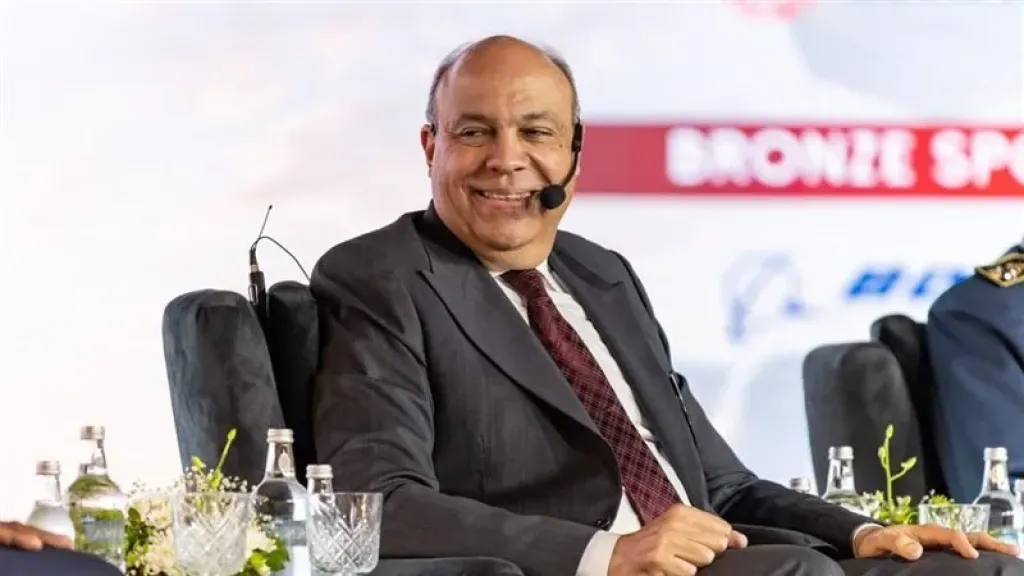
Dr. Sameh El-Hefny, Egypt’s Minister of Civil Aviation, participated in the "Aerospace Future Technology Symposium" held in the Heritage City of New Alamein. The event gathered top defense and aviation officials, including the Commander-in-Chief of the Armed Forces and Minister of Defense, the Air Force Commander, and the CEO of the Egyptian Space Agency, alongside international, Arab, and African leaders from the aerospace, defense, and technology sectors.
During the symposium, El-Hefny emphasized that artificial intelligence (AI) and automation will fundamentally reshape the aviation industry. Rather than marginalizing the human element, these technologies will redefine professional roles, shifting human responsibilities toward supervision, evaluation, complex decision-making, and managing exceptional safety-related scenarios.
Data Analysis Leads AI Adoption in Aviation
Citing the International Civil Aviation Organization's (ICAO) 2026 AI Governance Survey, the Minister noted that 73% of current or planned AI applications in the sector focus on data analysis and decision support. Training and simulation followed at 50%, with air traffic management and airport operations tied at 43%.
The survey also highlighted a critical governance gap: only 3% of respondents currently have a comprehensive AI governance framework in place, while 12% are in the developmental phase. El-Hefny pointed to the shortage of specialized expertise and the pressing need for international standards as primary challenges to deploying AI in aviation.
Evolving Skillsets and Regulatory Frameworks
The Minister stressed that the aviation industry is transitioning toward a workforce that combines specialized expertise with AI literacy. Professionals must understand both the capabilities and limitations of smart systems to effectively monitor performance and intervene when necessary. He called for the continuous evolution of training and simulation ecosystems to foster critical thinking, situational awareness, and the ability to manage automation—particularly during system failures.
El-Hefny also highlighted that technological advancement must be matched by robust regulation, governance, and oversight, aligning with the directives of the 42nd ICAO Assembly regarding the secure and responsible implementation of AI.
Strategic Panel on Human-Machine Integration
The symposium served as a strategic platform to discuss autonomous systems, multidomain operations, and the future of human-machine integration.
A prominent panel discussion on these topics was moderated by retired Lt. Gen. Charles Hooper. The session featured Dr. El-Hefny alongside regional aerospace leaders, including Lt. Gen. Mohamed Hajem, Chief of Staff of the Tunisian Air Force; Abdulaziz bin Abdullah Al-Duailej, President of Saudi Arabia's General Authority of Civil Aviation (GACA); and Air Marshal Umesh Yala, Air Officer Commanding-in-Chief of the Maintenance Command in the Indian Air Force.